10EUB Kieserl
A fresh start on the Kieserl
A fresh start on the Kieserl
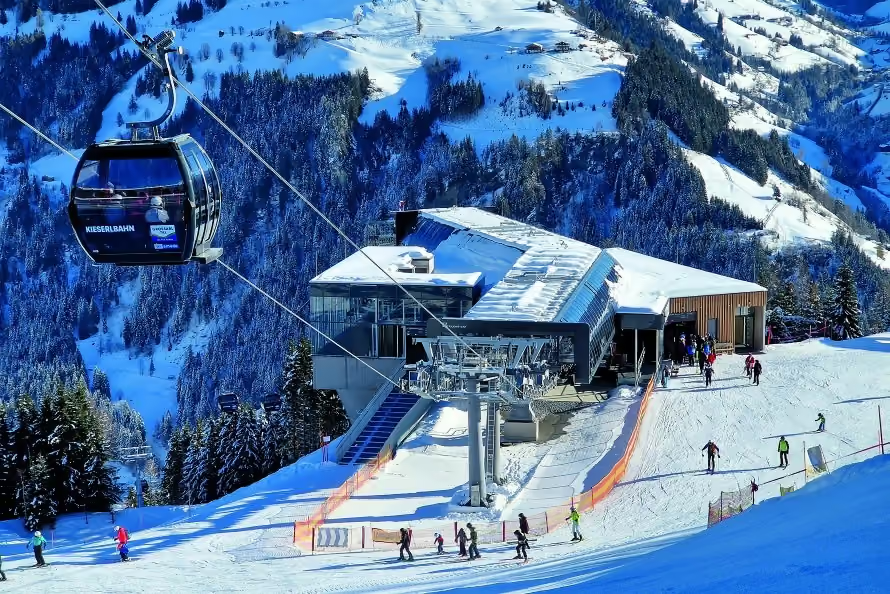
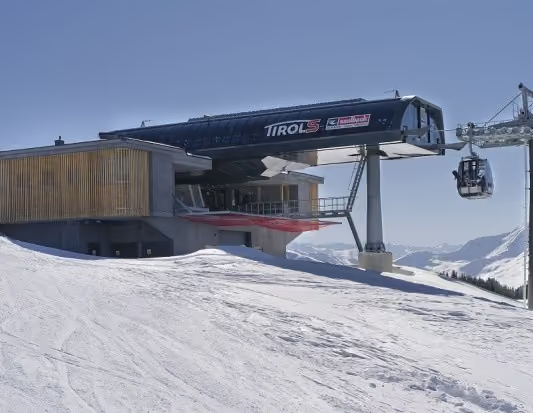
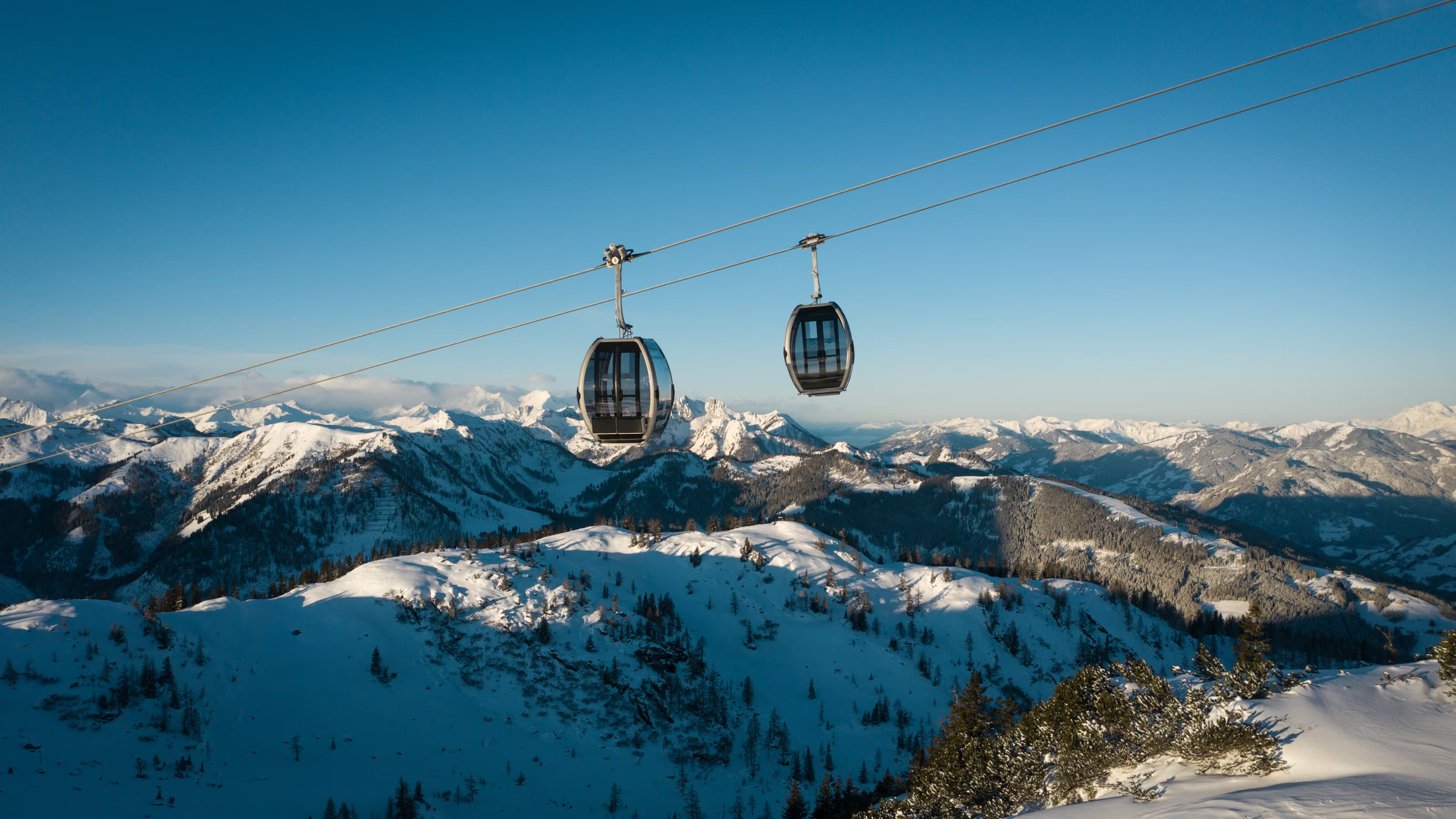
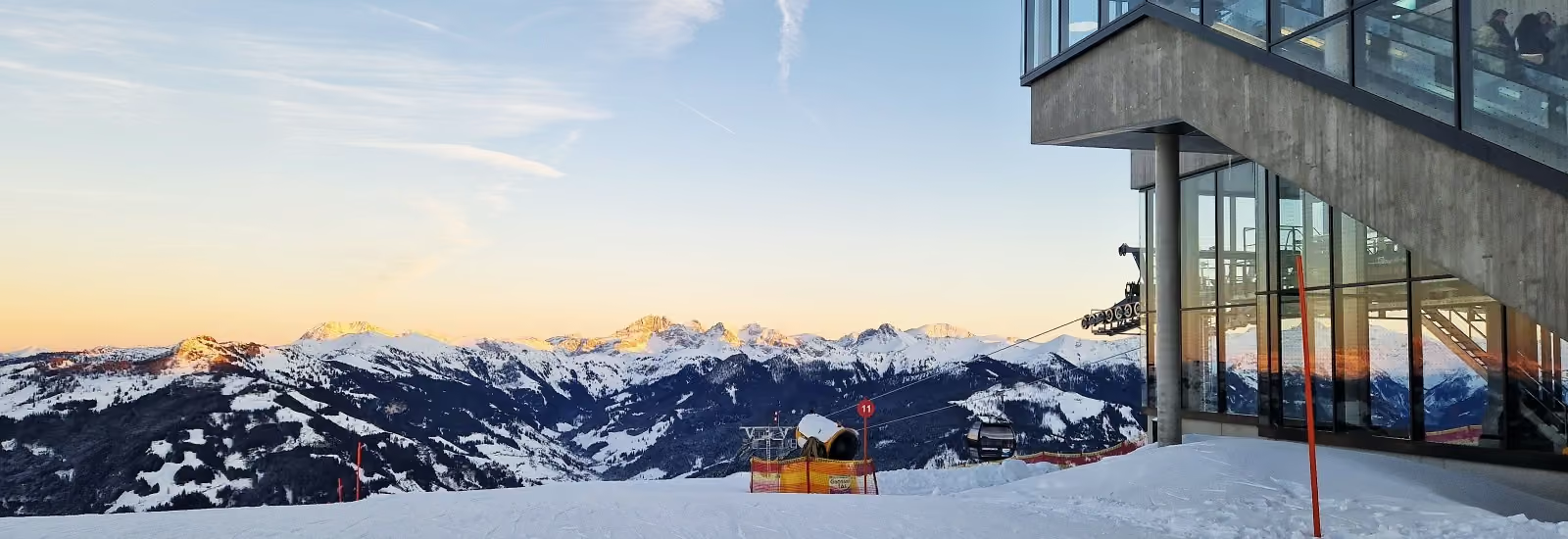
100 years after the first turns and 50 years after the last descent, the 1,954-metre Kieserl with the Roslehenalm was finally to become a ski area again. The summit in the mountains of the Großarl valley was already in use in the early days of alpine sport. With a major project, the Großarler Bergbahnen have reopened this historic ski area and created an attractive link to Dorfgastein.
Salzmann Ingenieure has supported the ropeway design since 2015 and, once the final decision had been taken, delivered one of Austria’s most modern ropeways in around a year and a half. In the process, not only a gully but also organisational hurdles had to be overcome. During construction the project even grew to include an autonomous ropeway system.
System type
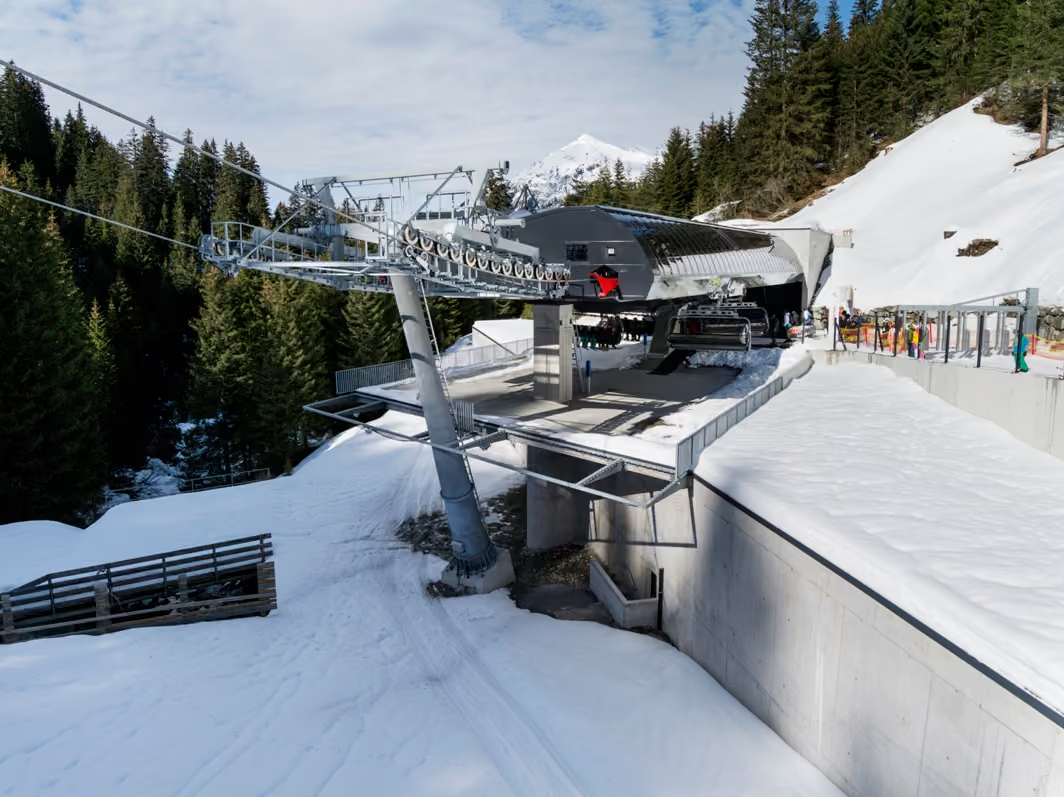
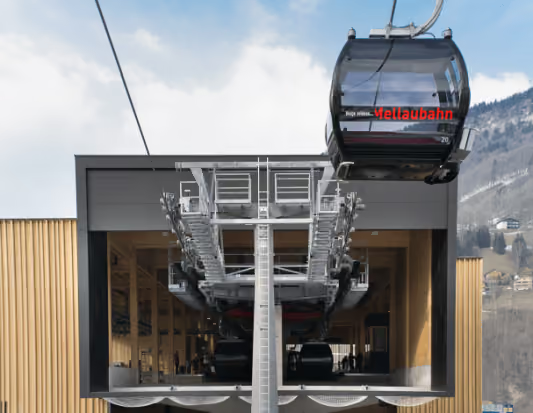
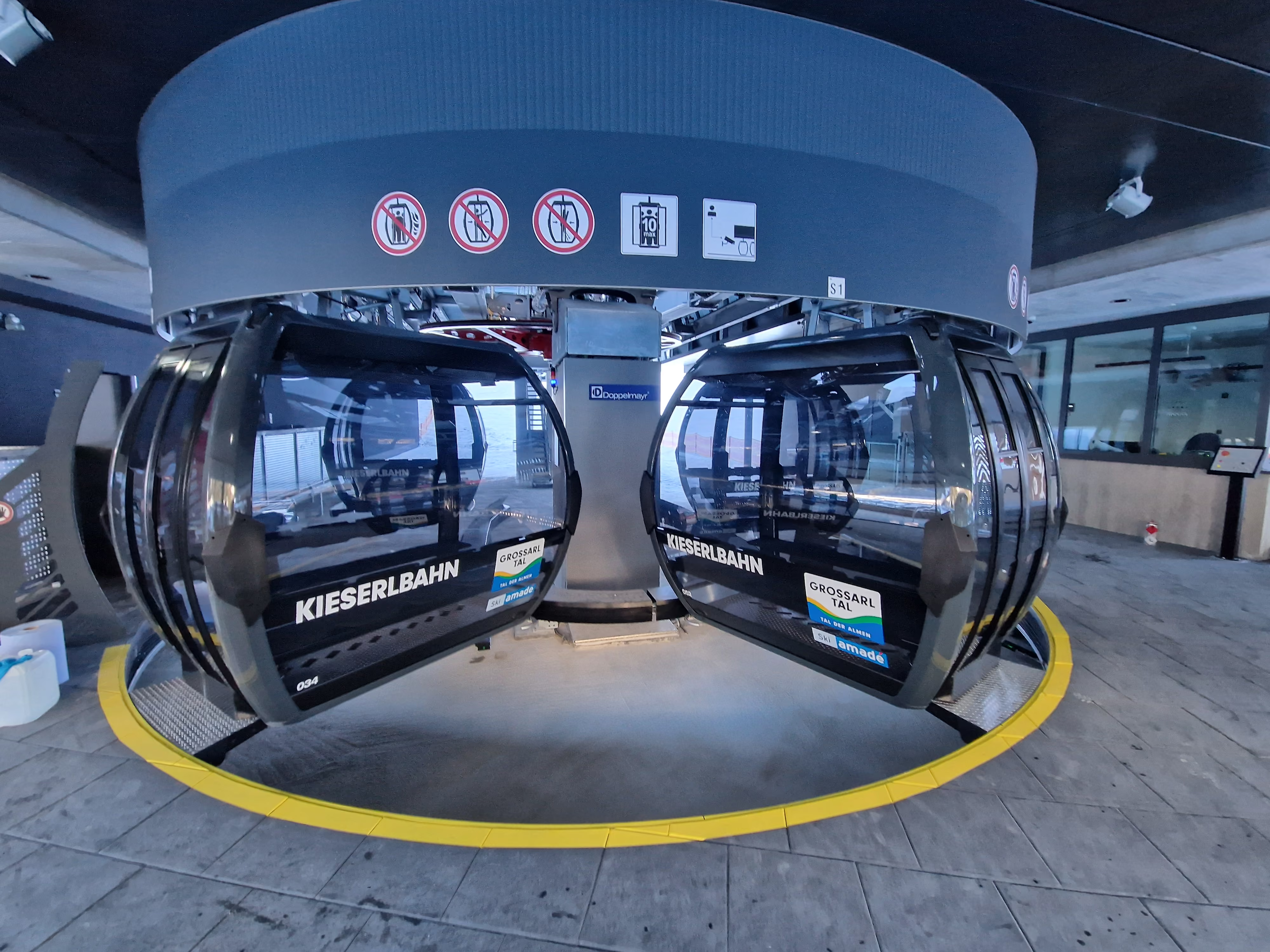
detachable 10-passenger monocable gondola lift
Length
962 metres + 2,334 metres
Vertical rise
379 metres + 672 metres
Capacity
1,900 persons/h (final build-out)
Total ride time (Sections I + II)
15 minutes
Max. line speed
6 m/s Section I + 6.5 m/s Section II
Number of cabins
25 + 46 (final build-out)
Ropeway technology supplier
Doppelmayr
Electrical engineering supplier:
Frey Austria


Initial situation
Plenty of sunshine, designated piste areas and the chance to improve the ski circuit: the Kieserl has great potential – and that is a rare thing in winter tourism today. The summit forms the boundary between the Salzburg municipalities of Großarl and Dorfgastein. On both sides of the ridge, snow-covered pistes stretch out in winter and working alpine pastures in summer. The ski areas have long been connected by the Kreuzkogel and Fulseck chairlifts and gondola lifts, but the transfer never really worked well. Fortunately, the Kieserl and the Roslehenalm mountain terrain below it were an unused gem – and it was to be polished to perfection.
Salzmann Ingenieure came into play in 2015 as the best bidder for the ropeway design and explored numerous variants over the years. The team analysed the position of the sun, forecast guest movement flows and examined alignments. The Hochbrand eight-passenger gondola lift, built in 2006, was part of the considerations from the outset. It ran from the Unterberg district to slightly above the mid station of the Panoramabahn. The problem: the short but steep piste down to the six-seater chairlift proved too difficult for many skiing guests. They therefore often decided against the lift and took the Panoramabahn straight to the top. The position of the top station was as unfavourable as boarding in the valley was inconvenient, with long walks from the car park to the cabin. Alongside a leap in quality and capacity, the new Kieserlbahn offered a unique opportunity to remedy these problems.
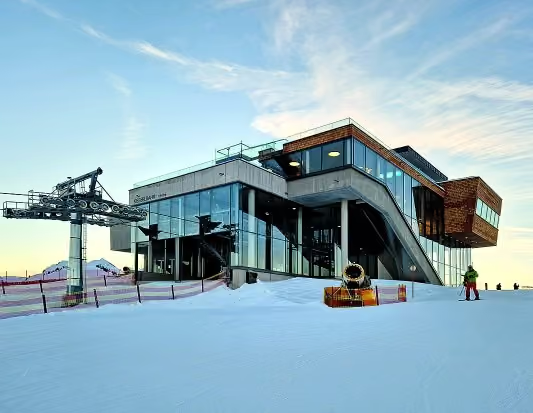
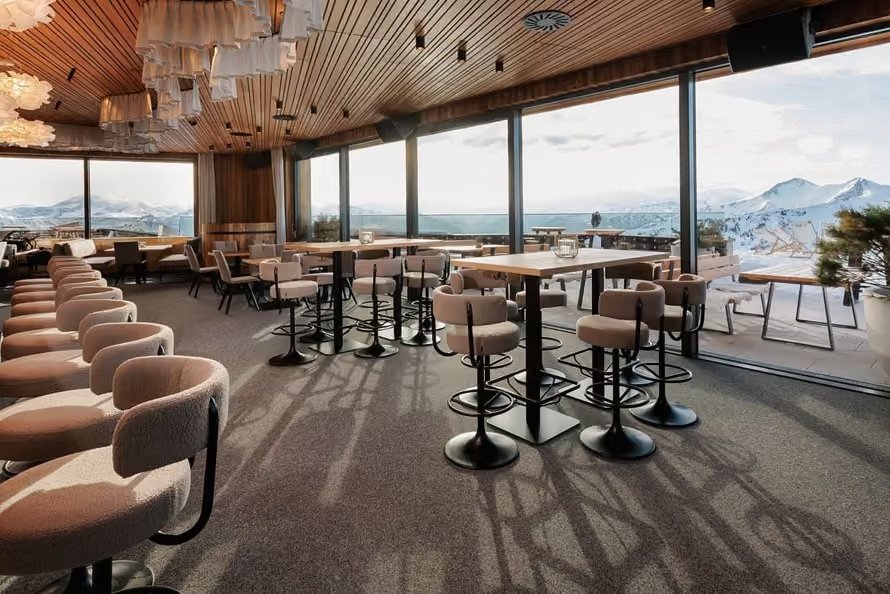
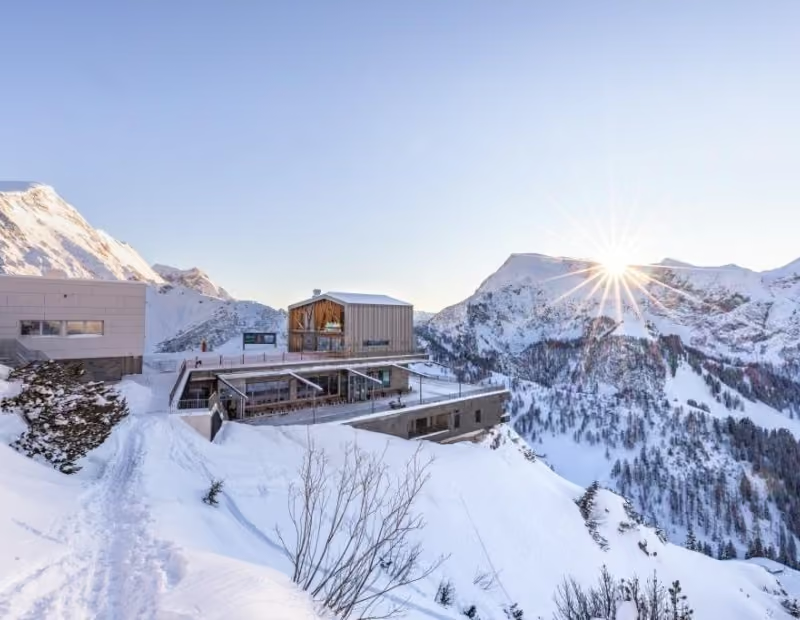
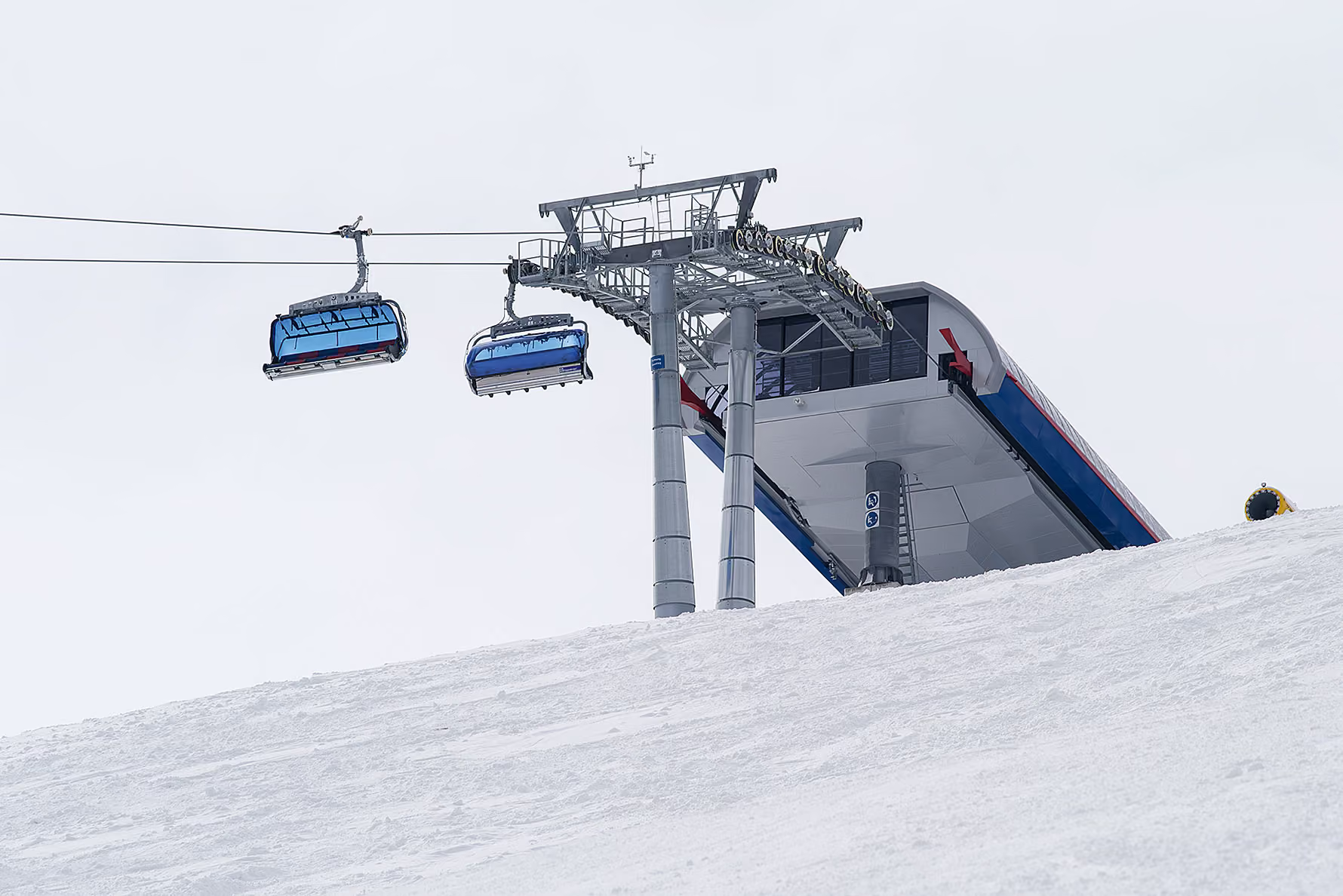
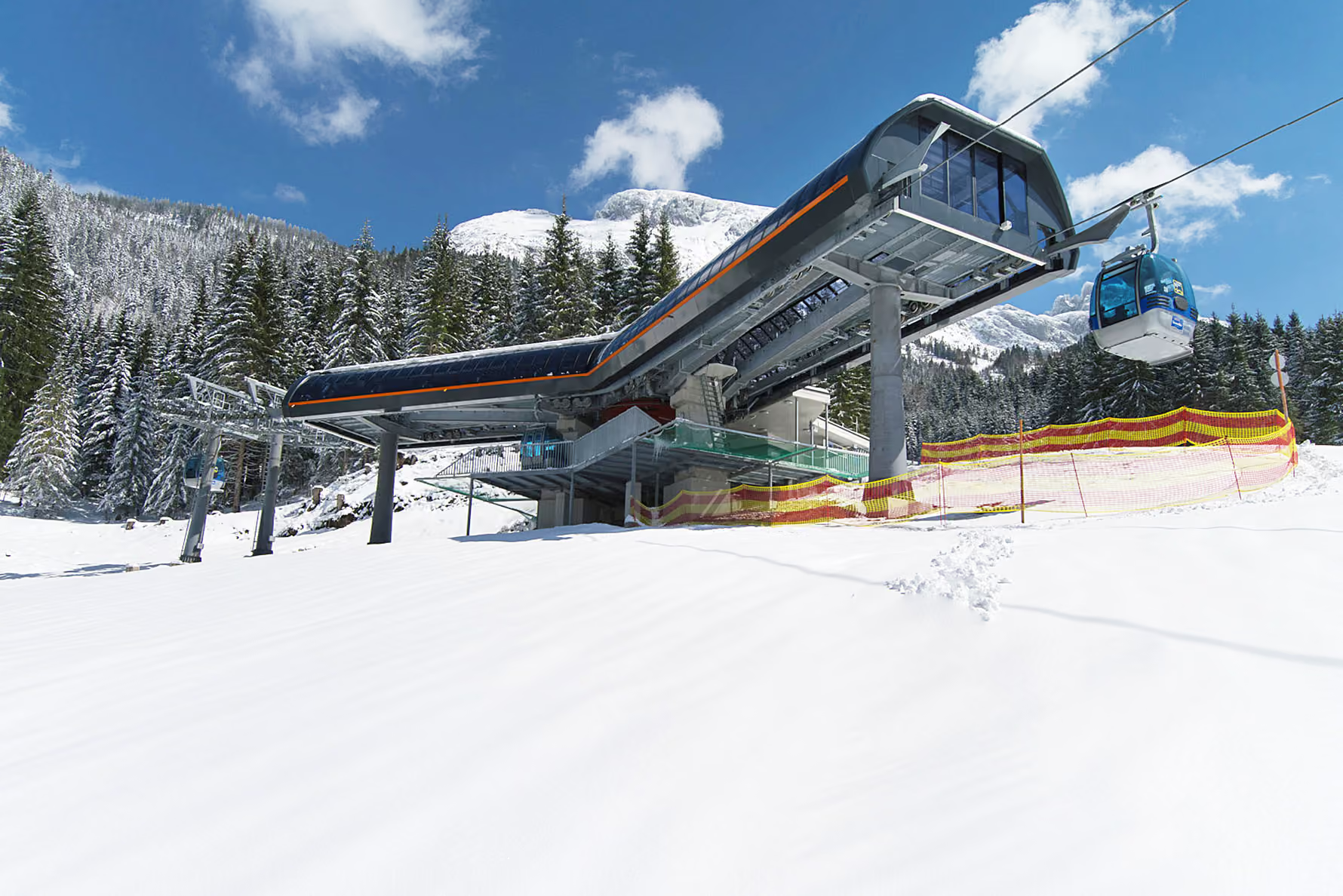
Instead of a new lift on the existing alignment plus a second section up to the Kieserl, Salzmann Ingenieure designed a state-of-the-art 10-passenger monocable gondola lift with two sections for comfortable boarding and transfers. The team planned and prepared the preliminary design for the ropeway technology and its requirements within the buildings, handled the permits and, in a major effort, retrofitted the AURO driverless ropeway system into the project. Once construction had started in summer 2022, things moved quickly: on 22 December 2023 the lift carried its first guests up to the Kieserl, and some straight on to the “Wolke 7” sky lounge.

Managing Director, Großarler Bergbahnen
Reopening the original ski area
“A case like this is fairly rare. Most of the time we replace ageing installations with new ones, or adapt or extend what is already there. With the Kieserlbahn we were able to open up a ski area that had lain unused for 50 years – and to do so with every technological refinement,” reports Stephan Salzmann, Managing Director of Salzmann Ingenieure. While new areas are approved only in exceptional cases and with a long list of imposed conditions, the historically documented ski area allowed for fast and efficient implementation. As a result, the piste construction from the Kieserl via the Roslehenalm down to the mid station was achieved almost without any intervention in nature. Compensatory measures such as biotopes, dry stone walls and the protection of forest and alpine pasture areas were required only at the station buildings.
That almost ten years nevertheless passed between the design work and the maiden run was due to the scale of the undertaking. Before ground was broken, every conceivable option had to be examined and weighed up thoroughly. “We worked out around five different variants and agreed the feasibility of each with the authorities,” says Simon Stöckler, project manager at Salzmann Ingenieure. “The Kieserlbahn is a project for generations. The responsibility is as great as the investment. With the new lift we wanted to reflect the fantastic development of Großarl with its many high-class hotels, restaurants and guesthouses and take our ski and hiking area to the next level for the long term and sustainably,” emphasises Peter Hettegger, hotelier and Managing Director of Großarler Bergbahnen.
The wait has paid off: since December 2023, up to 1,900 persons per hour have travelled with the Kieserlbahn in just 15 minutes up to the Großarl-Dorfgastein ski circuit with its 70 kilometres of pistes and 17 lifts. “We are really proud. The lift really does it all and runs all year round from morning until late in the evening. That goes down well with guests and locals alike,” says a delighted Hettegger. The focus may be on winter sports, but summer tourism is also growing in the pasture-rich Großarl valley. In the ropeway design, Salzmann Ingenieure had to allow for year-round operation. It is to be spacious, barrier-free and low-maintenance in winter and summer alike.
Comfortable and autonomous: a fresh start with added value
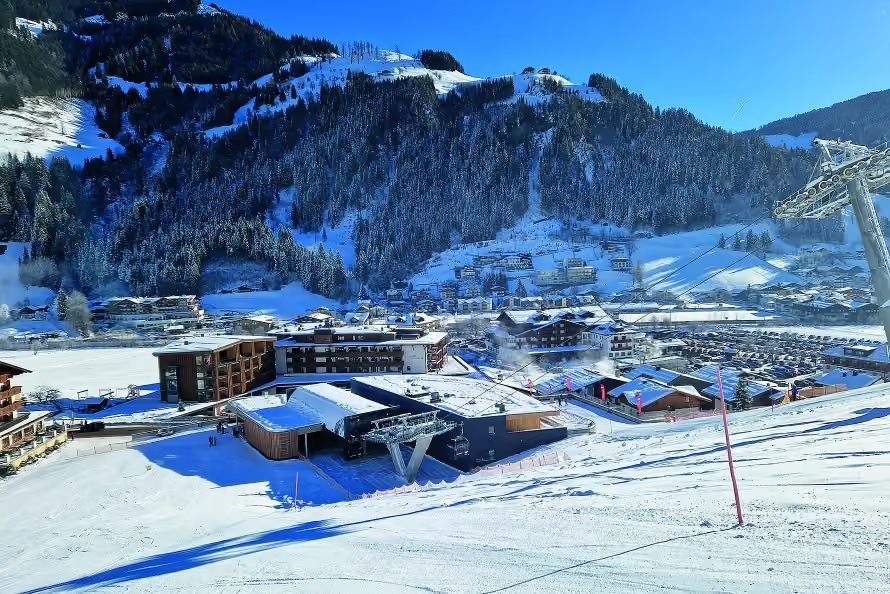
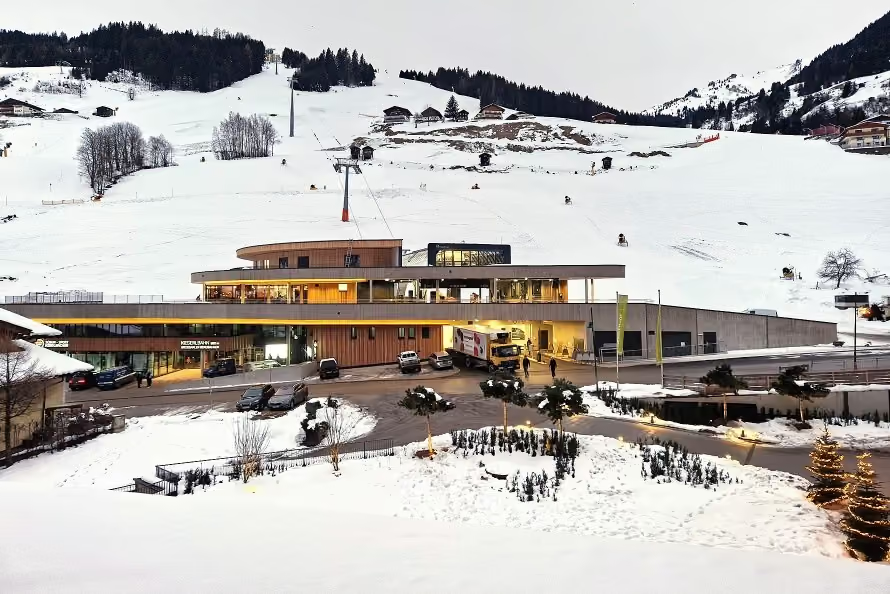
Originally the Hochbrand lift was part of the plan – at least its bottom station and the ropeway. As late as 2018, the installation was to remain in use in a shortened form. There were good reasons against this: the unfavourable access and technology that was almost 20 years old. While the former top station now serves as an equipment store and the ropeway will go on operating in another ski area, the bottom station was demolished. The demolition created room for shorter access routes to the car parks, an underground car park with 111 spaces, offices, a sports shop, a ski depot, staff flats and the “Inferno” restaurant. On top of that, thanks to its noise-emission-optimised Performa rope, the new Kieserlbahn is easy on local residents’ ears.
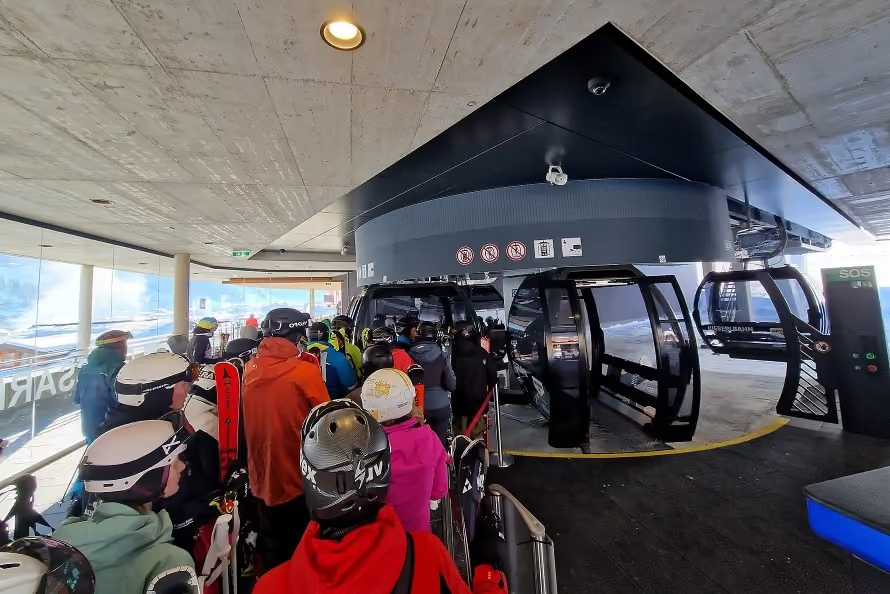
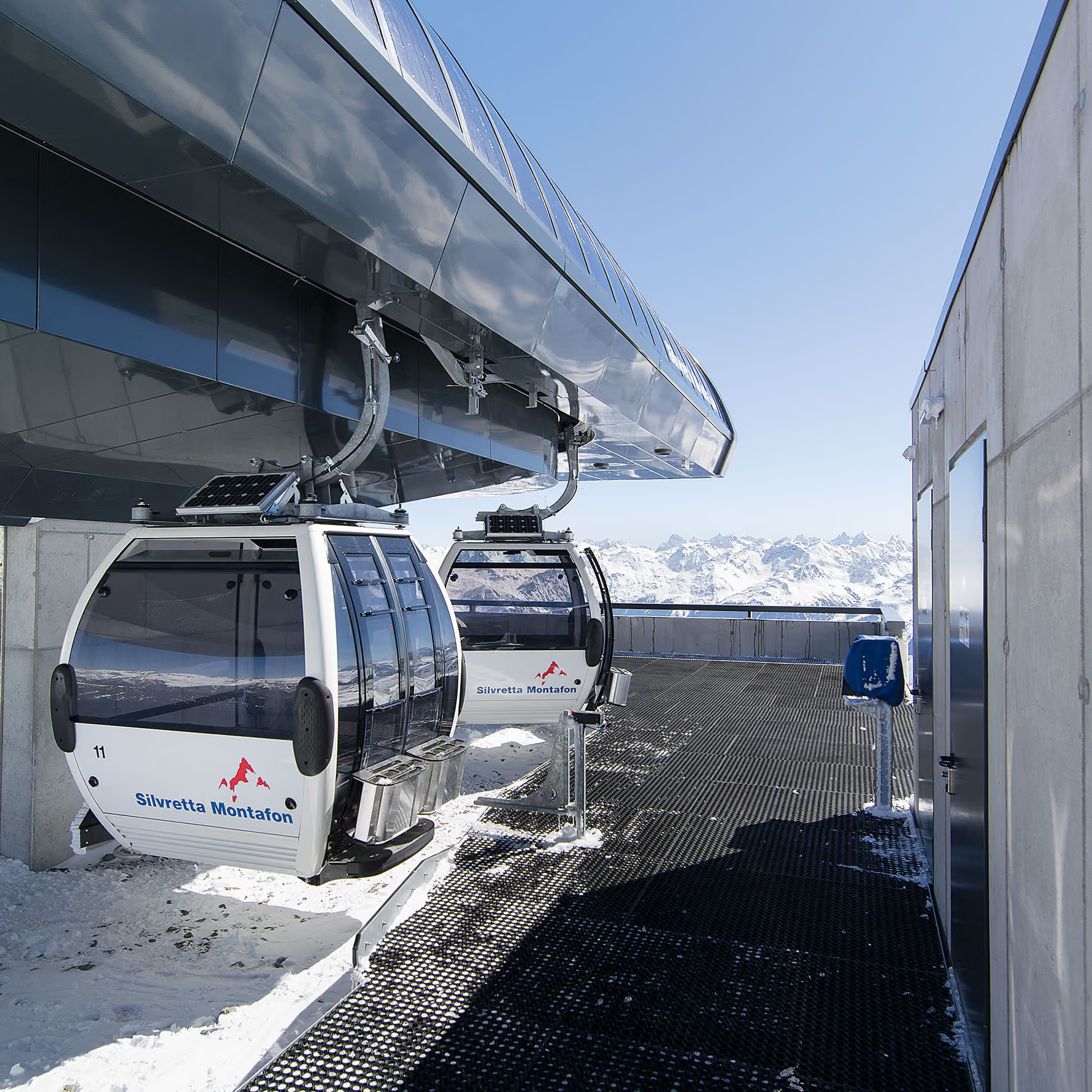
Above all, the new build opened the door to the autonomous ropeway system AURO (AUtonomous Ropeway Operation) from Doppelmayr and Frey Austria. Driverless operation with unstaffed bottom and top stations and a central “Ropeway Operation Center” (ROC) in the mid station requires structural provisions and cannot be built on older technology. The idea came into play only quite late, recalls Simon Stöckler: “In 2022 we realised a pioneering autonomous project with the Valisera Bahn in the Silvretta Montafon ski area. When the wish for this innovative solution arose in Großarl, it was actually already too late.”
Where there is a will, there is a way. Stations, carriers and operating procedures were redesigned during the ongoing construction phase – with the schedule unchanged. Together with the trades, Salzmann Ingenieure pulled out all the stops to integrate the system after all and to secure the project in terms of permit law. “We completely overhauled the passenger areas, the building services and the operation. Where there are no staff on hand, nobody boards in wind and bad weather. Our experience was worth its weight in gold there,” says Stöckler. The building permit of August 2022 was amended in May 2023. Also included: an additional storey at the top with a sun terrace and a further underground parking level in the valley.
Shifting terrain
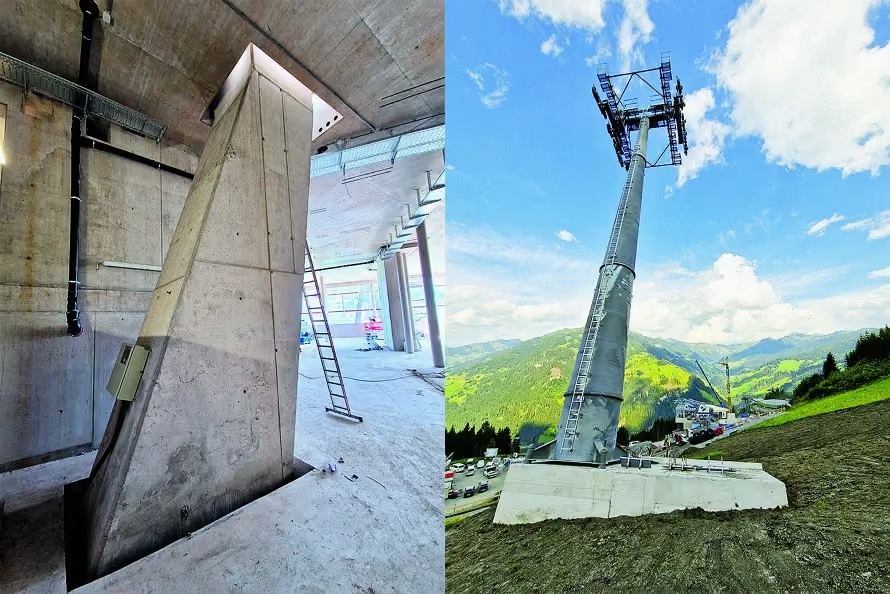
The new mid station lies about 200 metres below the Hochbrand top station and is thus at the same level as the mid station of the Panoramabahn. Guests can finally get from one place to anywhere else without difficulty. Admittedly, there is one small snag. All around the new building the slope is slipping – in places by up to four metres over the next 40 years. These forecasts emerged from geological measurements and elaborate calculations. The moving terrain naturally has an effect on the ropeway. “We had to find the right positions for the towers and build movable foundations,” explains Stöckler. So that the lift always stays on its axis even as the slope moves, 9 of the 23 towers can be repositioned on rails.
The building itself stands on firm ground – and will still move a little. Reinforced concrete columns fix the station at the points with the greatest stability. This leads to a curious situation: a hand’s breadth of space was left around the columns for the expected movement of the structure. The particular geological situation called for a further calculation exercise – this time in terms of fire protection. Just above the station are the Zapfenbar and Alpentaverne buildings. Where their roofs will be in 40 years and what the clearance to the cabin will then be was the subject of complex calculations and fed into the alignment.
Across the gully
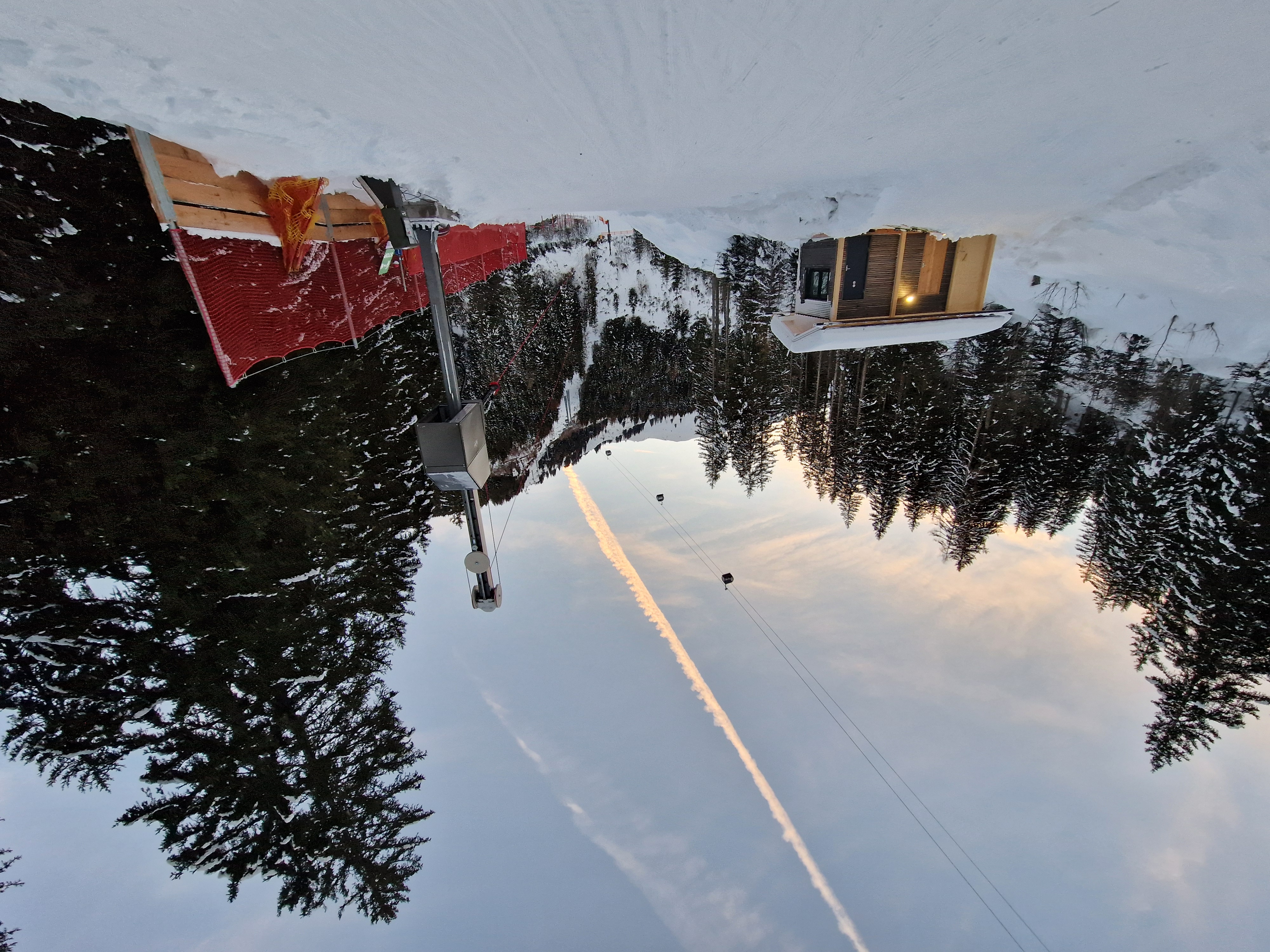
One small hurdle remained to be cleared right at the end: the Harbachgraben cuts across the route from the summit of the Kieserl down to the mid station. “A ski crossing in the form of a piste could not be approved. We had to cross the gully in another way. A conveyor belt was not feasible, so it became a rope tow,” reports Simon Stöckler. The cooperation between Großarl and Salzmann Ingenieure goes further still. In the coming years a new six-seater chairlift is to follow with the Roslehenalmbahn.