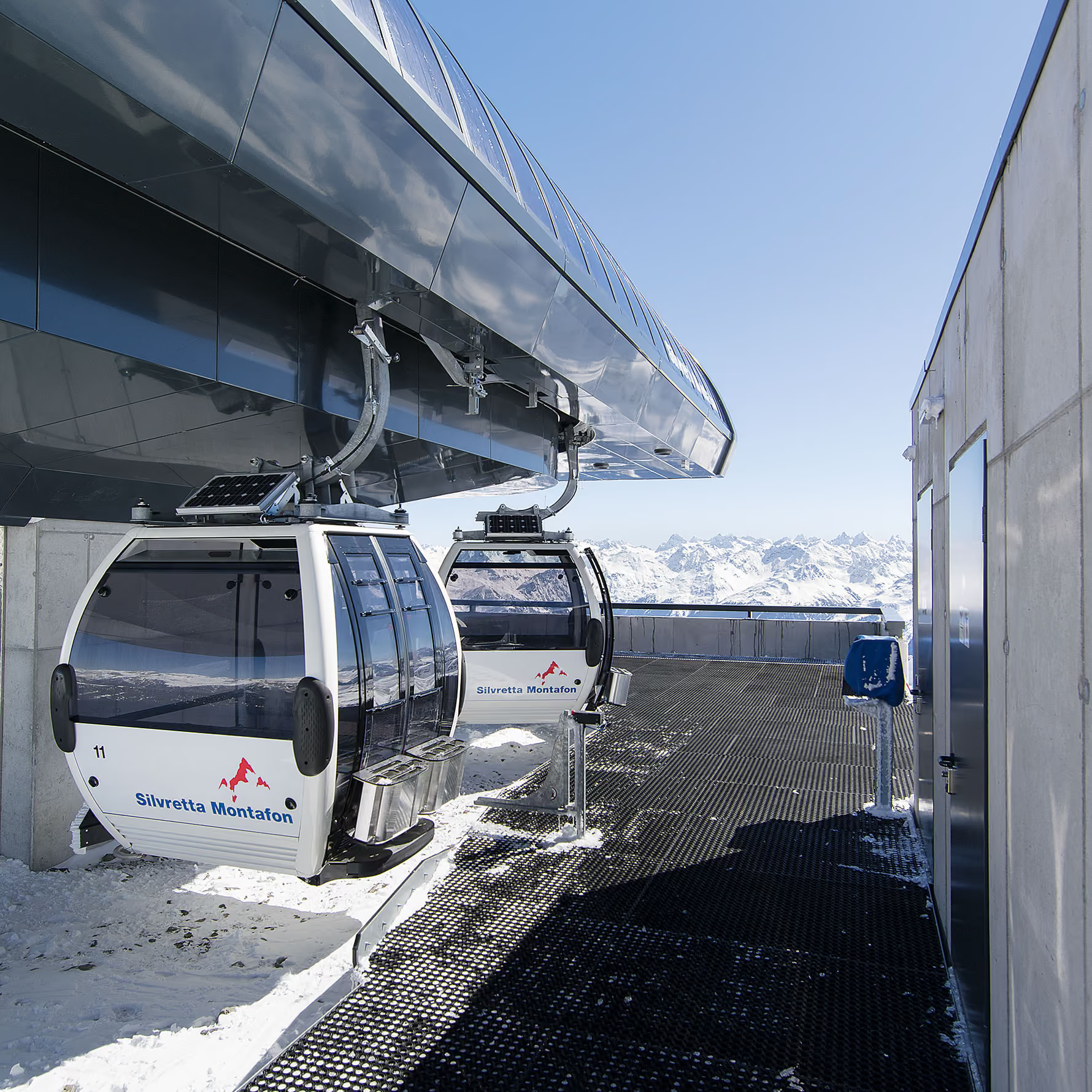
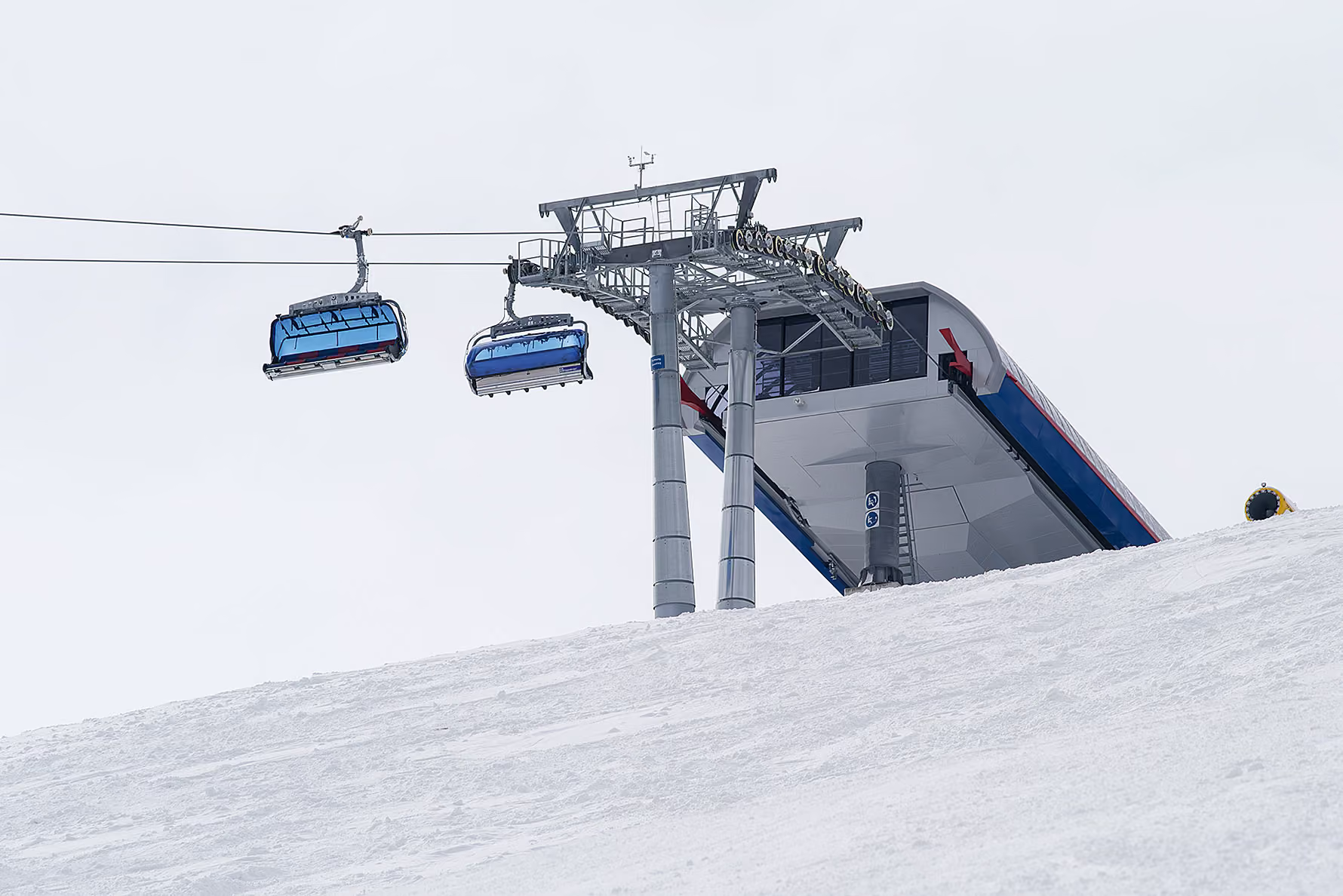
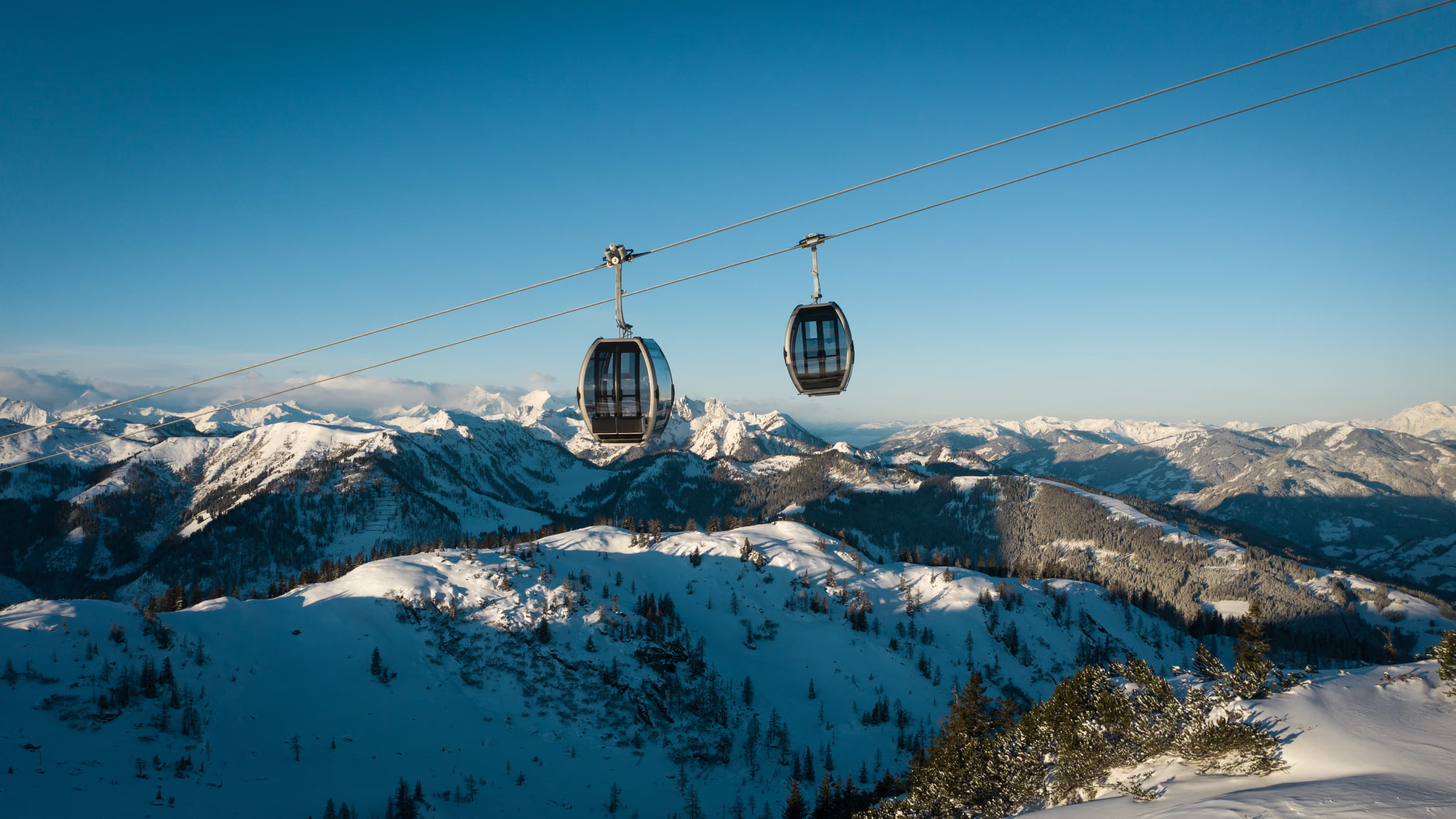
8EUB Donnerkogel
Donnerkogel - More comfort for Annaberg
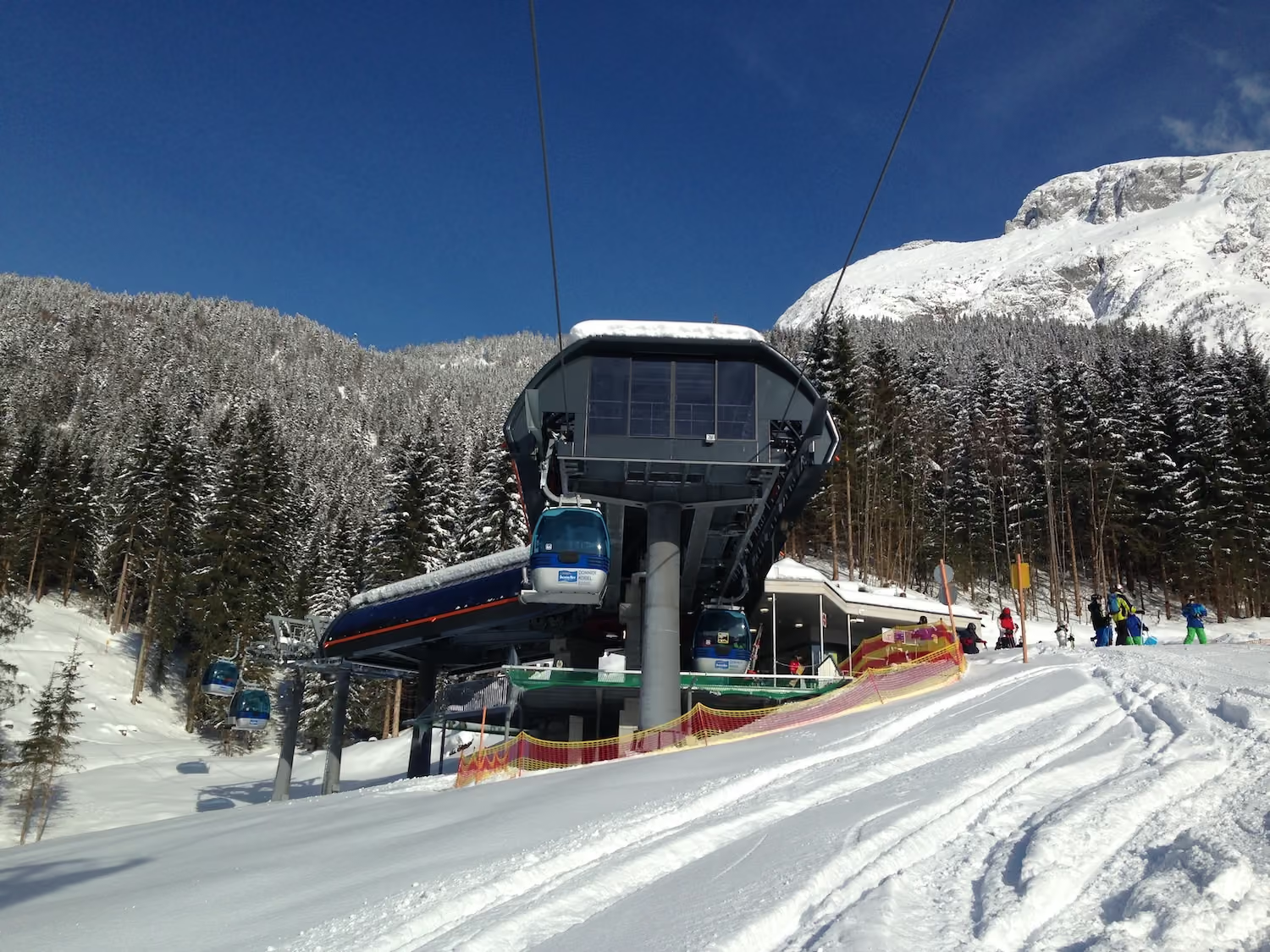
DONNERKOGELBAHN – MORE COMFORT FOR ANNABERG
Many ropeway projects call for stamina and for mutual support between client, planning office and contractors. “Together with ropeway operators we turn a vision into reality. Our experience shows that long-term thinking and good partnerships always pay off,” says Stephan Salzmann, Managing Director of Salzmann Ingenieure.
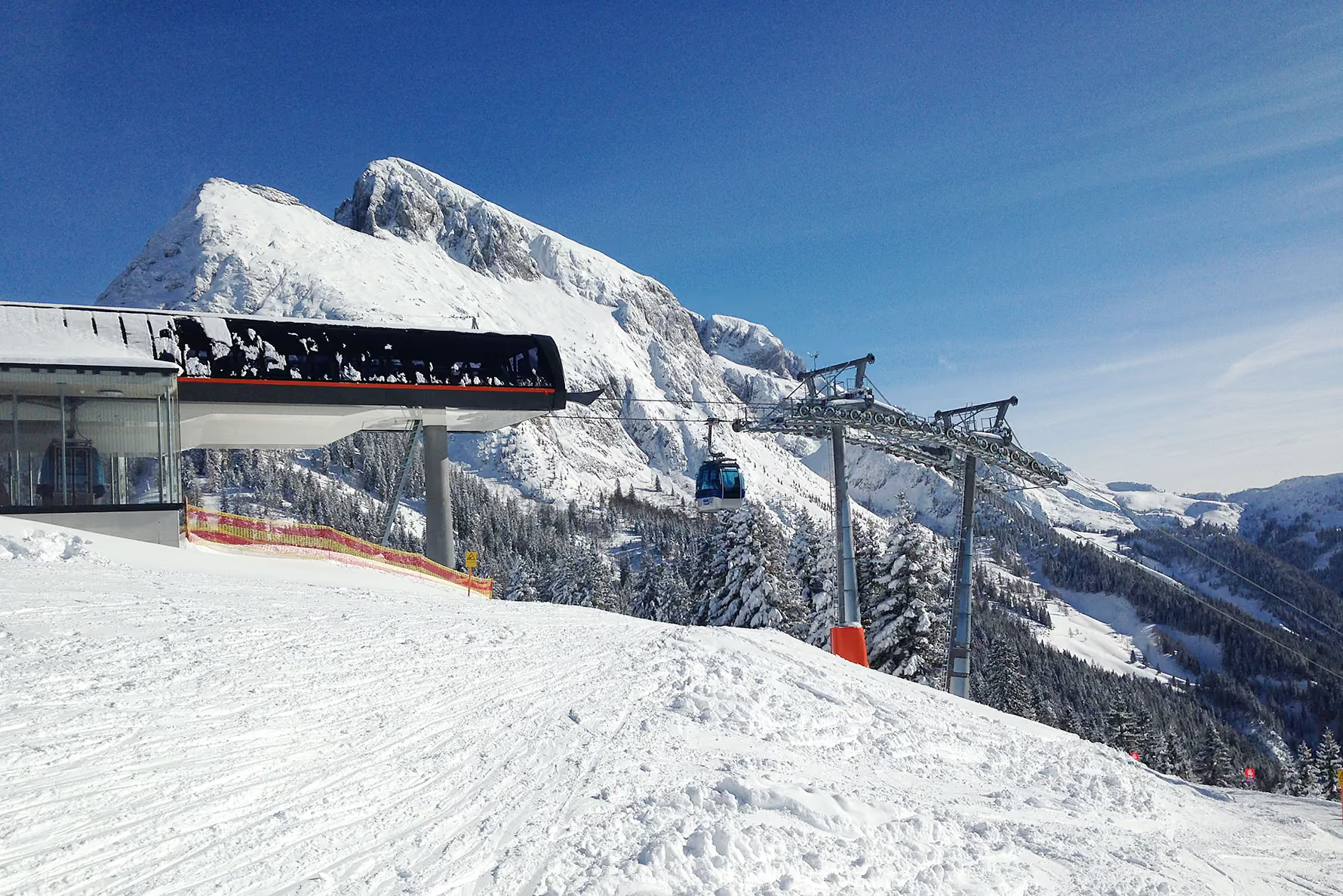
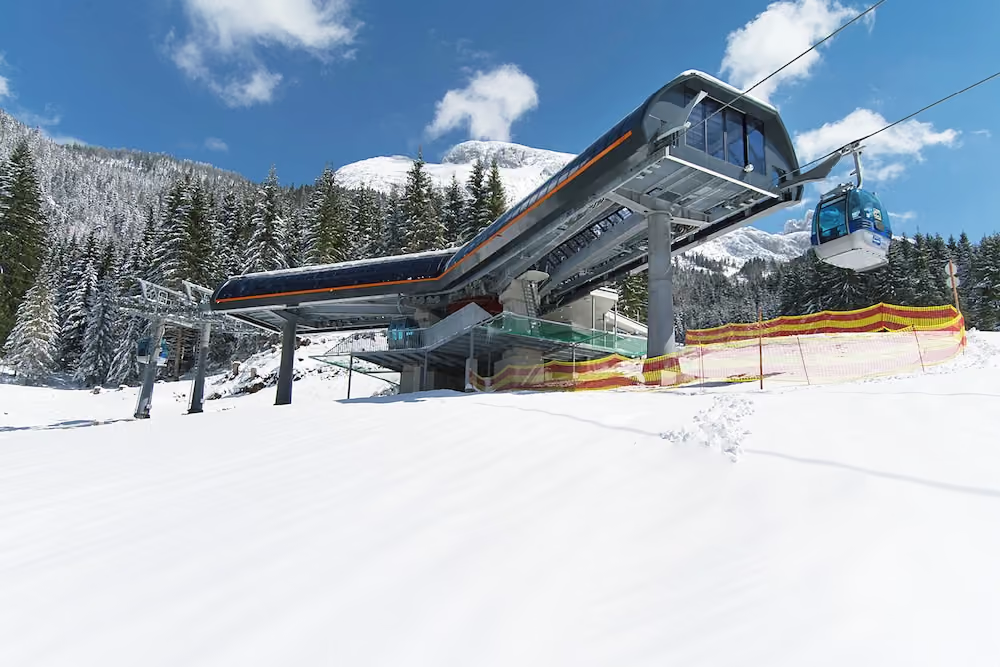
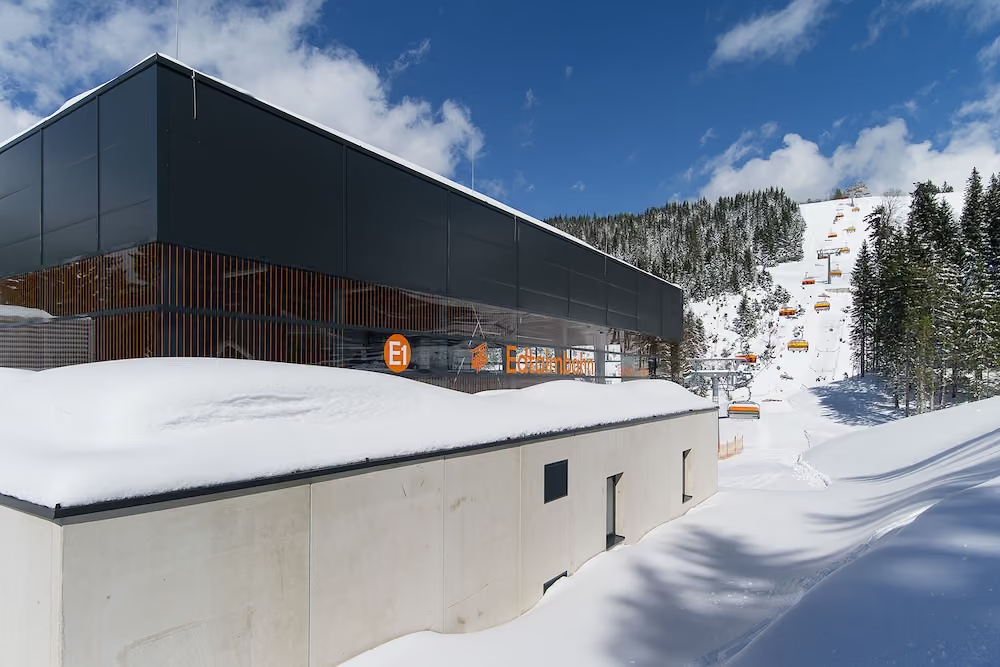
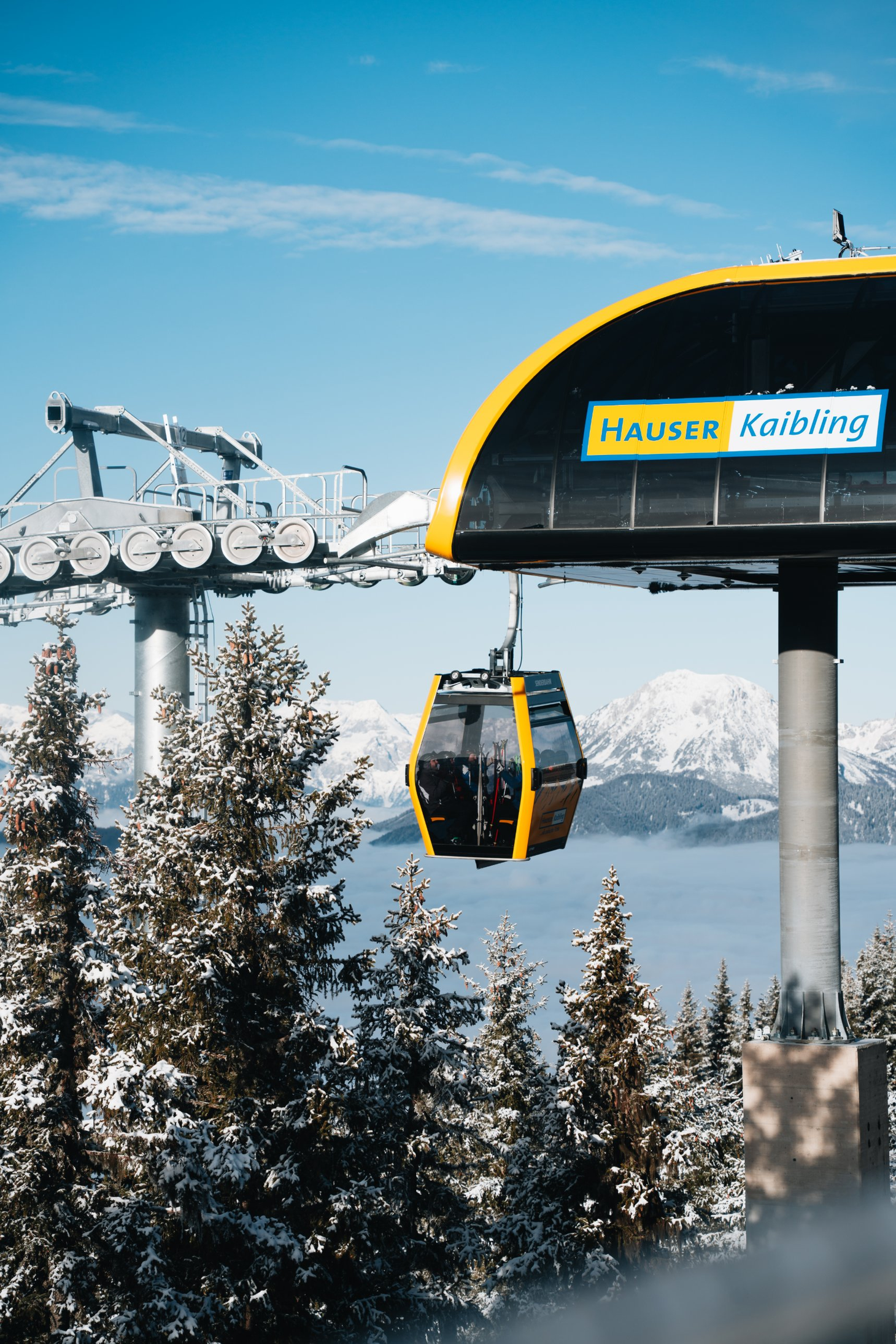
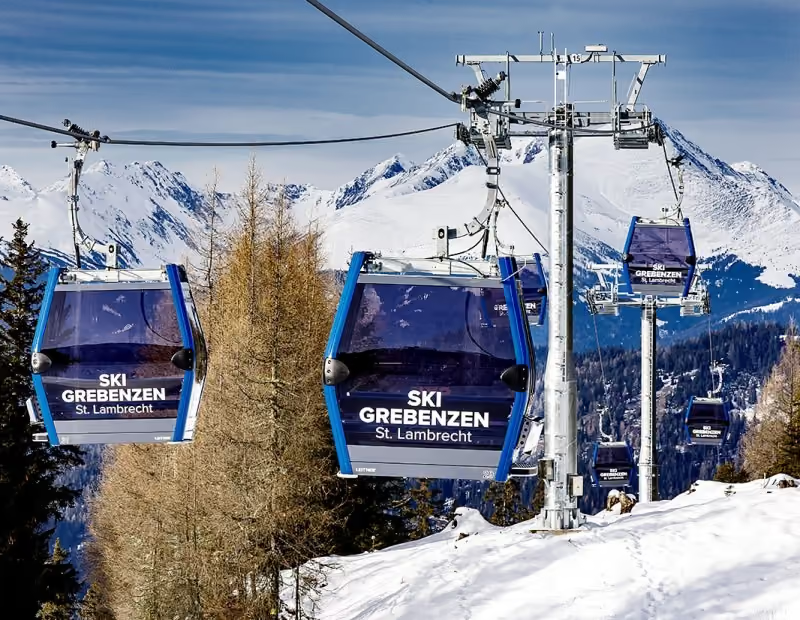
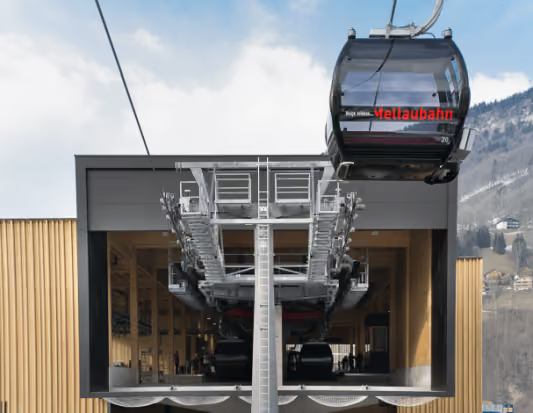
The design and construction of the modern 8-passenger monocable gondola lift (8EUB) Donnerkogel in the Dachstein West ski area is a good example of this. As early as 2005, Salzmann Ingenieure prepared a development study for the Salzburg villages of Annaberg and Rußbach. Investments in comfort, safety and appeal were intended to keep the two villages and the entire region competitive for the future. In 2010 the first part was realised with the six-seater chairlift Edtalm in Rußbach, followed in 2014 by the second step with the Donnerkogelbahn in Annaberg.
System type
8-passenger monocable gondola lift
Drive
Bottom station
Tensioning
Bottom station 1st section, top station 2nd section
Bottom station elevation
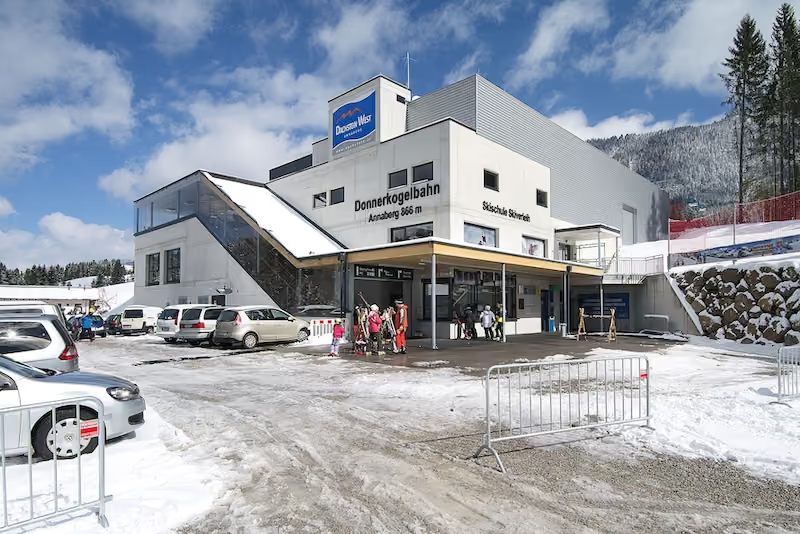
866 m
Top station elevation
1,473 m
Total line length
2,055 m
Average gradient
32 %
Number of towers
15
Number of cabins
58
Line speed
6.0 m/s
Ride time
approx. 3 min
Capacity
2,000 p/h
Construction period
5 months
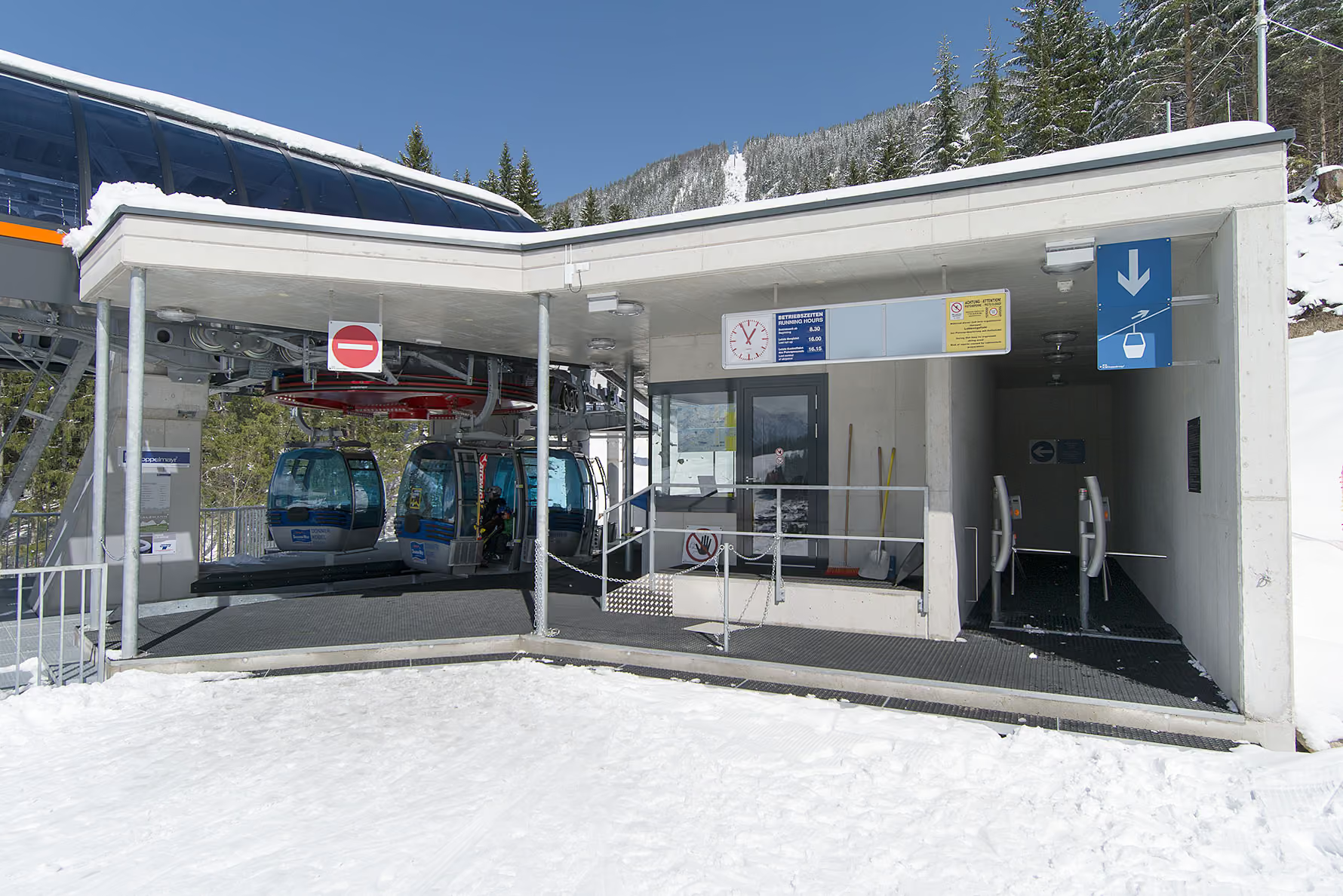
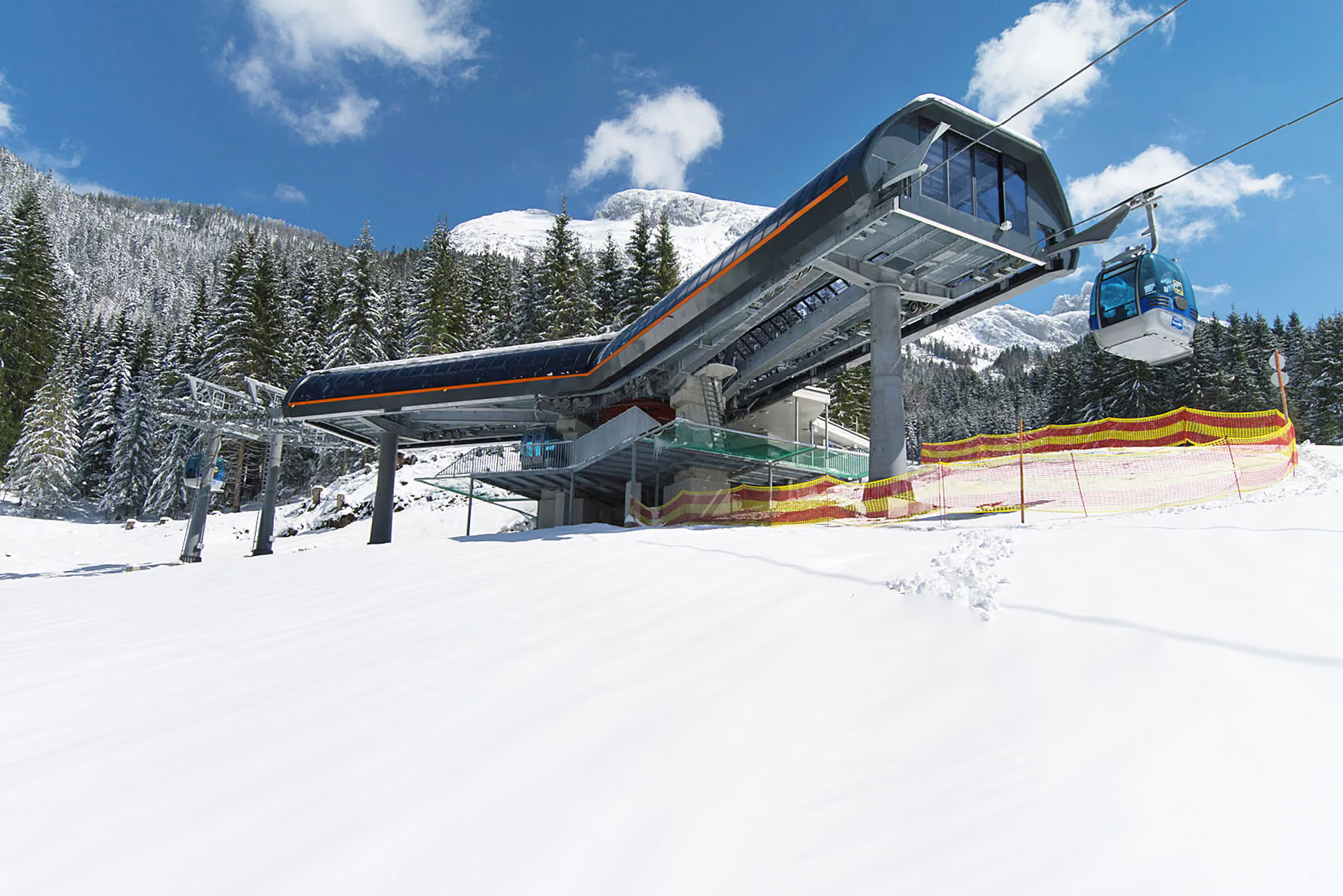
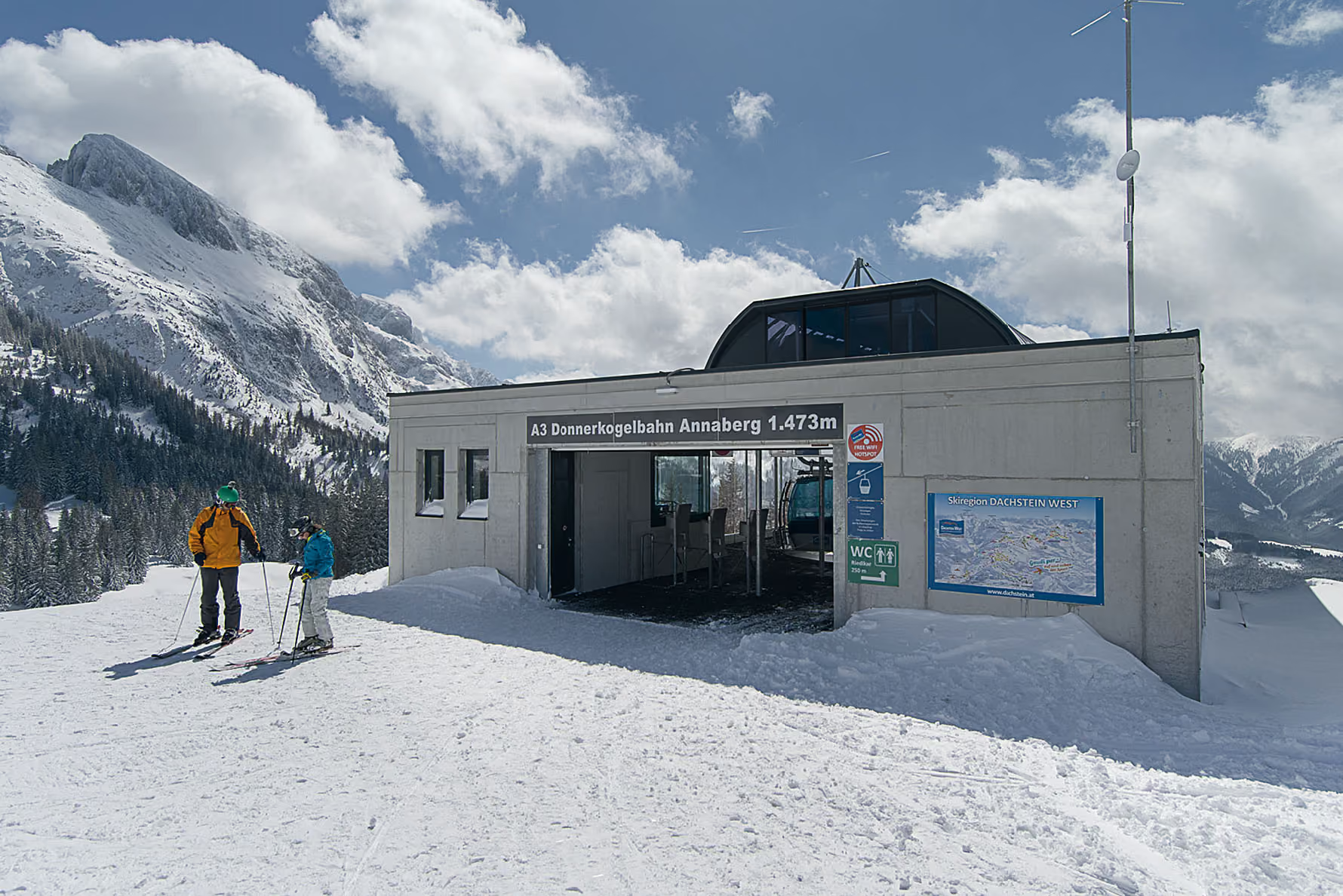
The starting situation
Unequal conditions – The ski area lies between Upper Austria and Salzburg and comprises three villages: Gosau in Upper Austria as well as the municipalities of Rußbach and Annaberg in Salzburg. Differing subsidy guidelines in the two provinces had led in recent years to an imbalance within the ski region: the province of Upper Austria generously supported Gosau with an investment programme for modernisation measures. Rußbach and Annaberg, by contrast, had to make do with far smaller subsidies for a long time.
Ideal for families – Because of the topographic and geographic conditions, the ski region is ideally suited to families. “This means that investments have to be tailored to the requirements of this guest group while at the same time taking their financial means into account,” says Stephan Salzmann, who emphasises: “Ski areas with an attractive price structure are decisive for the future of winter sports: they are what makes skiing affordable for a wider range of people.”
On the basis of extensive analyses, Salzmann Ingenieure of Bregenz recommended the following measures, among others: improving the lift offering and replacing the outdated installations in the Riedlkopf area in order to make access from Annaberg easier; and creating a high-altitude practice area in the Riedlkopf–Angerlift area. These recommendations were put into practice in a first step with the construction of the 8EUB Donnerkogel.

Managing Director Bergbahnen Dachstein West
The implementation: two rope loops, one drive
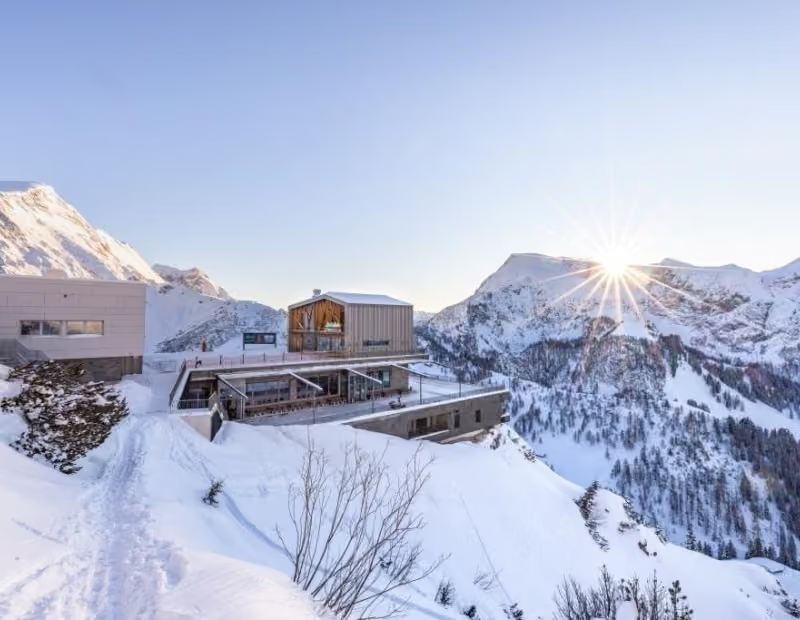
“The scenically beautiful summit area at the Riedlkopf was too built up, with three top stations. The bottom station was too far from the car park and the top station was not at the highest point. Our long-term aim was to manage in future with a maximum of two ropeways and still cover all functions,” explains Stephan Salzmann.
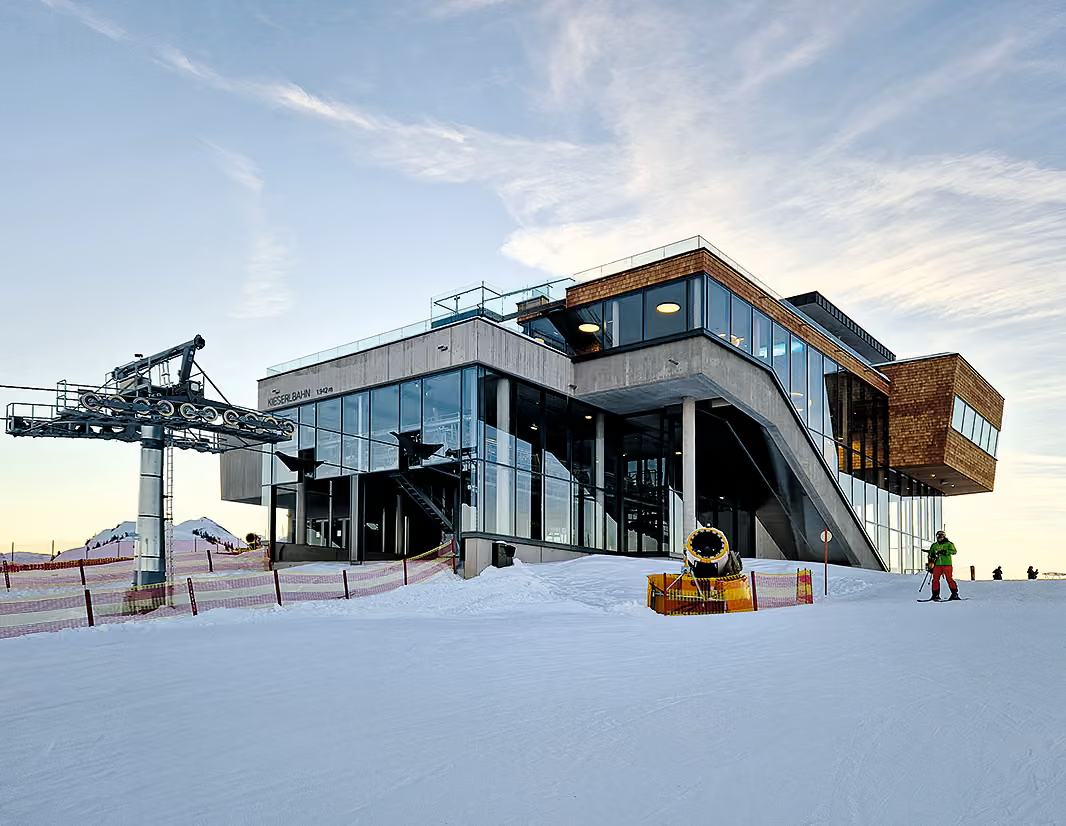
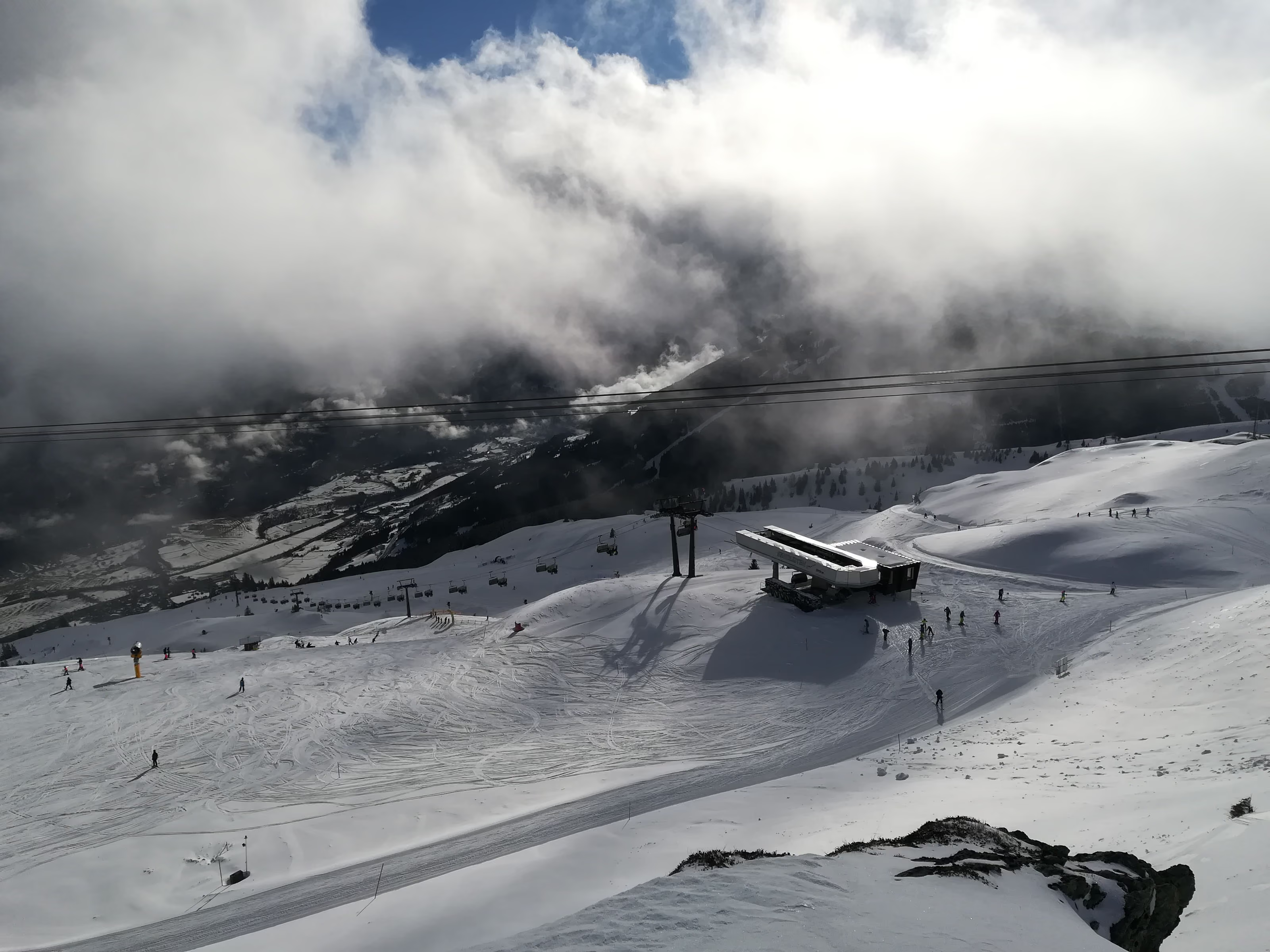
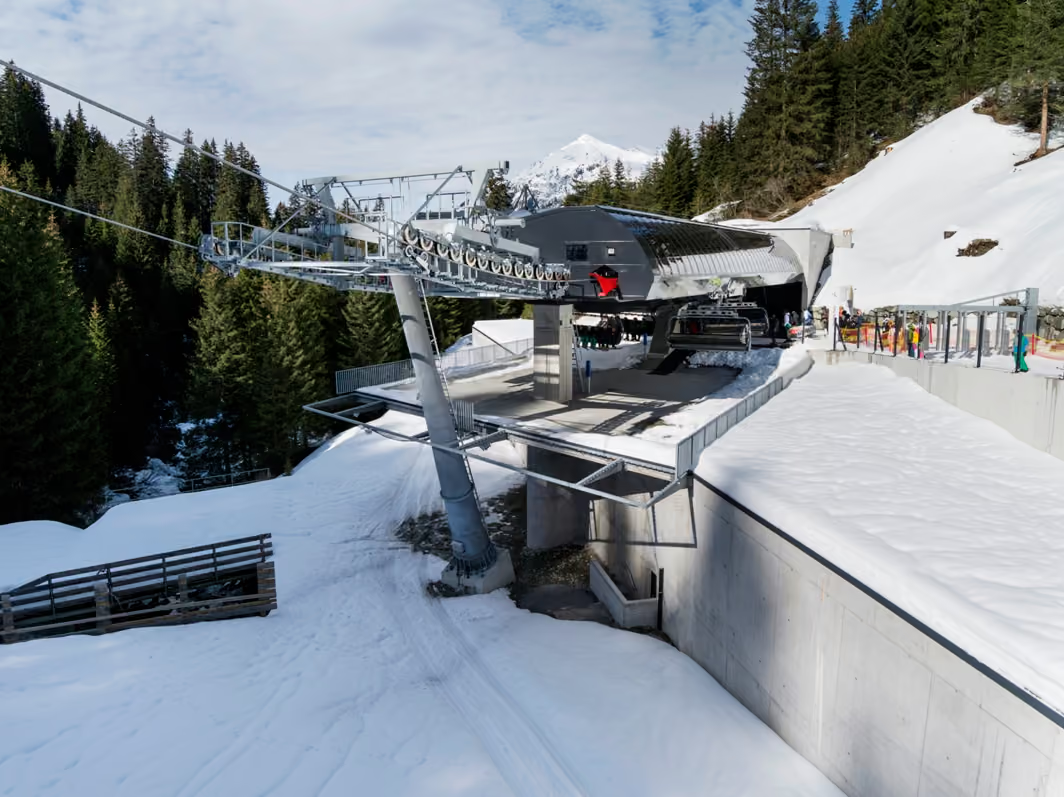
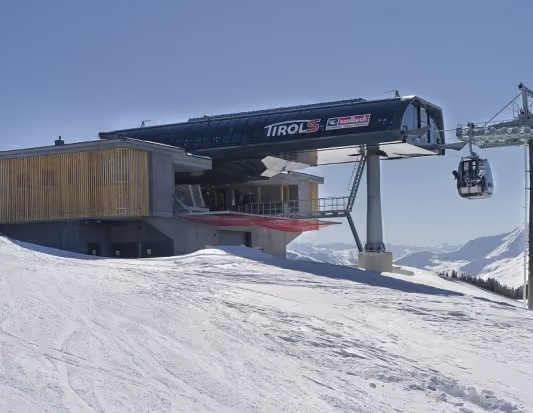
A modern gondola lift with a new alignment was to replace the fixed-grip double chairlift Riedlkar and the Riedlkopf surface lift. To this end the new bottom station was planned directly at the car park and the top station directly at the summit. Because of the new alignment, however, the concession for the planned lift had to be renegotiated, which proved to be a major challenge. “The Astauwinkel is farmland. Unfortunately we were unable to win over the landowners for the direct connection we had planned.” The Salzmann Ingenieure team made a virtue of necessity and designed the Donnerkogelbahn with an angled alignment and an intermediate station.
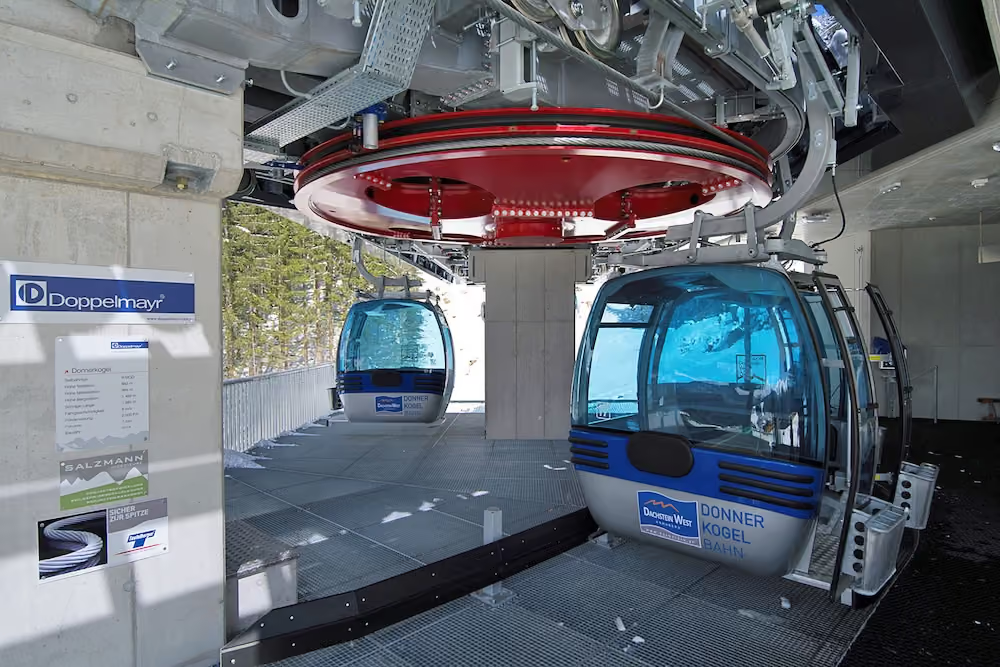
“Normally each of the two sections, or rope loops, would need its own drive – that is, two motors, two gearboxes and so on. The Donnerkogelbahn, however, has only one drive, in the bottom station. In the mid station the lower rope drives the upper rope loop via a double-grooved sheave. In ropeway engineering terms this solution is very interesting and nevertheless cost-effective,” explains Managing Director Stephan Salzmann.