6SB Schwamm Wissi-Stei
Salzmann Ingenieure realise their first complete project in Switzerland
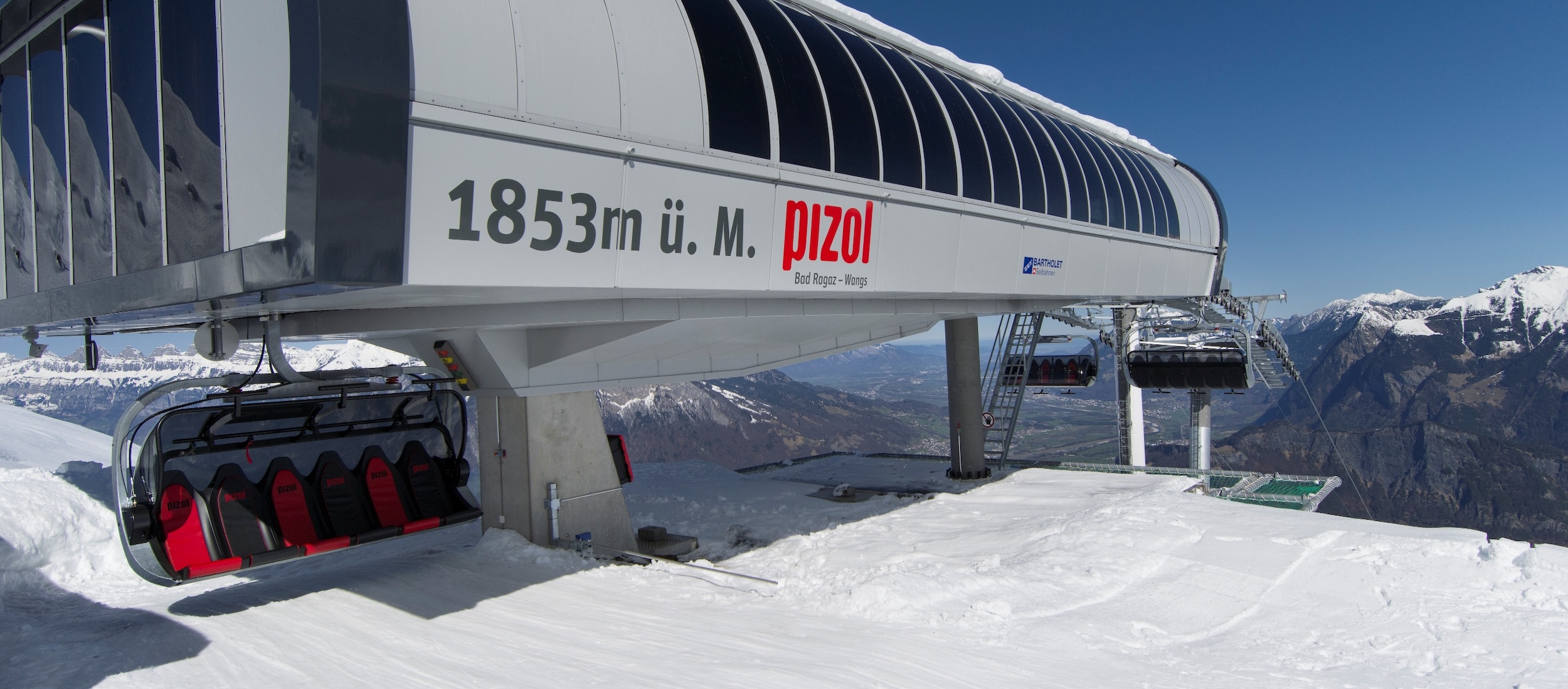
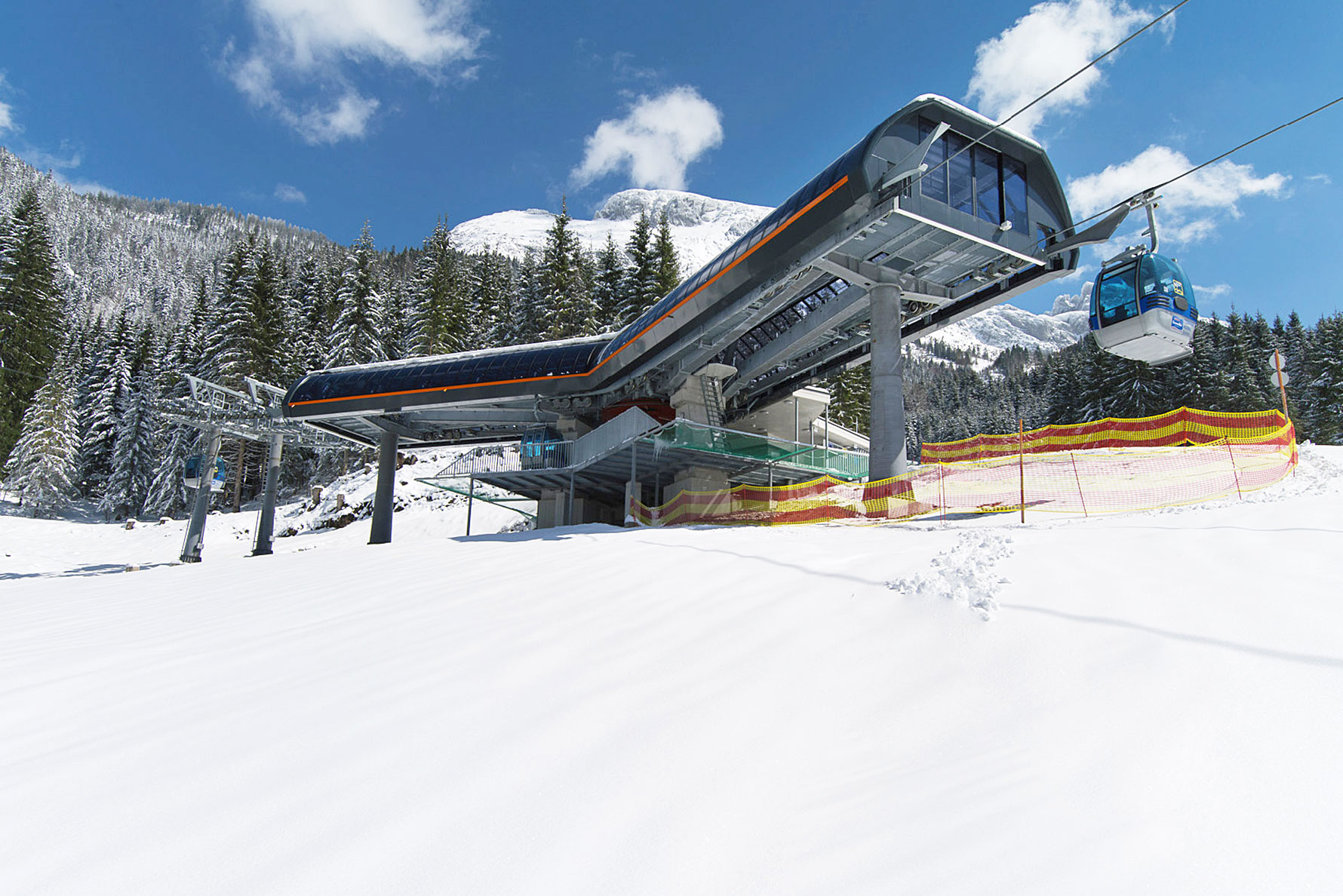
SALZMANN INGENIEURE REALISES THE NEW SCHWAMMBAHN ON THE PIZOL
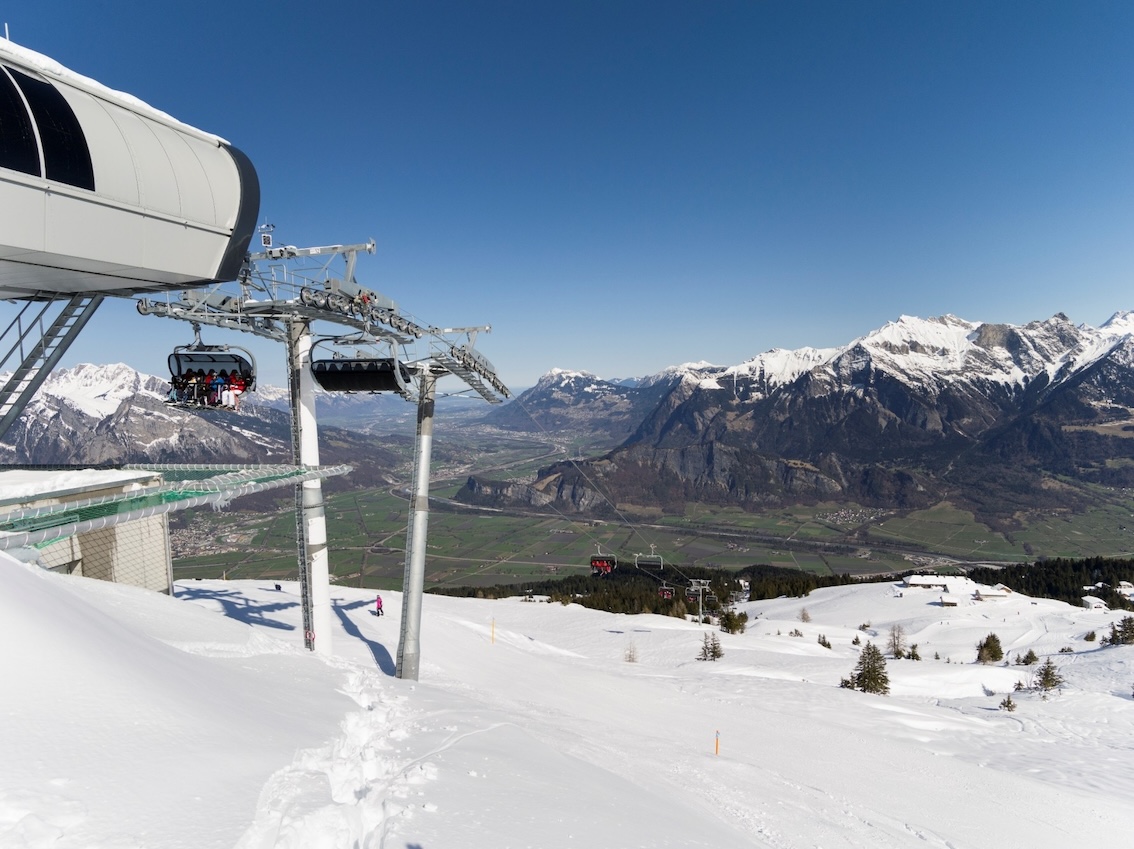
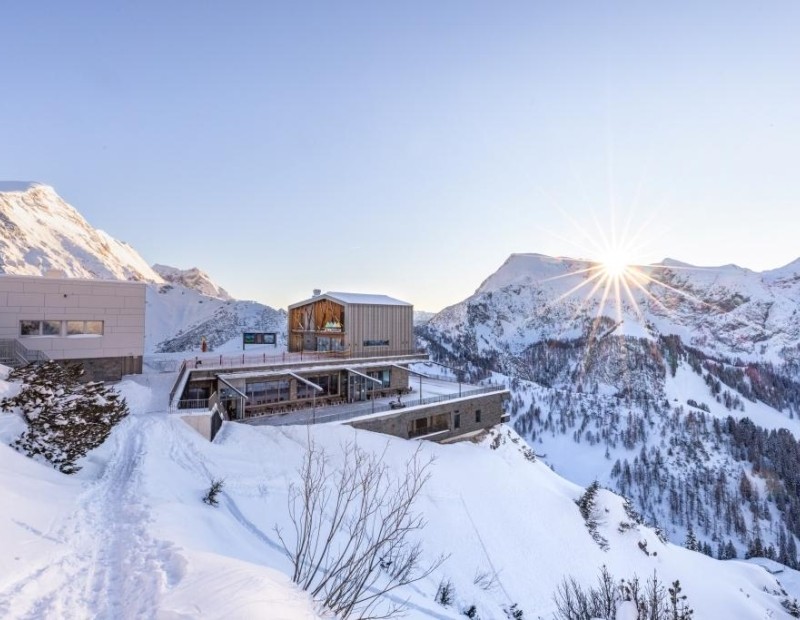
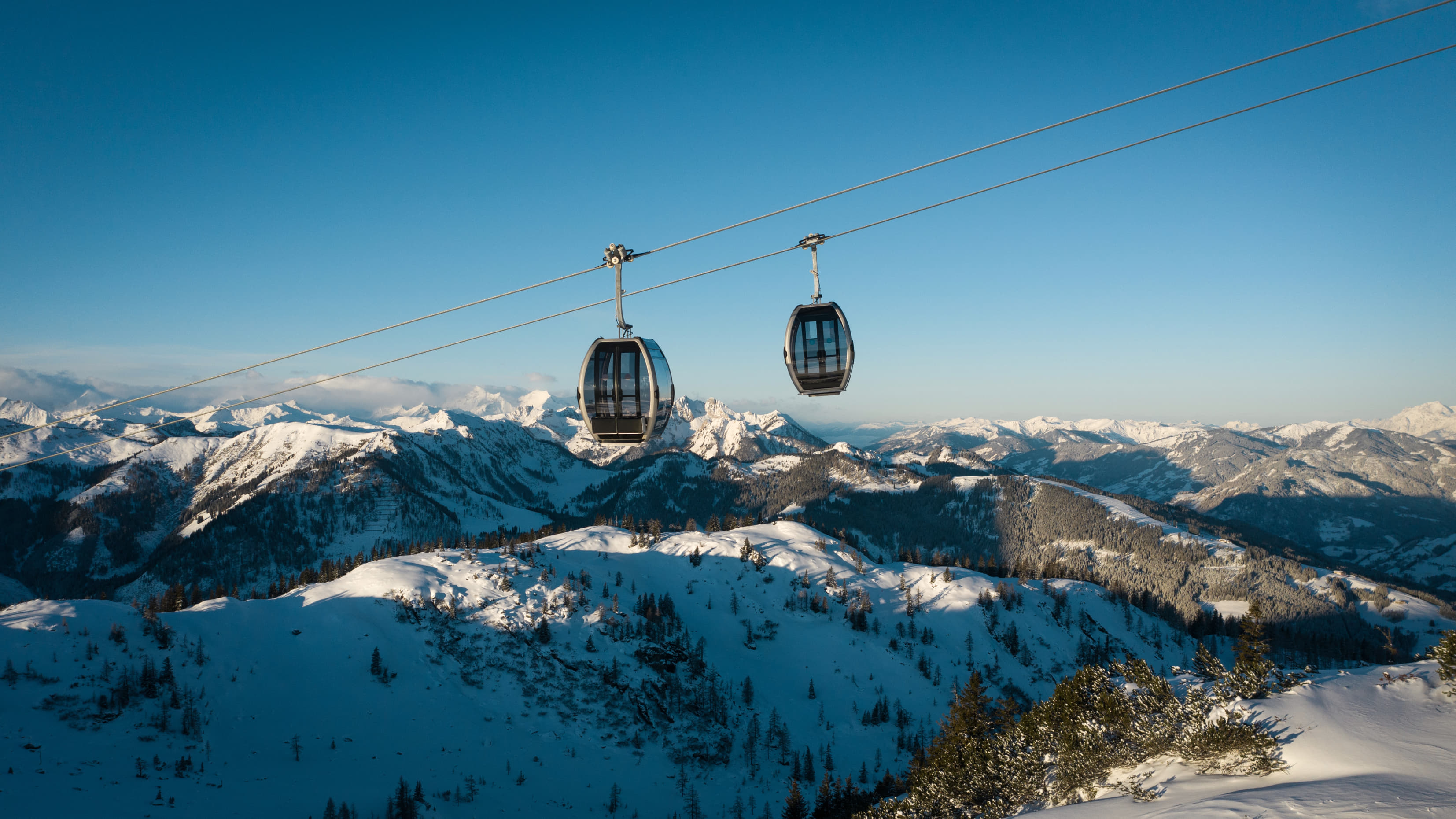
Between Bad Ragaz and Wangs the Pizol rises to 2,844 metres. Many describe the panoramic view over the mountains of eastern Switzerland and Vorarlberg as far as Lake Constance as unique. It is not without reason that the Pizol is regarded as the local mountain of the Sarganserland, and in summer it is a popular destination for hikers as well.
The Pizol area is ideally situated both geographically and in terms of transport. The journey from St. Gallen and from Zurich takes only about an hour in each case. The immediate proximity to the motorway junctions (A3 and A13) further favours day tourism. On the Bad Ragaz side, Salzmann Ingenieure designed and supervised the construction of the Schwamm-Wissi Stei chairlift, which opened in December 2016.
The initial situation
The first ropeways were built here as early as the mid-1950s. Over the past sixty years both the winter and the summer offering on the Pizol have become well established. Eleven installations operate in winter and five in summer. Pizolbahnen AG, however, had to face ever tougher competition. The task now is to modernise the partly outdated offering with foresight and to create competitive infrastructure. At the centre of these measures are not only guests’ increasing comfort expectations, but in particular also the economic, year-round operation of the ropeways.
In 2012 Pizolbahnen AG commissioned the planning office Salzmann Ingenieure to prepare a master plan for an overall review of the area and a concept for the Schwamm-Wissi Stei surface lift (hereinafter the “Schwammbahn”). “In Switzerland it is not usual to engage ropeway planners such as Stephan Salzmann. Nevertheless we decided to draw up a master plan for the winter development of the entire area and commissioned Salzmann Ingenieure to do so,” explains the Managing Director of Pizolbahnen, Klaus Nussbaumer. The planning office has its head office in Bregenz, Austria, and a branch in Widnau, Switzerland.
The analysis identified nine key themes for future development. Improving the bad-weather offering and thus stabilising revenues emerged as an important objective. This gave the new Schwammbahn top priority.
System type
6-seater chairlift, detachable
Drive
Top station
Tensioning
Bottom station
Capacity, initial/final stage
1,580/1,935 persons/h
Drive power, operation
507 kW
Number of carriers, initial/final stage
53/65
Number of towers
12
Total line length
1,705 m
Vertical rise
520 m
Construction period
May-November
A chairlift replaces the surface lift
The surface lift, built in 1967, had long ceased to meet the requirements of a modern lift installation. The T-bar lift was very long and ran through steep terrain. Even so, it secured skiing operations on the Bad Ragaz side in bad weather. The Pardiel-Laufböden chairlift, which runs above along the ridge, is very exposed to wind. In the preceding years the lift had therefore been wholly or at least partly out of service on an average of 15 winter days. For the fallback function expected of it, the Schwammbahn did not have the necessary capacity. Salzmann Ingenieure examined three location variants. Besides an optimum cost-benefit ratio, the experts also assessed in particular the wind exposure and the best possible connection to the pistes. The alignment and choice of location take account of the long-term development of the entire area: the new bottom station makes it possible to reactivate the former Jona piste. Any new lift in the See-Egg-Laufböden area would also be easily reachable from the top station. In addition, by using the new Schwammbahn guests can now conveniently reach the bottom station of the Pardiel-Laufböden chairlift. Before the new construction, skiers had to cover the difference in altitude on foot.

Managing Director Pizolbahnen AG
The best cost-benefit ratio
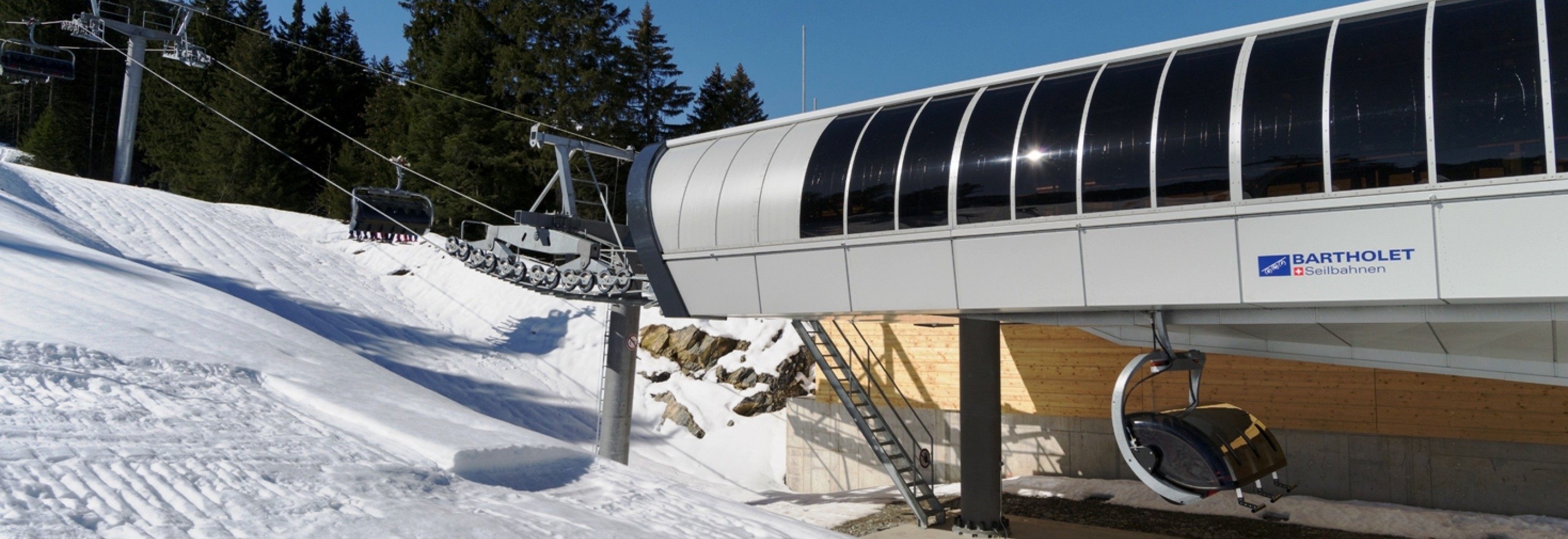
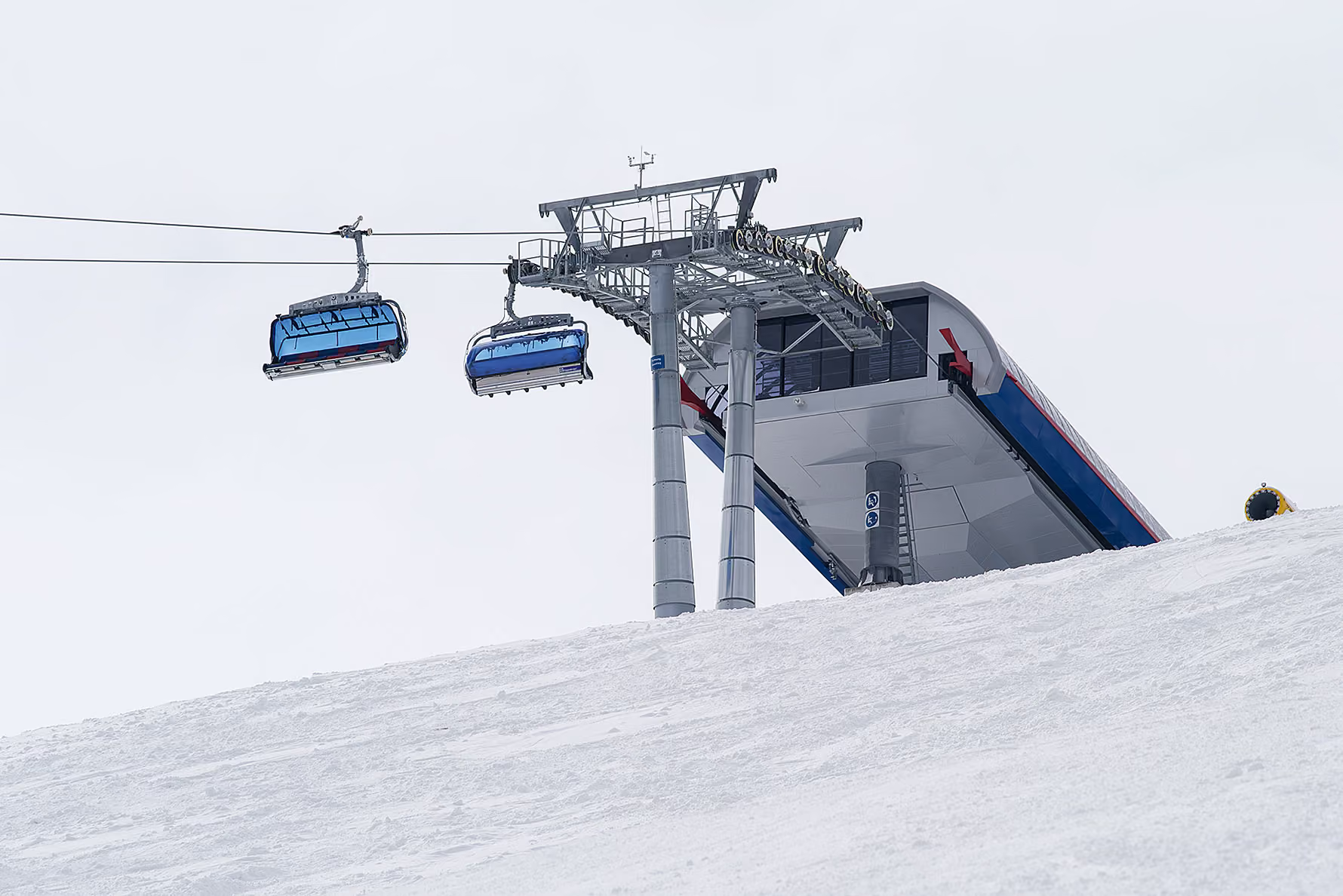
The ropeway is built as a detachable chairlift with 6-seater chairs. The chairs are stored in the valley. The contractor had originally envisaged storing the chairs in the station. For cost reasons, however, a structurally separate loop depot was finally chosen.
“The tight budget was to be adhered to at all costs,” explains Stephan Salzmann. “As an independent planning office we always look for suitable solutions – not only in structural terms, but also when it comes to affordability.” On the course of the two-stage permit procedure, Klaus Nussbaumer of Pizolbahnen adds: “Because public NRP funds were used (editor’s note: Neue Regionalpolitik = NRP, the Swiss New Regional Policy), all works had to be publicly tendered and evaluated. Salzmann dealt flexibly and competently with the requirements and imposed conditions of the Federal Office of Transport and the environmental authorities. His experience in ropeway design contributed substantially to our having a wonderful Bartholet lift standing on the Pizol.”
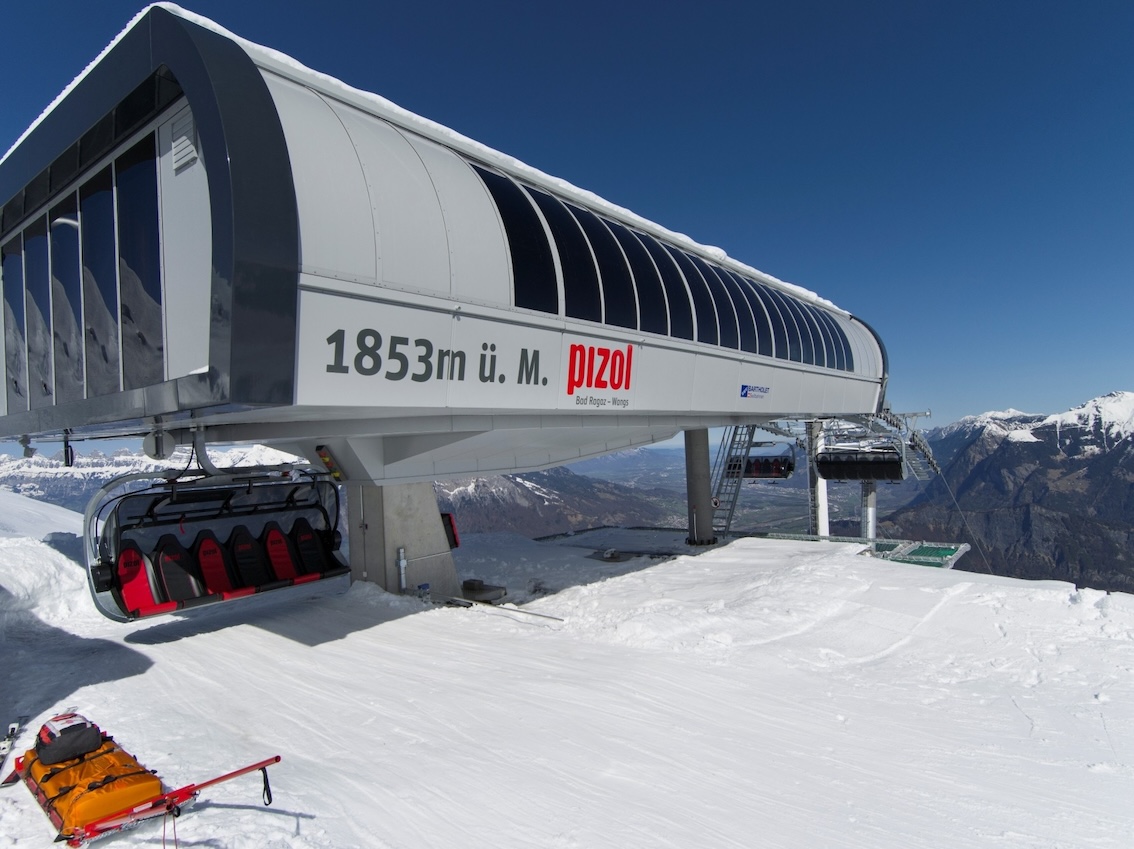
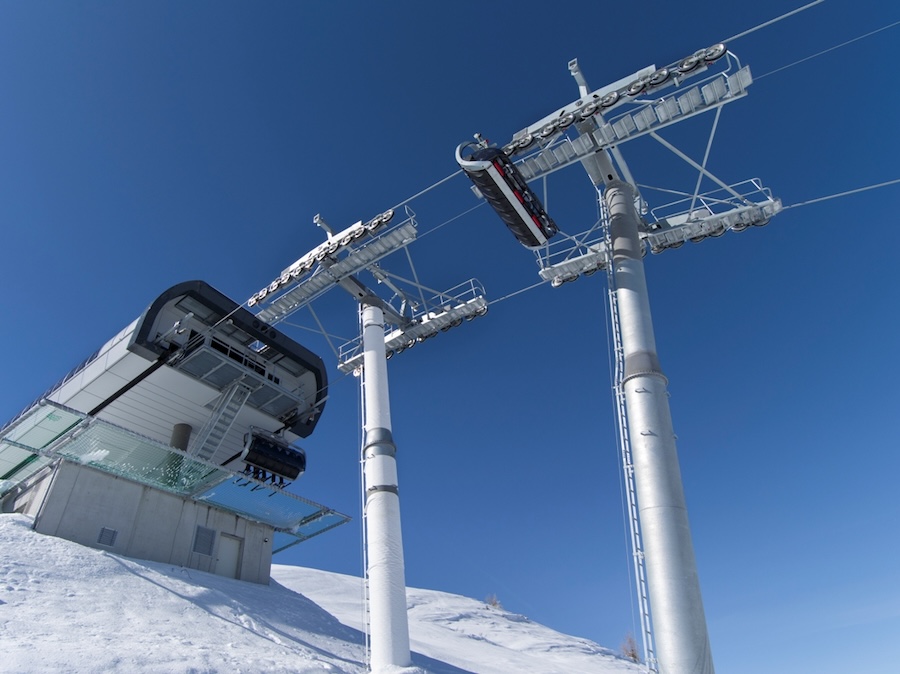
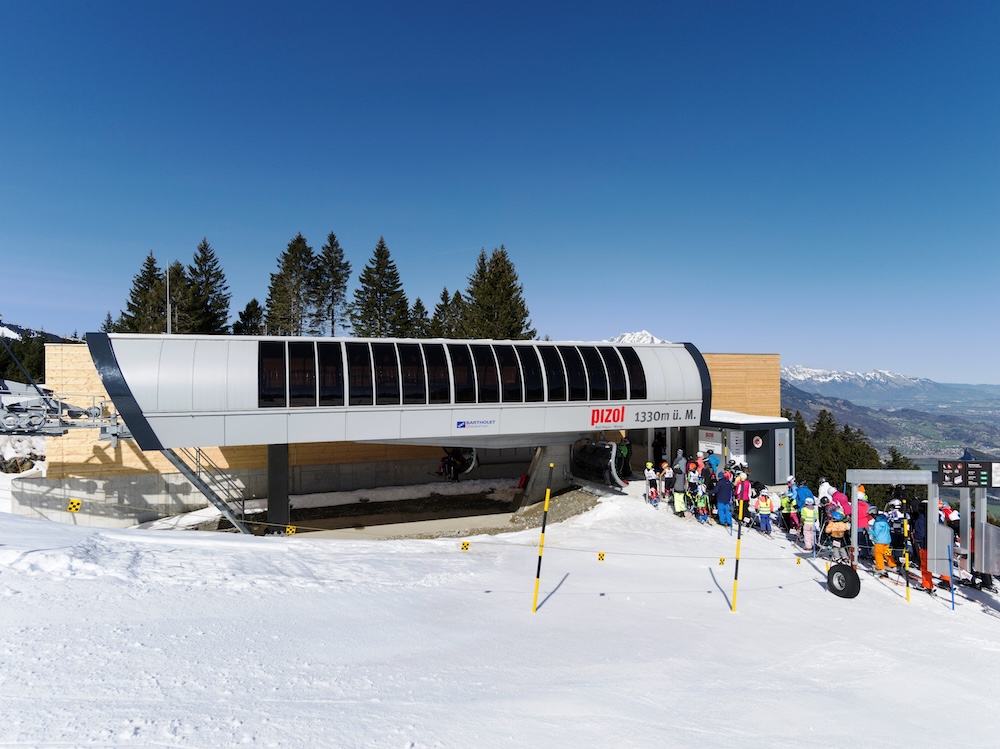
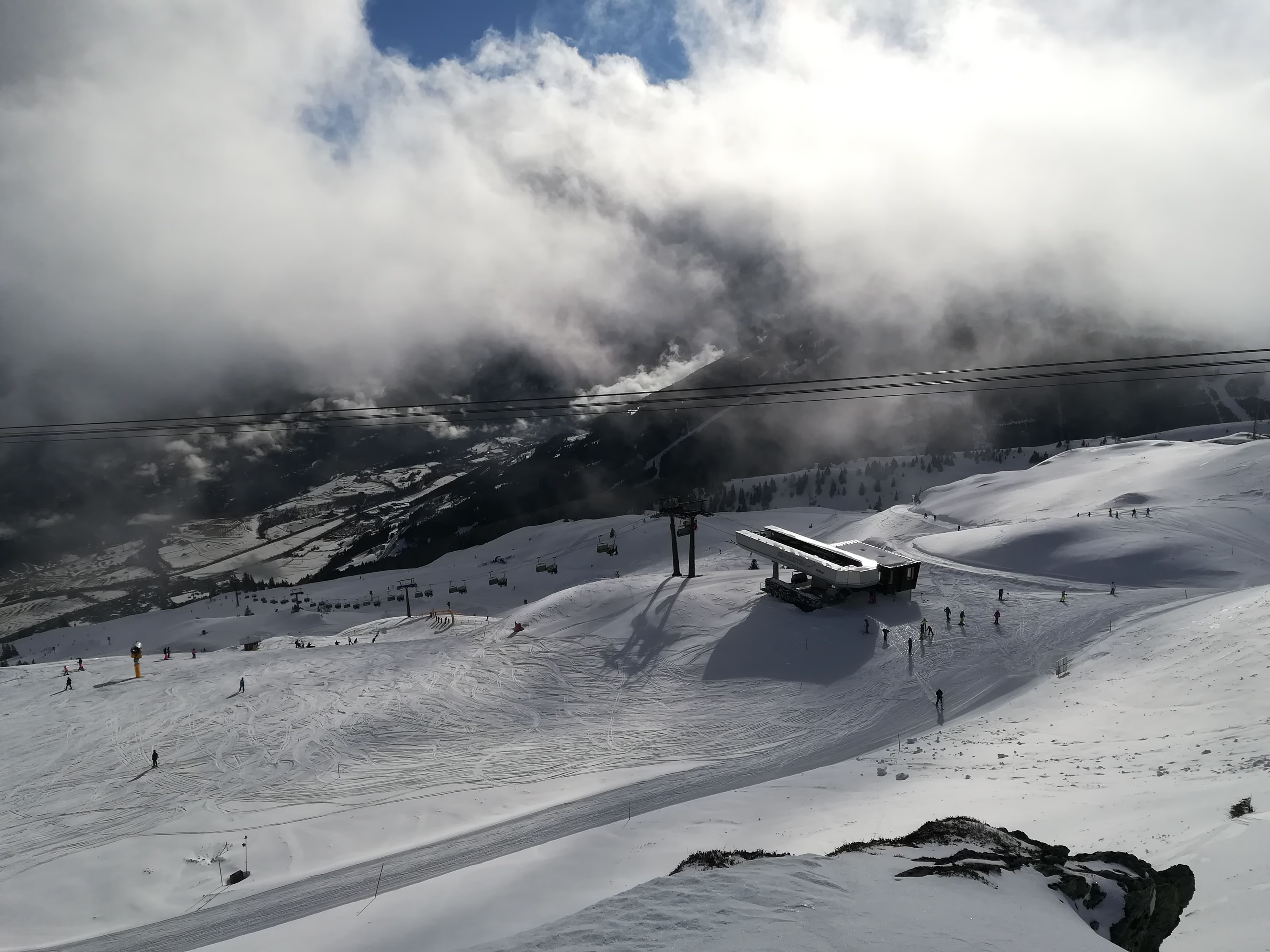
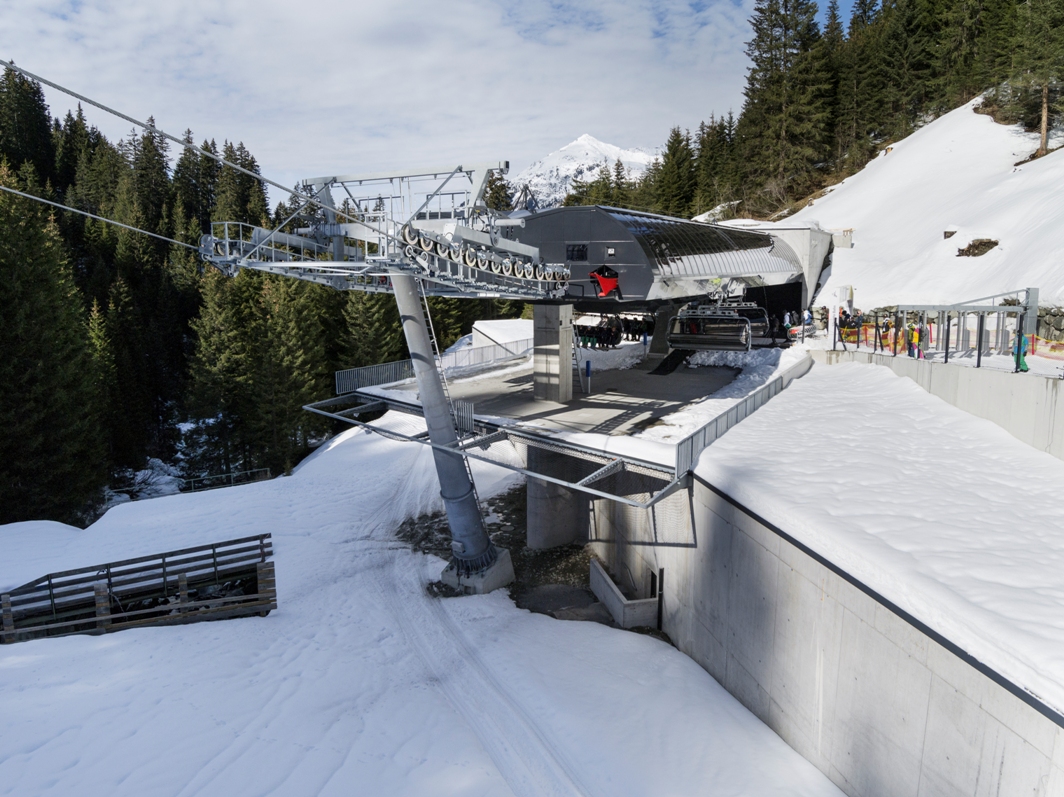
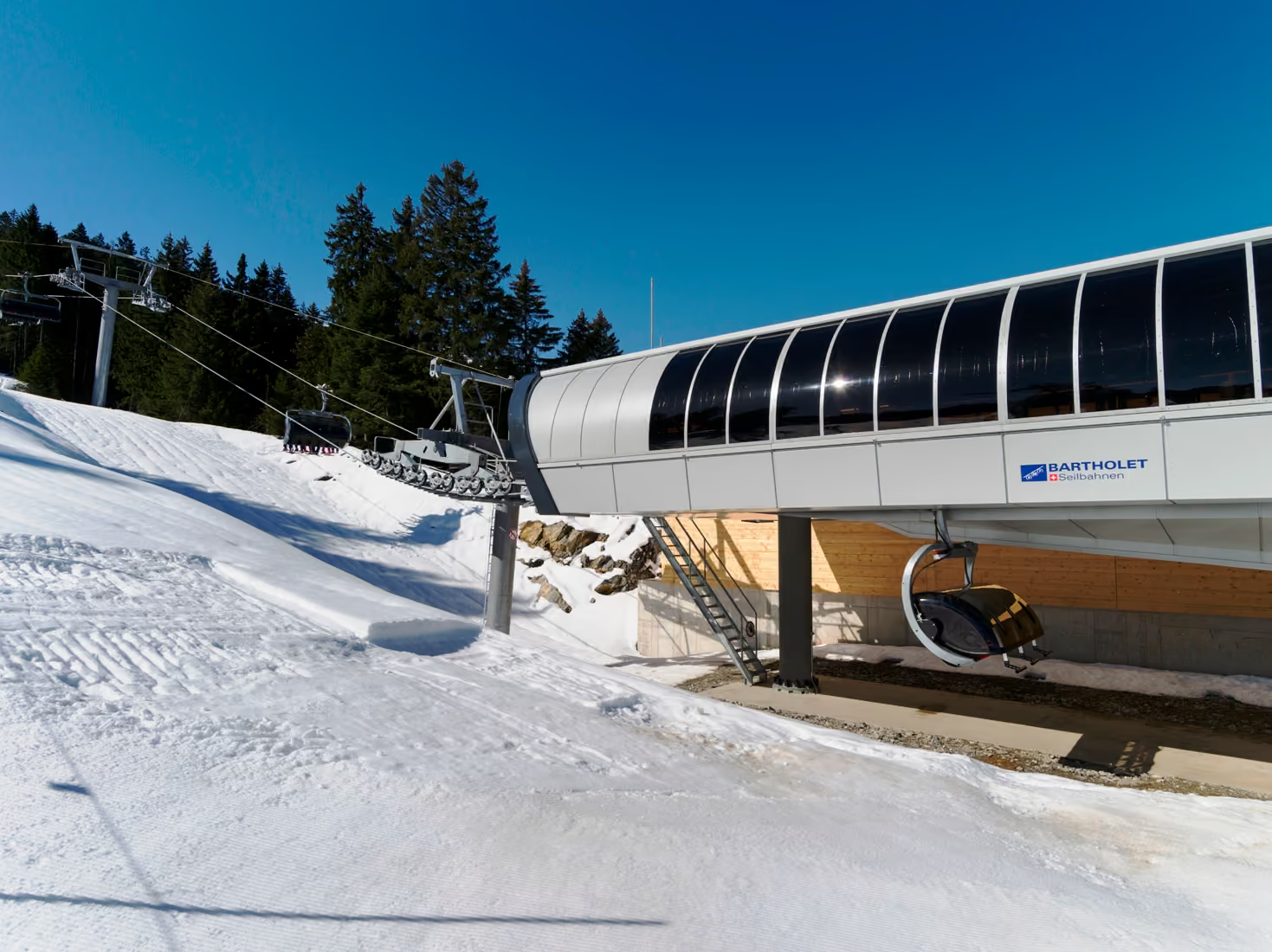
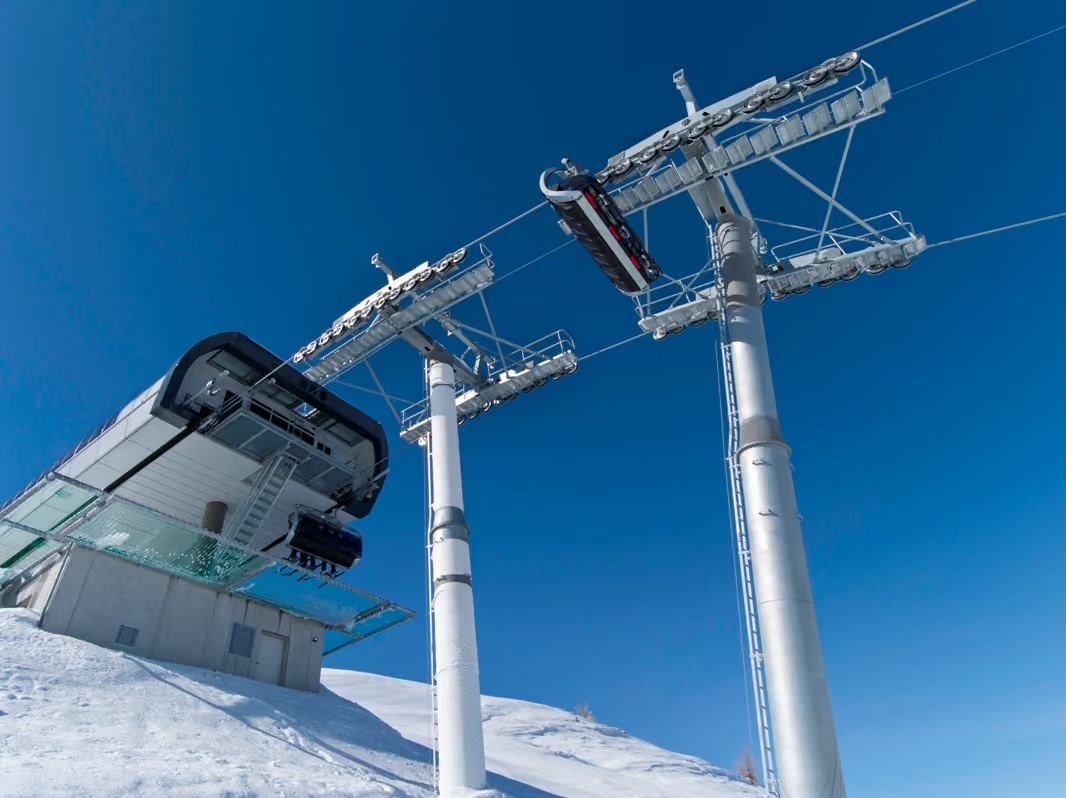
The drive of the chairlift is located in the top station and the return/tension station for the haul rope in the bottom station. Both the top and the bottom station consist of a station frame with the respective ropeway equipment required. The operating rooms were delivered ready-made as containers and placed on cast-in-situ concrete foundations.
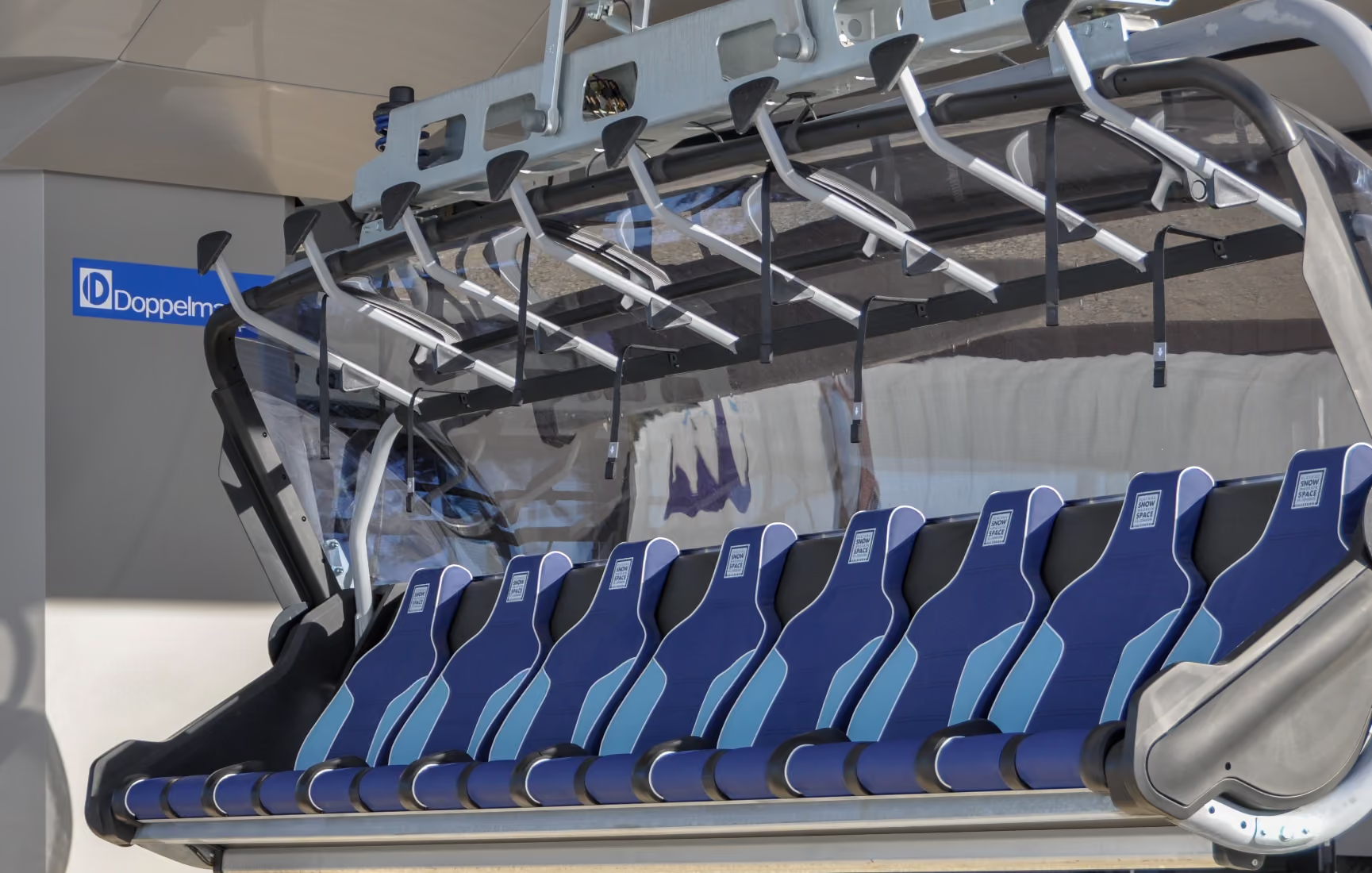
A public toilet is available to guests in the bottom station. Both stations are enclosed with standard cladding. The architects Filippi+Partner of Mels are responsible for the design. The 6-seater chairs are fitted with weather protection bubbles. The design of the chairs comes from Porsche Design.