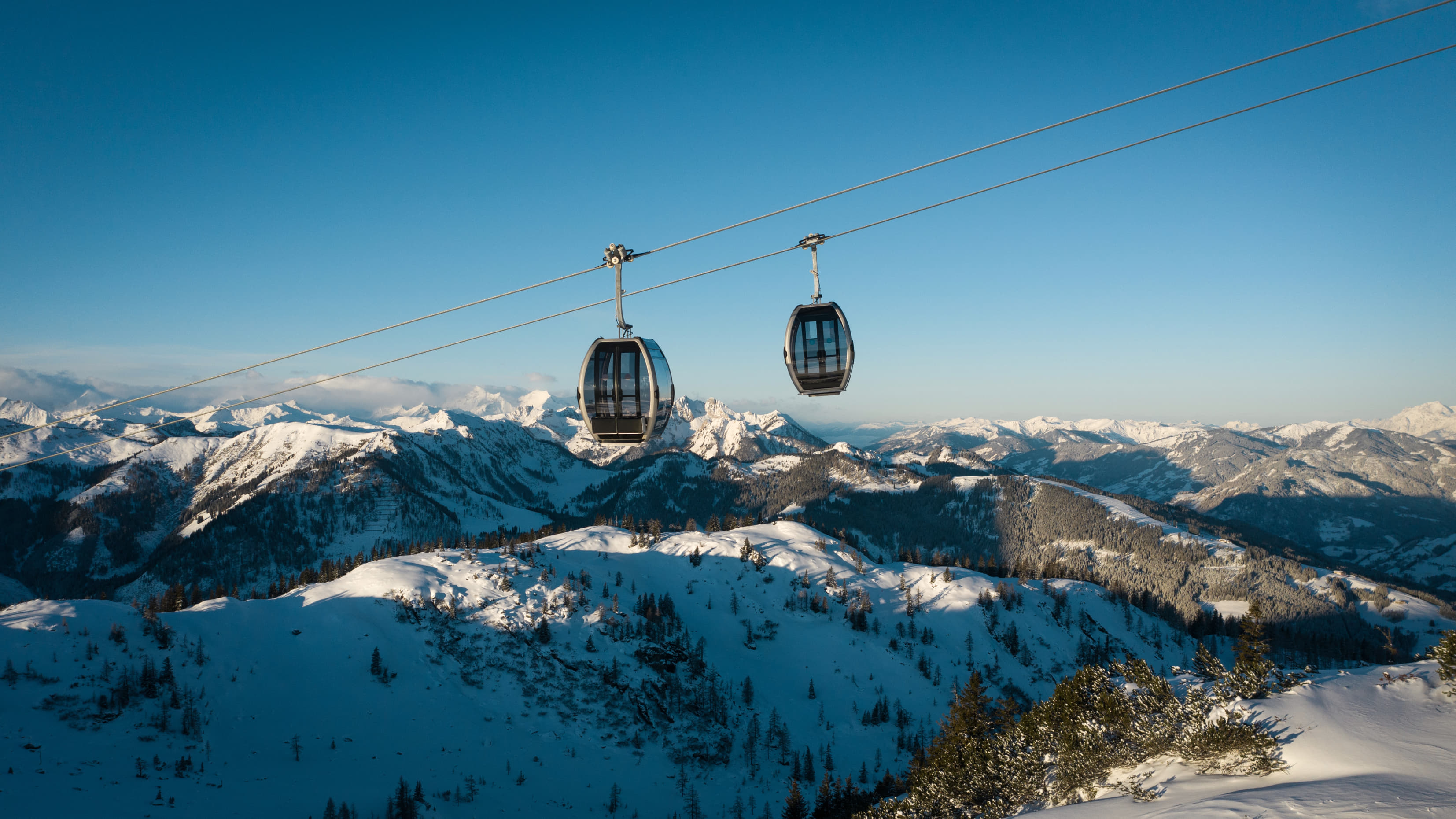
6SB Angeralm and Aussichtsberg
A duo at the Dachstein
A duo at the Dachstein
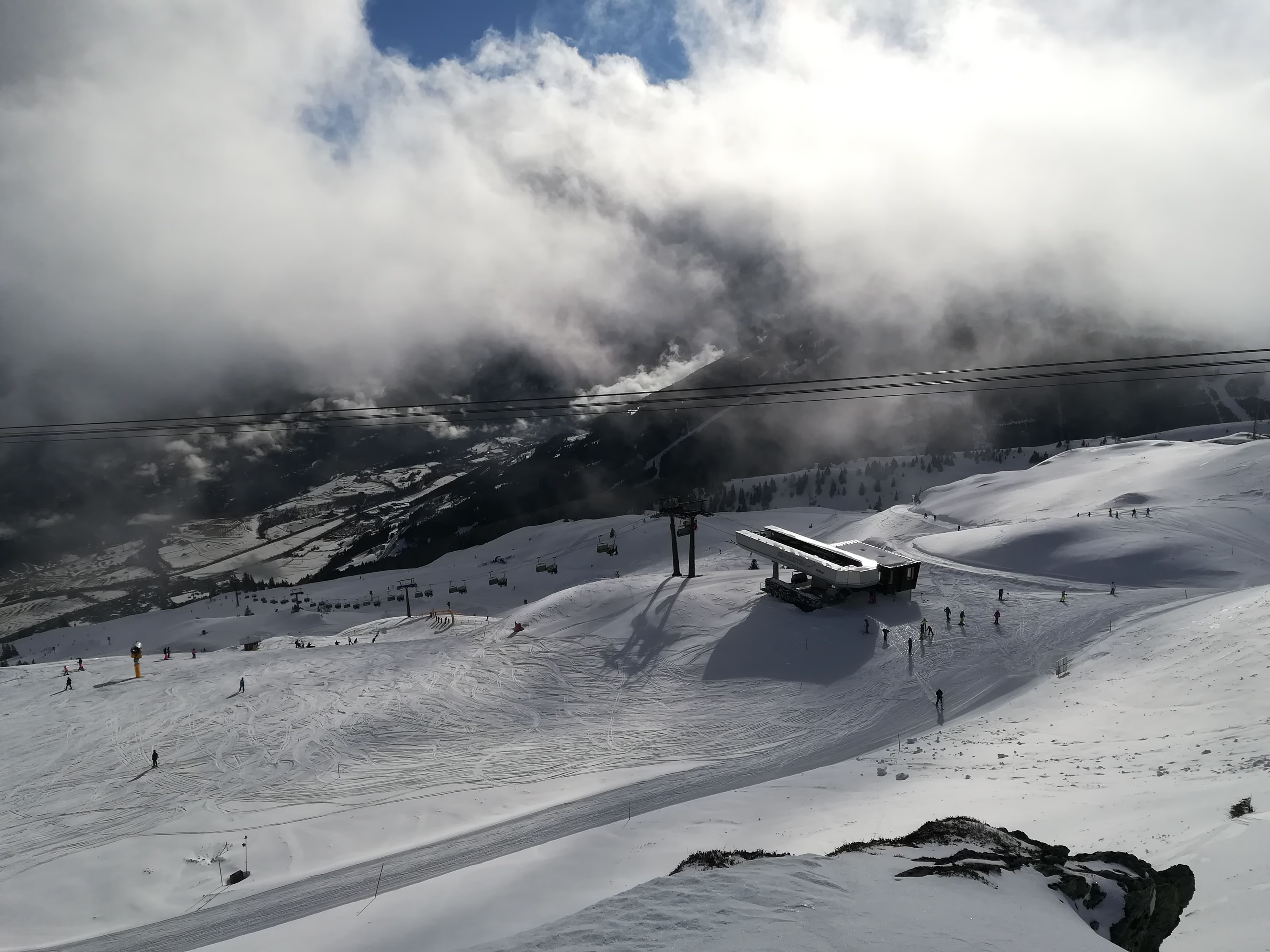
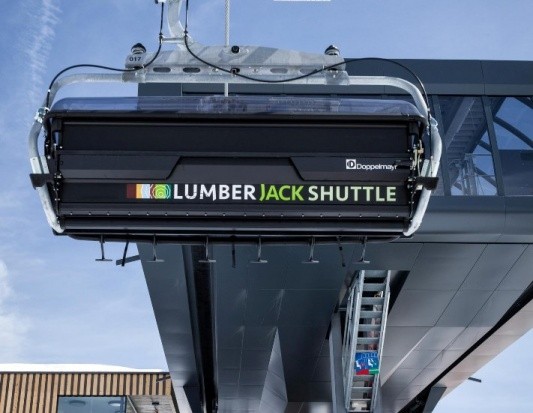
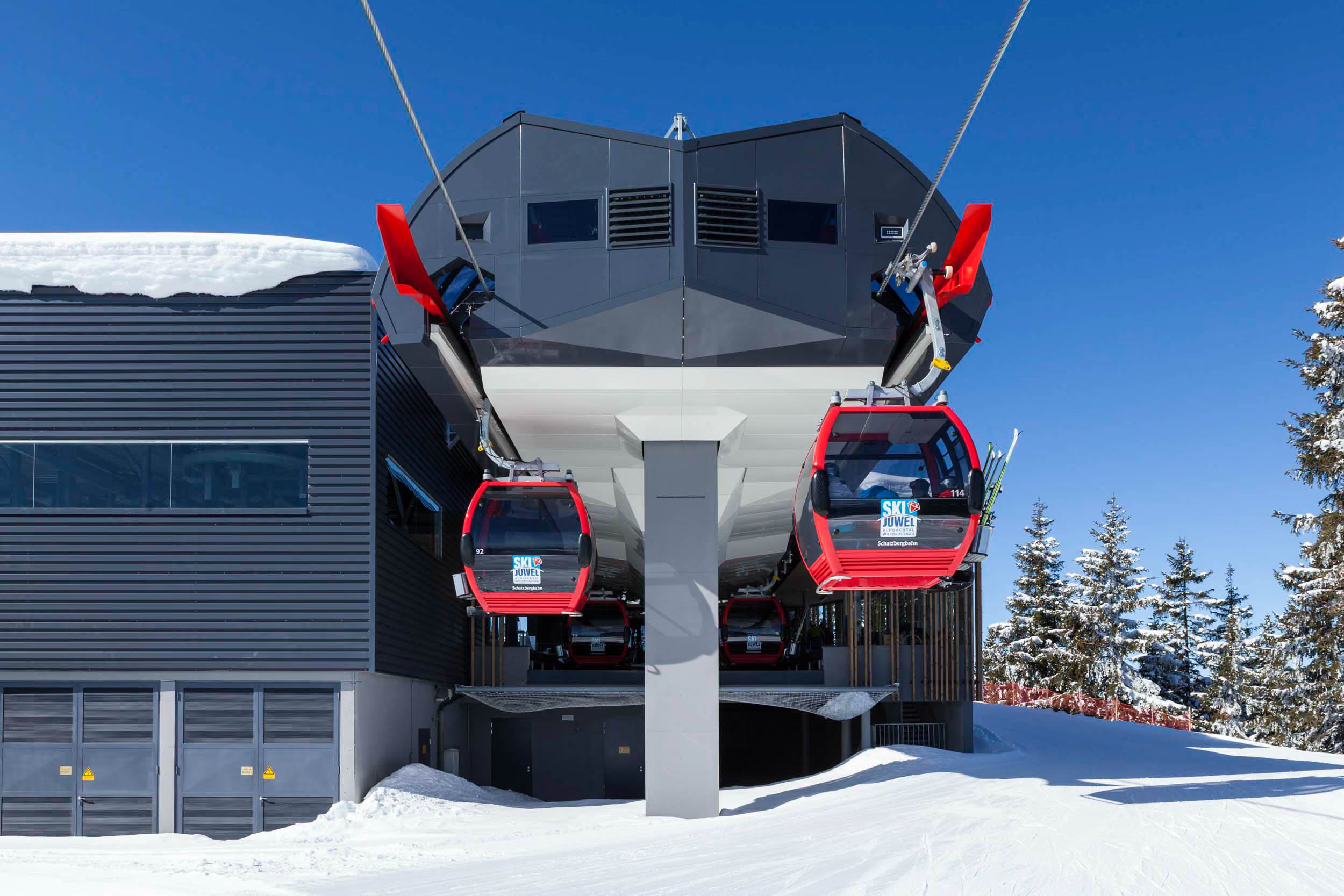
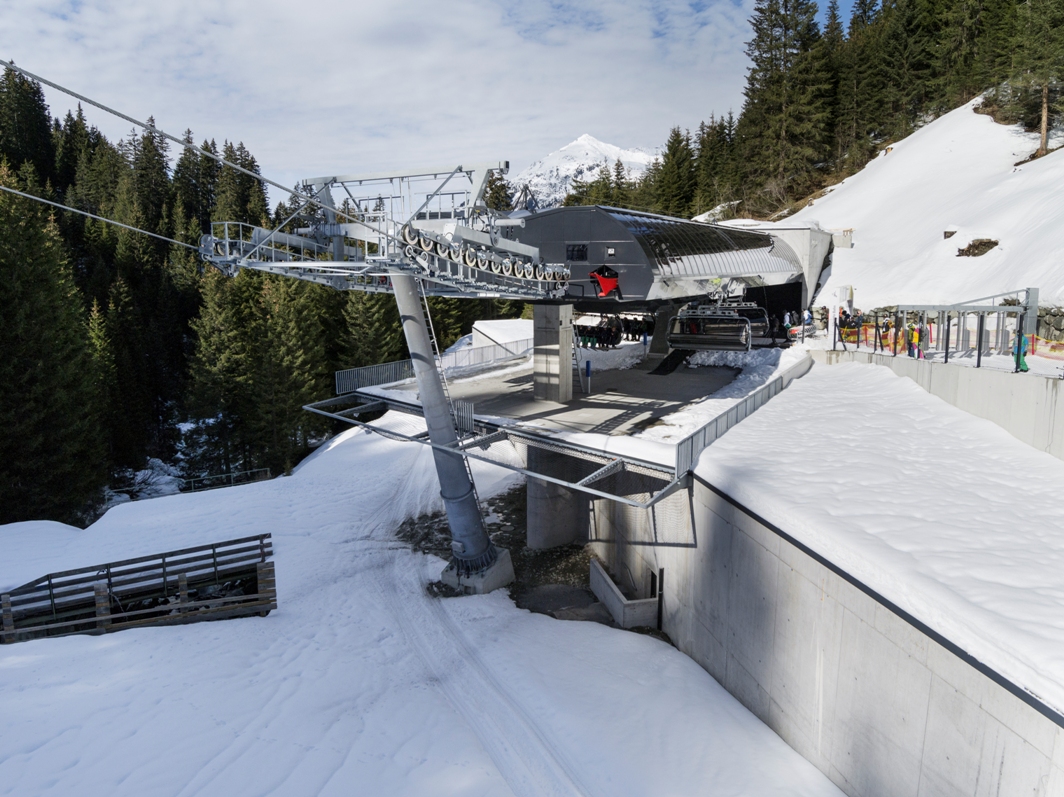
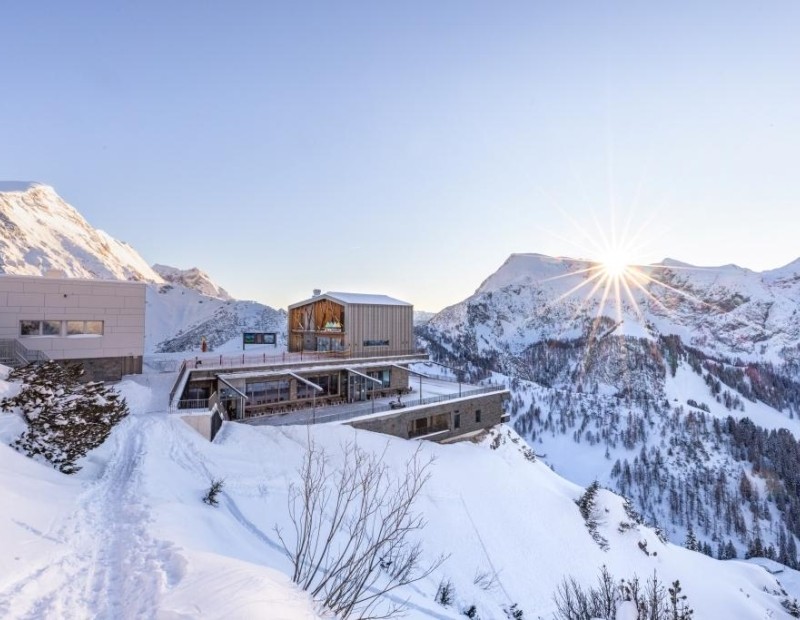
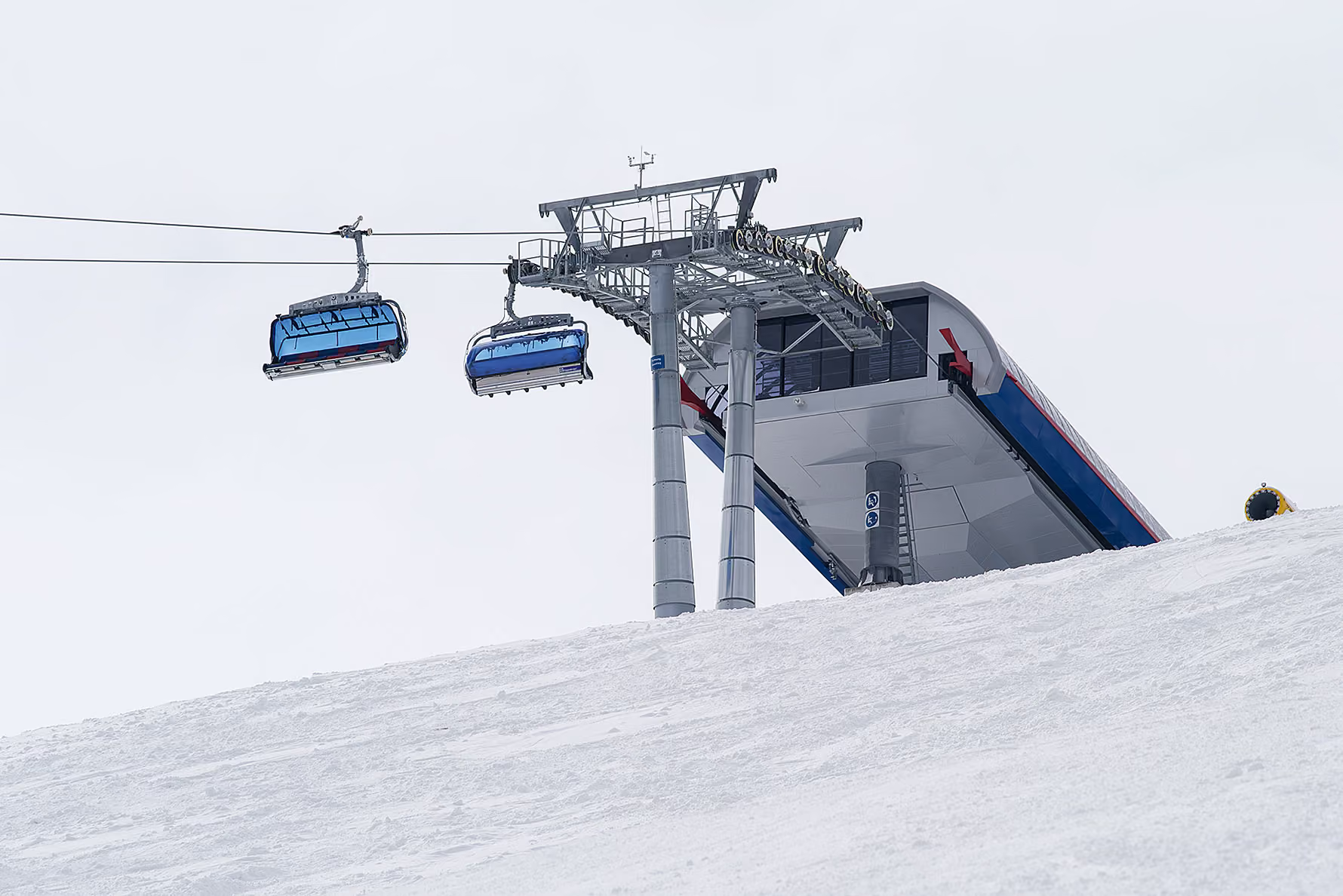
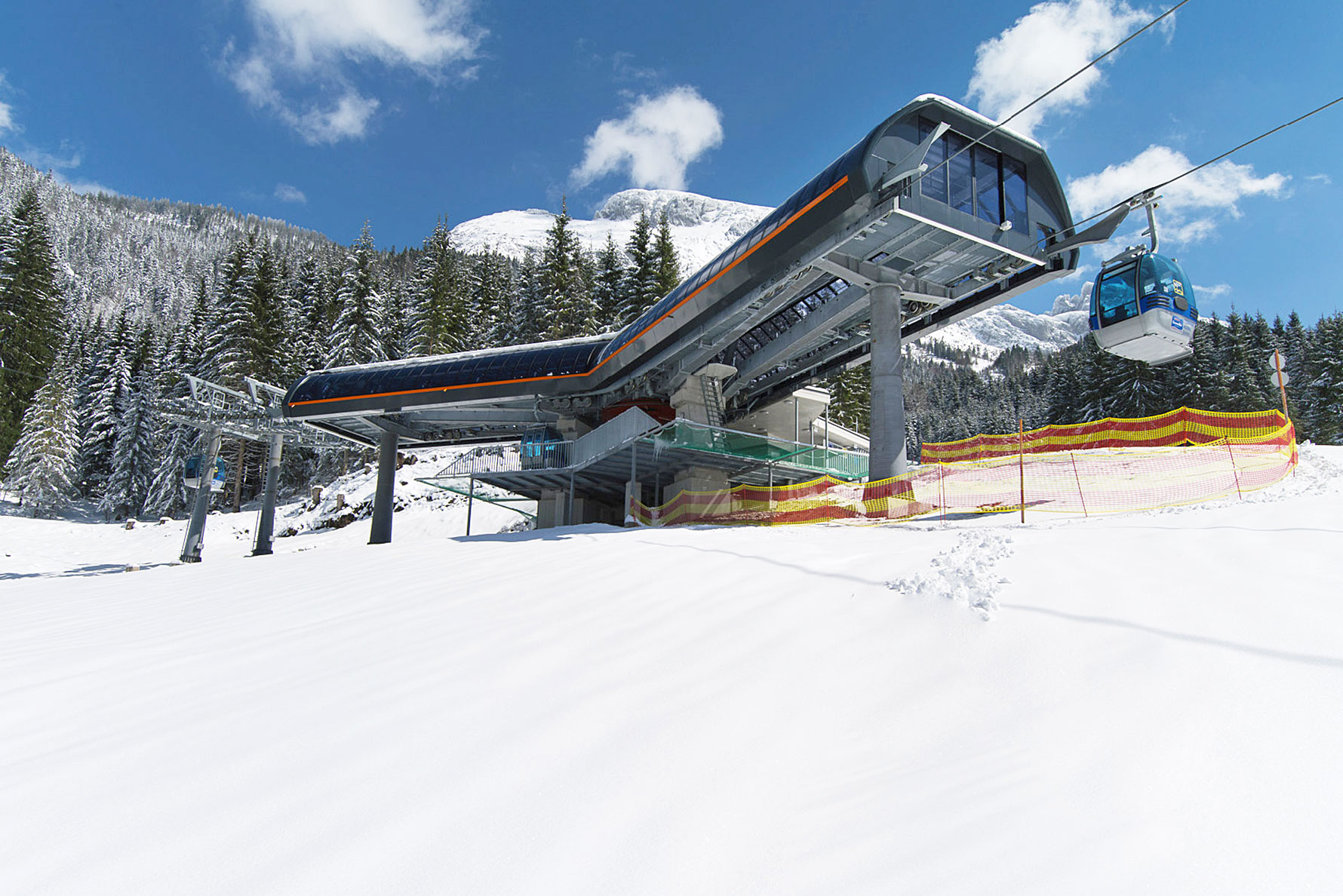
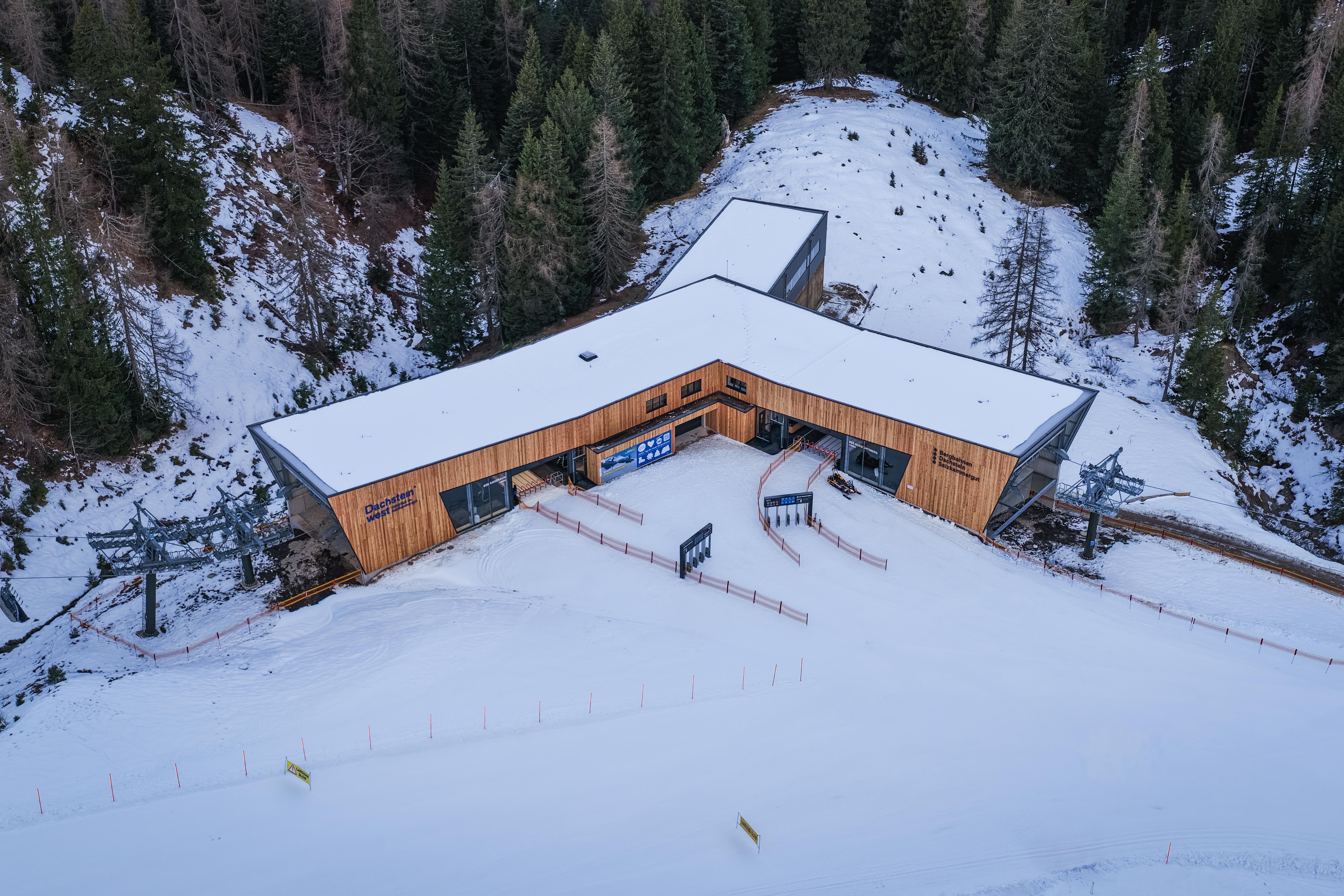
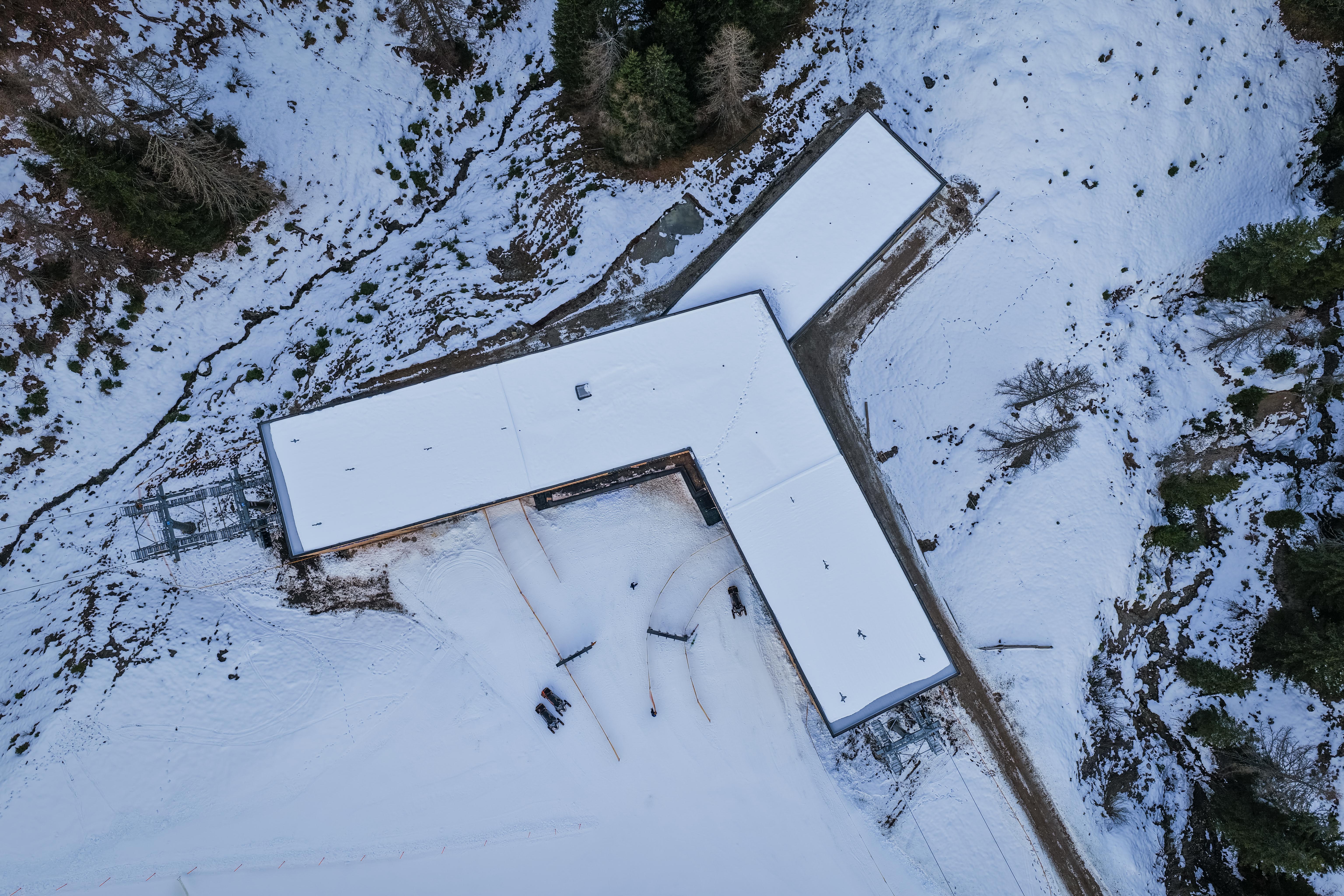
Anyone standing in front of the Y-shaped bottom station in the Teufelsgraben is spoilt for choice. On the left runs the detachable 6-person chairlift “Angeralm”, on the right the “Aussichtsberg” in the same design. Since December 2025 the two lifts with their shared bottom station have taken the link between the Annaberg, Russbach and Gosau ski areas to the next level. With this major investment, the Dachstein West ski area has opened a new chapter. The two modern installations replace a 4-person chairlift more than 30 years old and a surface lift.
With the dual solution devised by Salzmann Ingenieure, Dachstein West is making a statement both economically and ecologically. The combined building brings together the infrastructure and carrier storage of two installations. This saves space in the natural environment and simplifies maintenance. The “Angeralm” is even second-hand: as the former Jennerwiesenbahn it had already proved itself in Berchtesgaden. After ski operations there were discontinued, Salzmann Ingenieure moved the installation, built in 2017, to the Salzkammergut.
Starting point: ageing installations with an expiry date
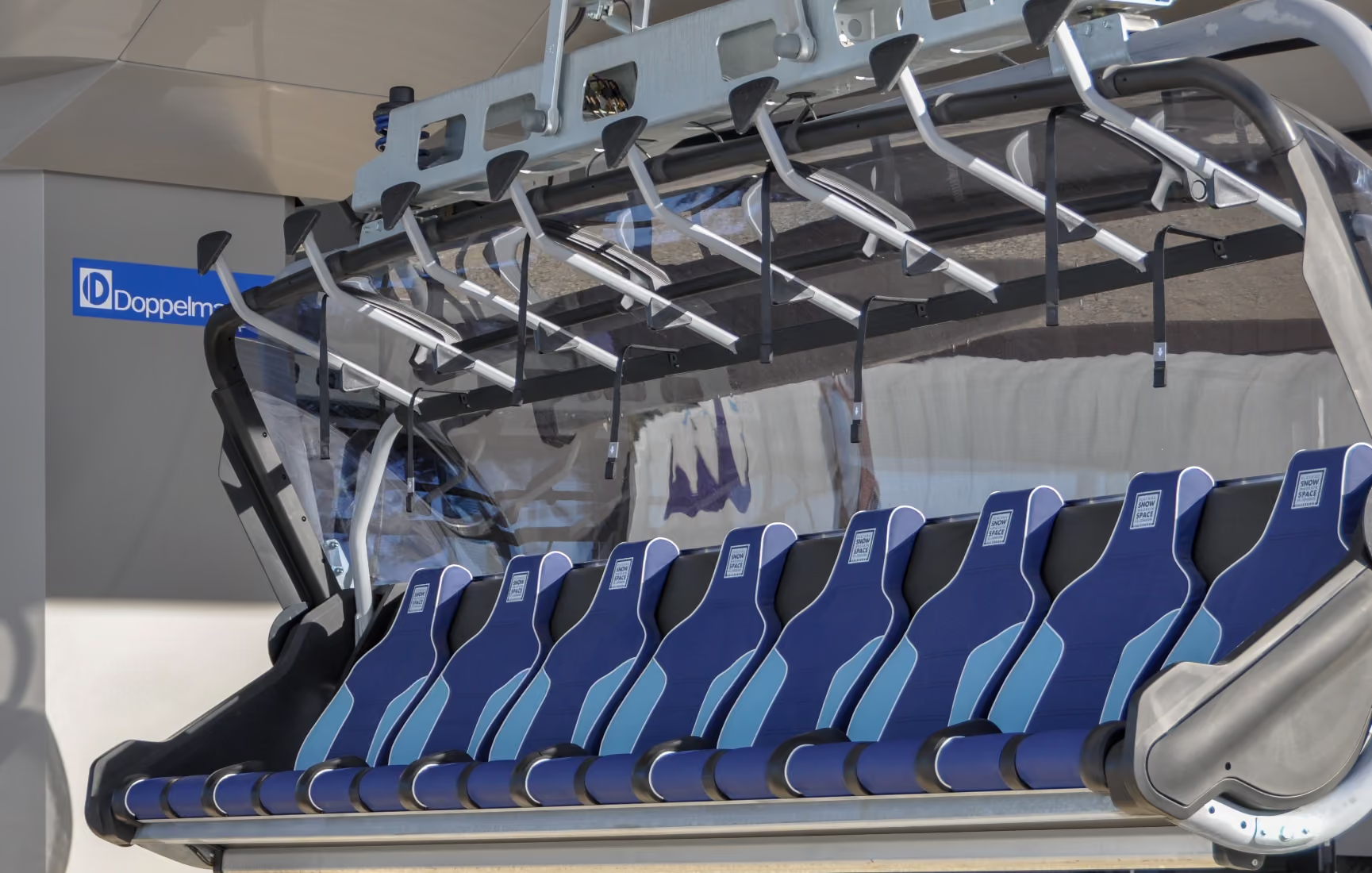
With views of the high-alpine panorama of the Dachstein, the Dachstein West ski area in the Salzkammergut offers a special experience. Winter guests move across 160 kilometres of pistes in two federal provinces. Since 1992 the route over the Zwieselalm has led from Annaberg in Salzburg across to Russbach and Gosau in Upper Austria. For a long time the only way to make the crossing was the steep surface lift – a hurdle for many ski guests. The fixed-grip 4-person chairlift “Aussichtsberg” was also technically no longer up to date. A general overhaul would have been due in 2030. To remain attractive as a ski area, Dachstein West opted for a comprehensive renewal. Modern chairlifts with weather protection bubbles, seat heating and a conveyor belt were to increase safety, raise quality and offer visitors a comfortable ride into the mountains. As general planner, Salzmann Ingenieure contributed not only know-how but also a financially advantageous idea.
System type
6-person chairlift
Lengths
615 metres (Angeralm) and 982 metres (Aussichtsberg)
Vertical rise
144 metres (Angeralm) and 257 metres (Aussichtsberg)
Capacity
2,221 (Angeralm) and 2,400 persons/h (Aussichtsberg)
Max. line speed
5 m/s
Number of carriers
30 (Angeralm) and 48 (Aussichtsberg)
Ropeway technology supplier
LEITNER

Solution: a Y-station and reuse
Since December 2025, the two detachable 6-person chairlifts “Angeralm” and “Aussichtsberg” have taken ski guests up to the starting point or over to the other side faster, more safely and in real comfort. The lifts move 2,221 and 2,400 persons per hour respectively. The new combined bottom station in the Teufelsgraben makes this possible with its distinctive Y shape. It unites technical and public areas in a single building. “It cannot be done more efficiently. We brought two technically identical ropeways in immediate proximity under one roof. That saves operating costs in the long term,” emphasises Managing Director Stephan Salzmann.
The two chairlifts share a technical centre, an inspection platform and carrier storage as well as a store and workshop. There is also a garage for piste machinery. This concentrates the staff in one place and minimises the built footprint on the terrain. The two top stations are designed to save space as well. “The building volume is as small as possible,” reports Salzmann.
The ropeway itself has also been delivered as sparingly in terms of resources as possible. For the “Angeralm”, Salzmann Ingenieure brought the former Jennerwiesenbahn from Berchtesgaden into play. The LEITNER installation had only been built in 2017 and was available at low cost after winter operations there ceased. As its planner at the time, Salzmann Ingenieure had the best contacts. But the technical details also have to match for a relocation like this. As chance would have it, the vertical rise and the rope length matched almost to the metre. “The project is the best example of successful reuse and of careful handling of resources – technically, financially and ecologically,” Stephan Salzmann is convinced.
Board member of Dachstein Tourismus AG and Managing Director of OÖ Seilbahnholding GmbH
Delivery: on time despite resistance
Although the new bottom station promised many advantages and took up less space than two separate buildings, the environmental ombudsman's office initially opposed the location. “They would even have accepted more piste area and thus a greater impact on the natural landscape. Our aim is always to keep the intervention in the landscape as sensitive as possible. This time we had to do a great deal of persuading,” recounts Salzmann. It did not, of course, go ahead entirely without imposed conditions. After amphibians had been relocated, work began in June 2025 with a delay of several months.
From July to August the station foundations were built. In parallel, the old buildings and towers were dismantled. The former Jennerwiesenbahn was flown by helicopter from Schönau am Königssee in Bavaria to Annaberg. By September all the new towers and the stations were standing. During the works there were also several adaptations on the slope. Rope and chairs were ready for the first test runs in October. Despite the delayed start, the two ropeways were already carrying ski guests to the summits in December 2025.
“The modern design and the well-thought-out infrastructure enable efficient maintenance and smooth operation of the installations. The entire construction concept is designed to optimise ski operations in the long term and to secure their use sustainably.” – Stephan Salzmann, Managing Director of Salzmann Ingenieure