10EUB Mellaubahn
Planning expertise in the second generation
Planning expertise in the second generation
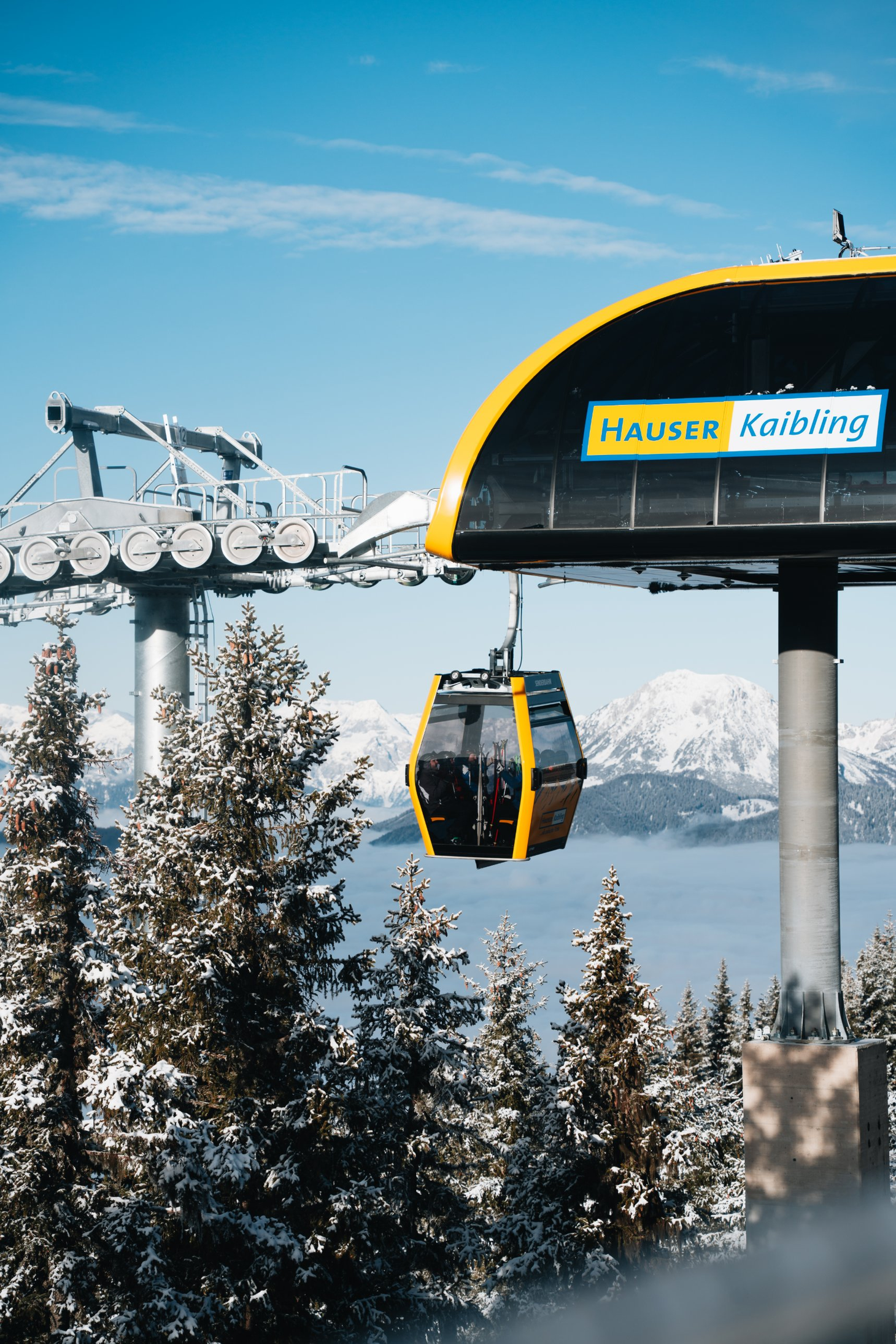
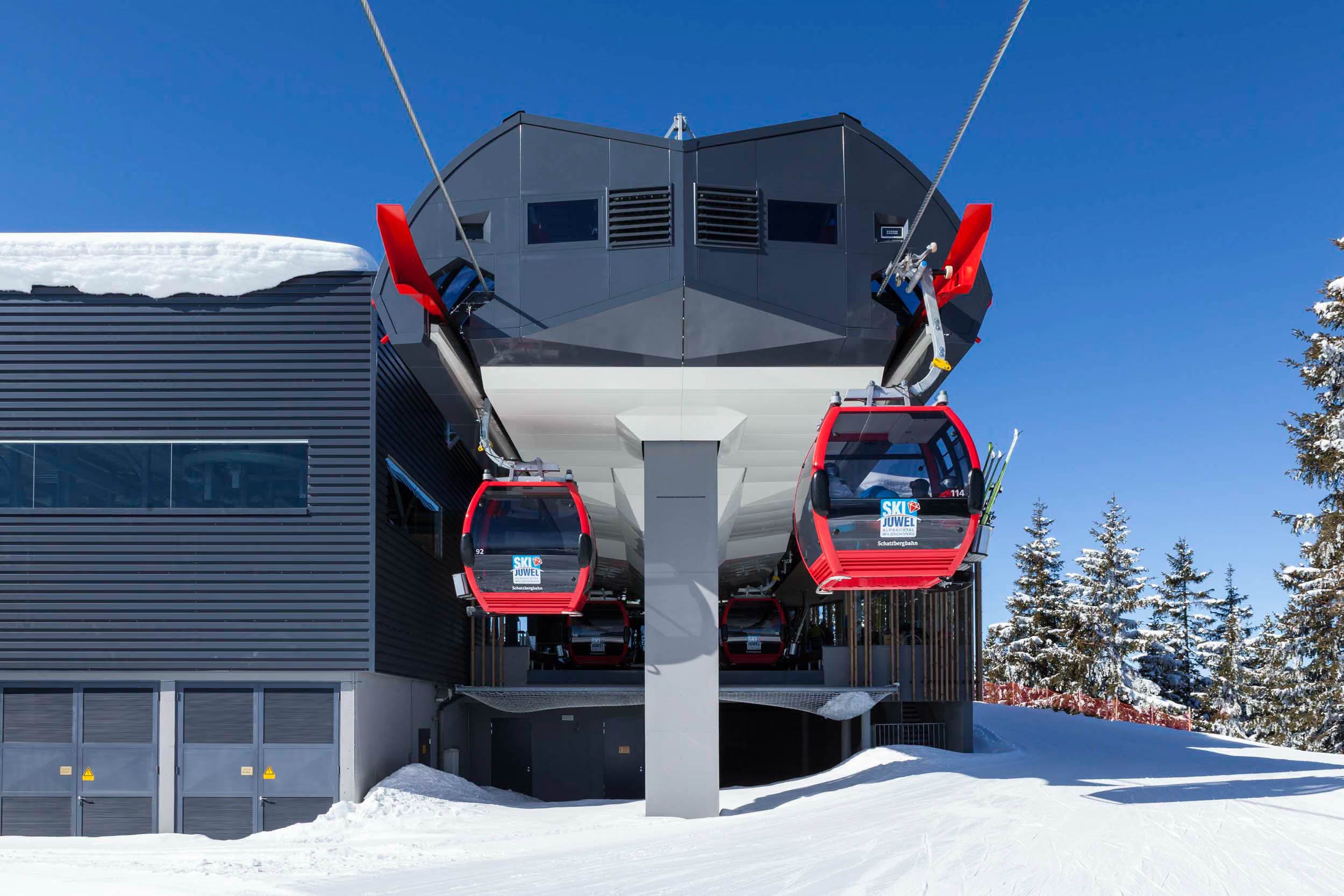
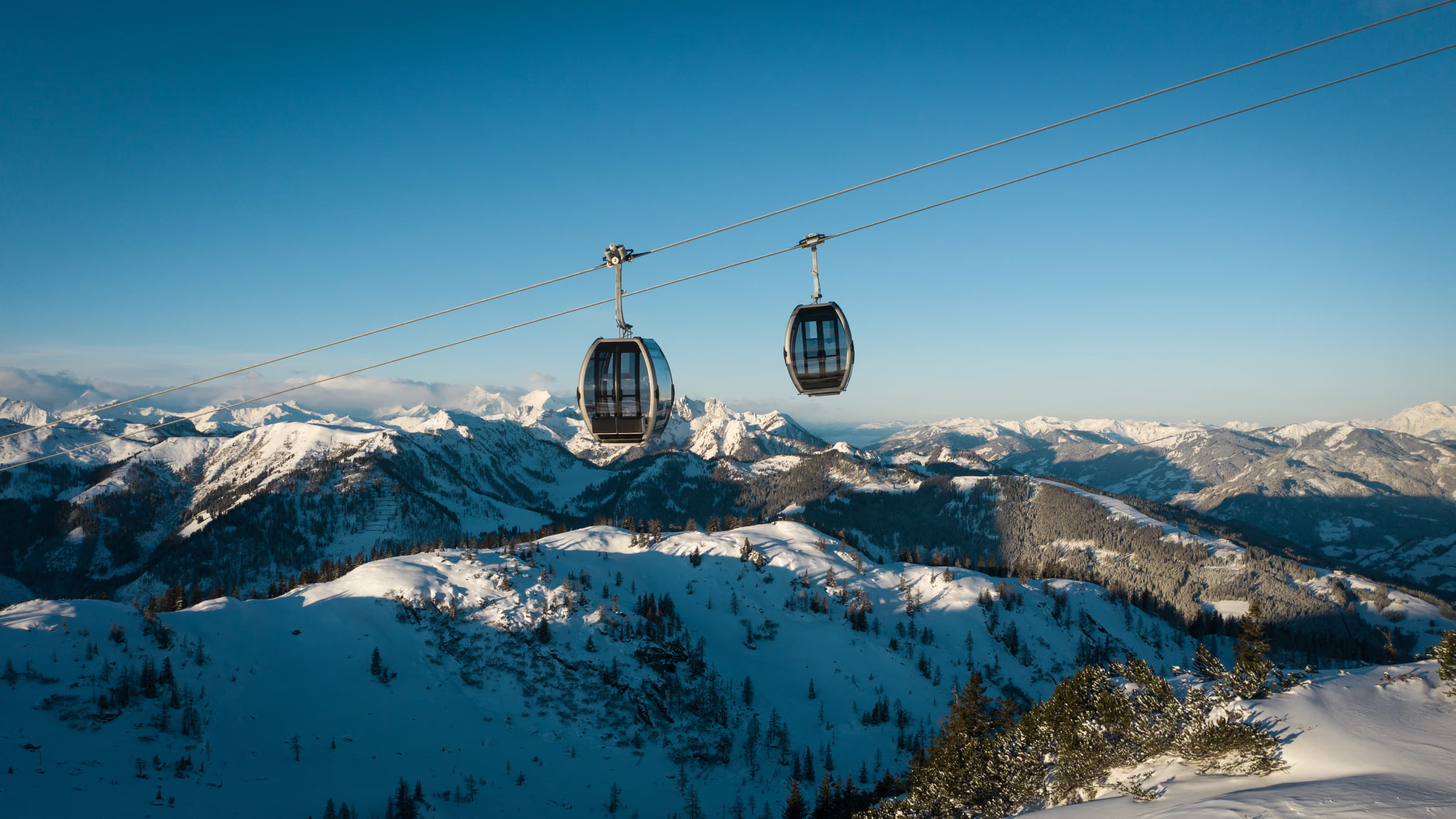
The construction of the Mellaubahn in 1972 was the founding project of Salzmann Ingenieure. After forty years, Bergbahnen Mellau launched a modernisation drive: since 2013 an 8-seater chairlift has replaced the Rossstelle double surface lift. In a second step, the Mellaubahn was completely dismantled and rebuilt in 2015. Since then this 10-passenger gondola lift has offered day visitors the ideal gateway to the Mellau Damüls ski area.
As early as 2009, Bergbahnen Mellau and Damüls responded to an industry trend and linked the two ski areas with the Gipfelbahn. Since then “Schneereich – Damüls, Mellau, Faschina”, with 29 ropeways and lifts and a total of 109 kilometres of pistes, has been the largest ski area in the Bregenzerwald (Vorarlberg). Bergbahnen Mellau then decided to modernise their lift installations step by step and engaged the Bregenz planning office Salzmann Ingenieure for the design and implementation. “I was very pleased about this commission. The Mellaubahn is a cornerstone of our family business,” reports Managing Director Stephan Salzmann. For when the father of today’s Managing Director was entrusted with the Mellaubahn project in 1972, he took the step into self-employment and founded Salzmann Ingenieure. “I regard it as a great honour that we were able to continue the project in the second generation.”
8SB Rossstelle – all-round added comfort
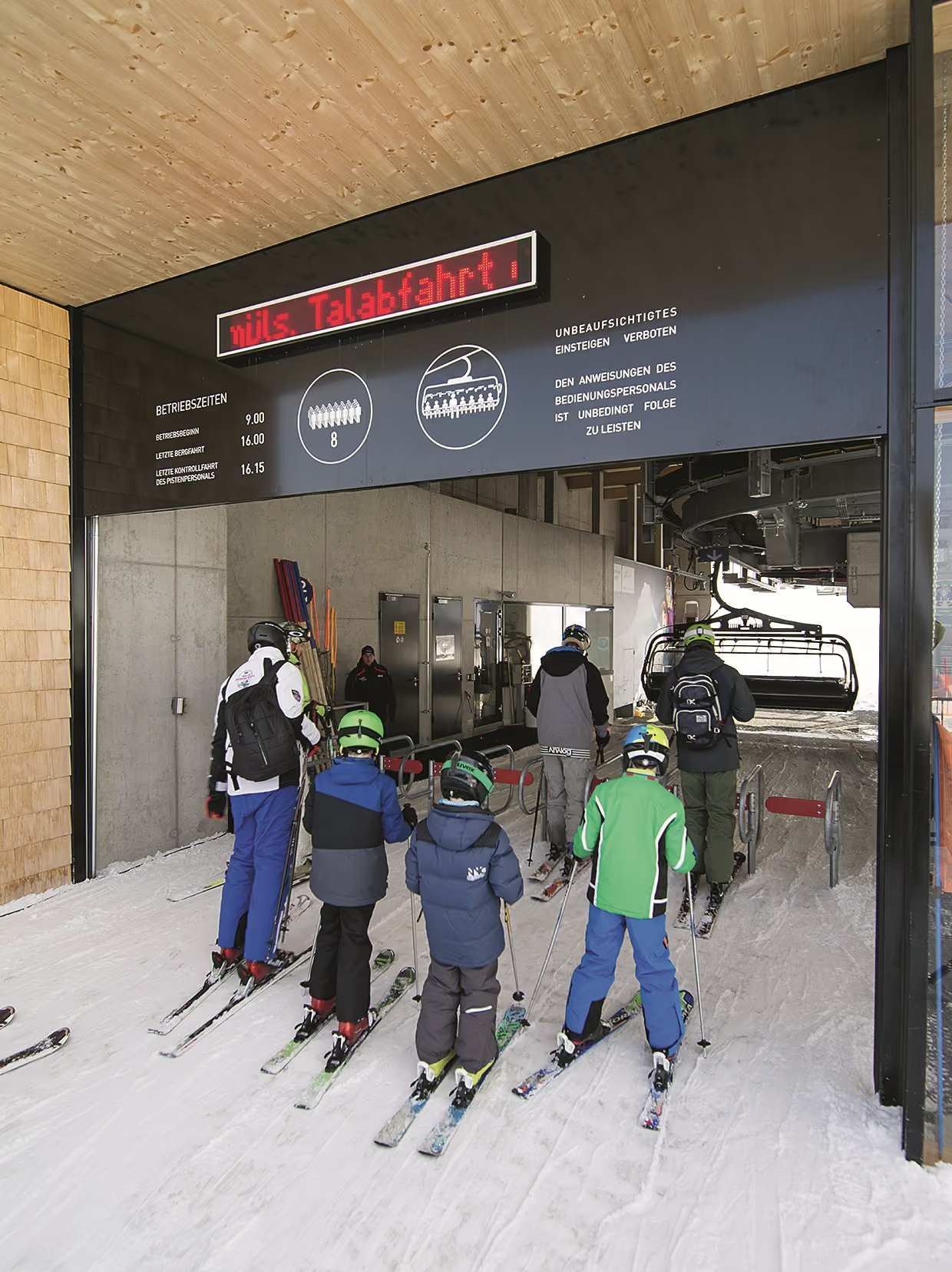
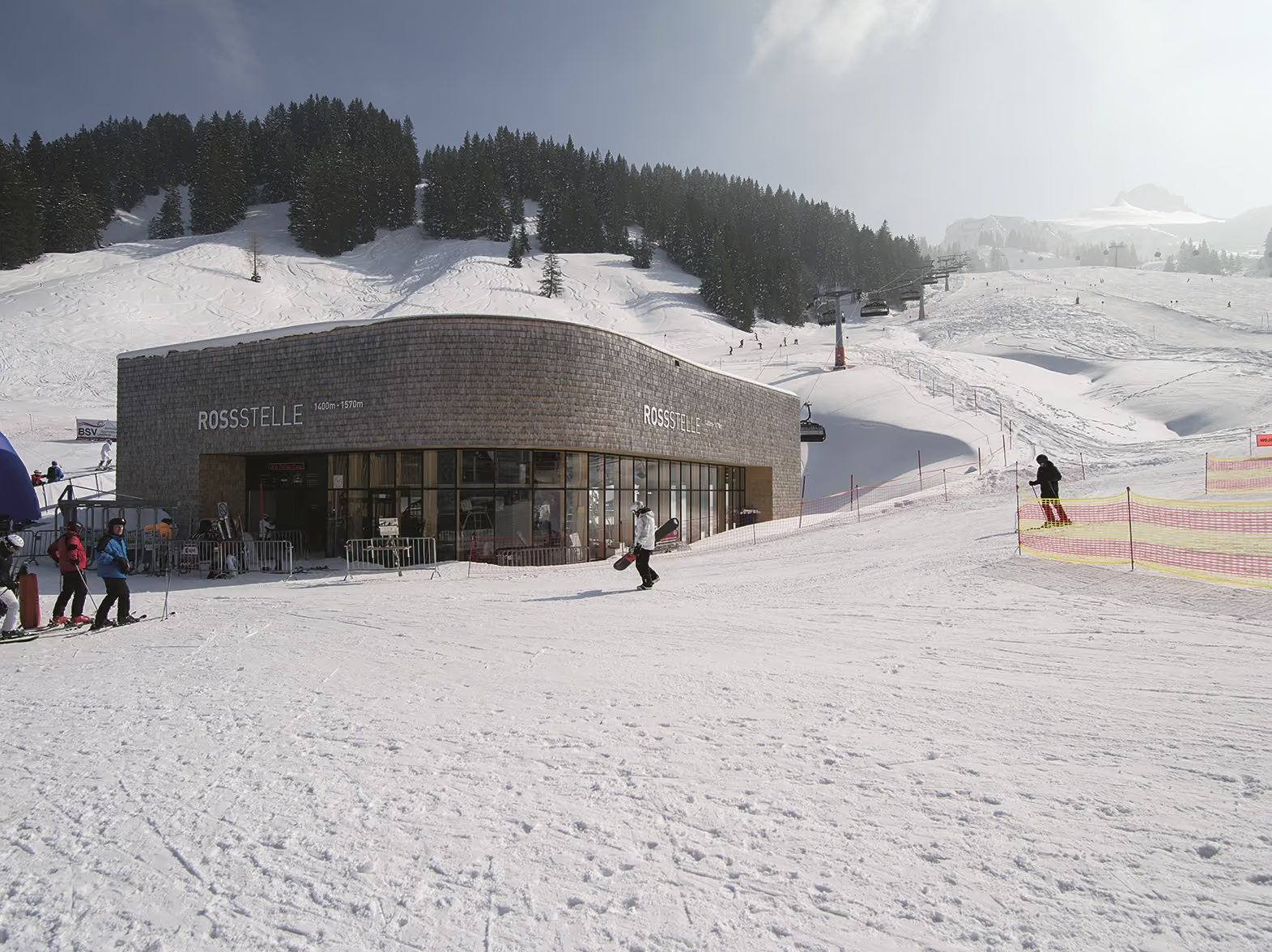
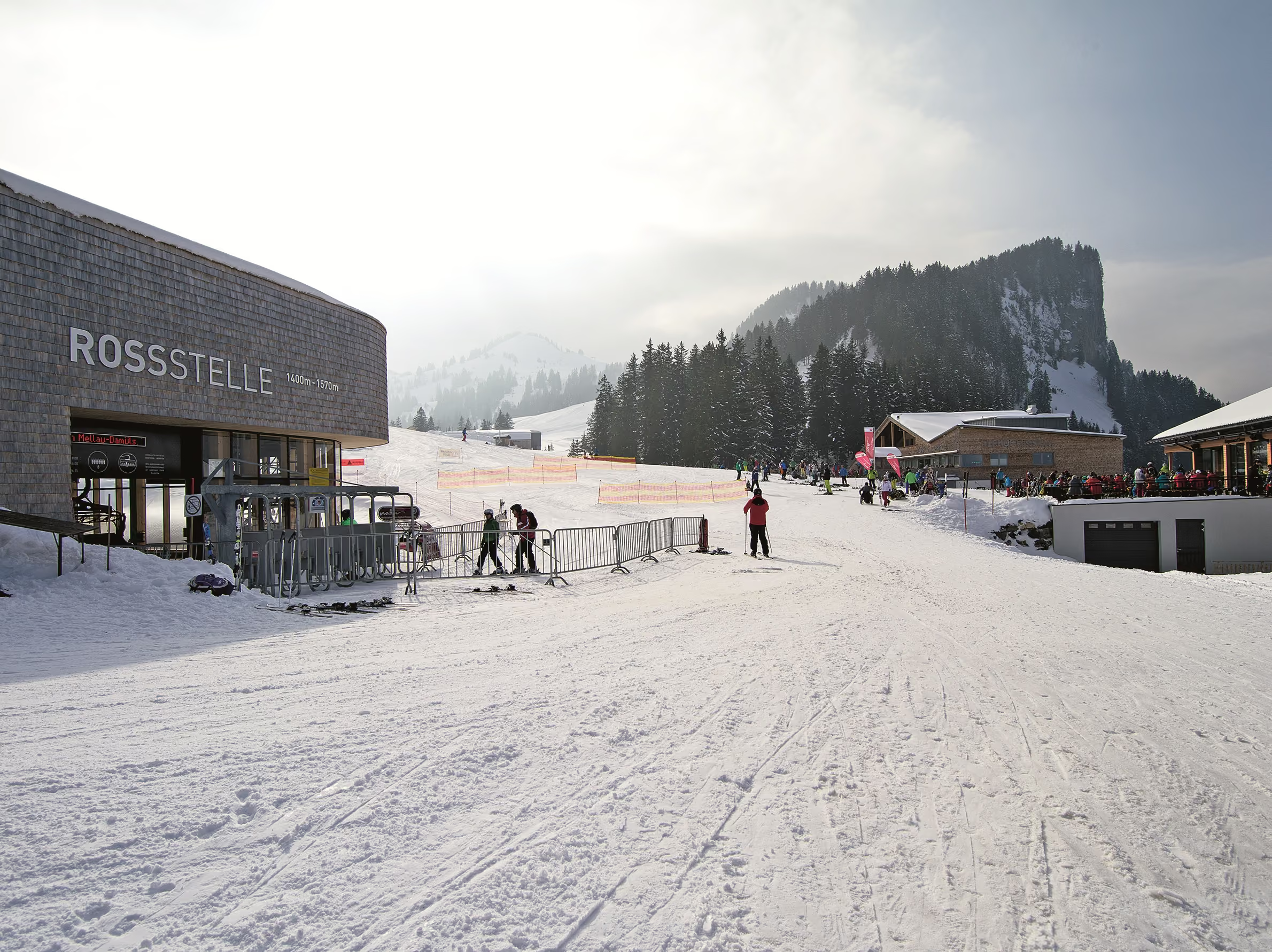
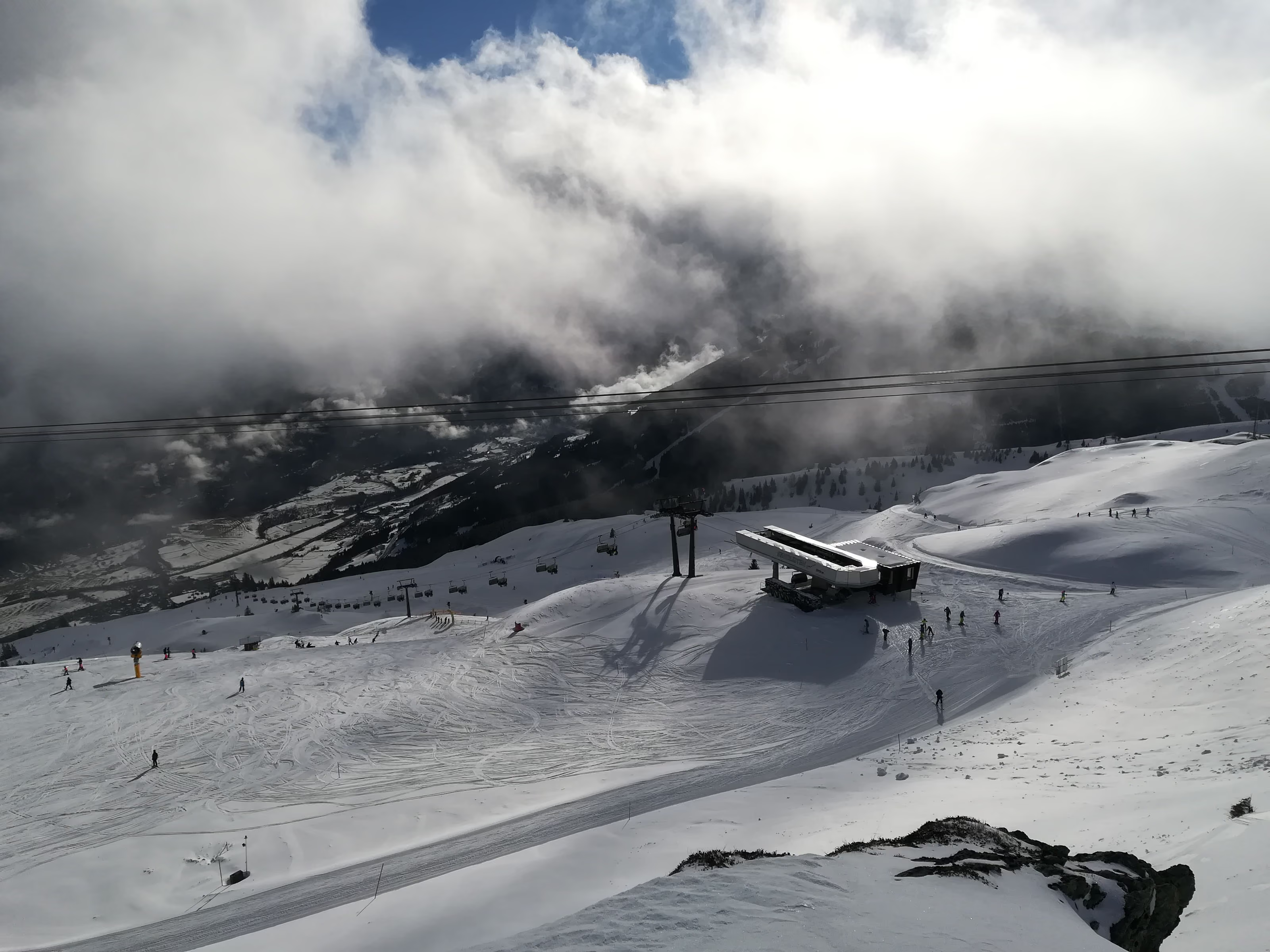
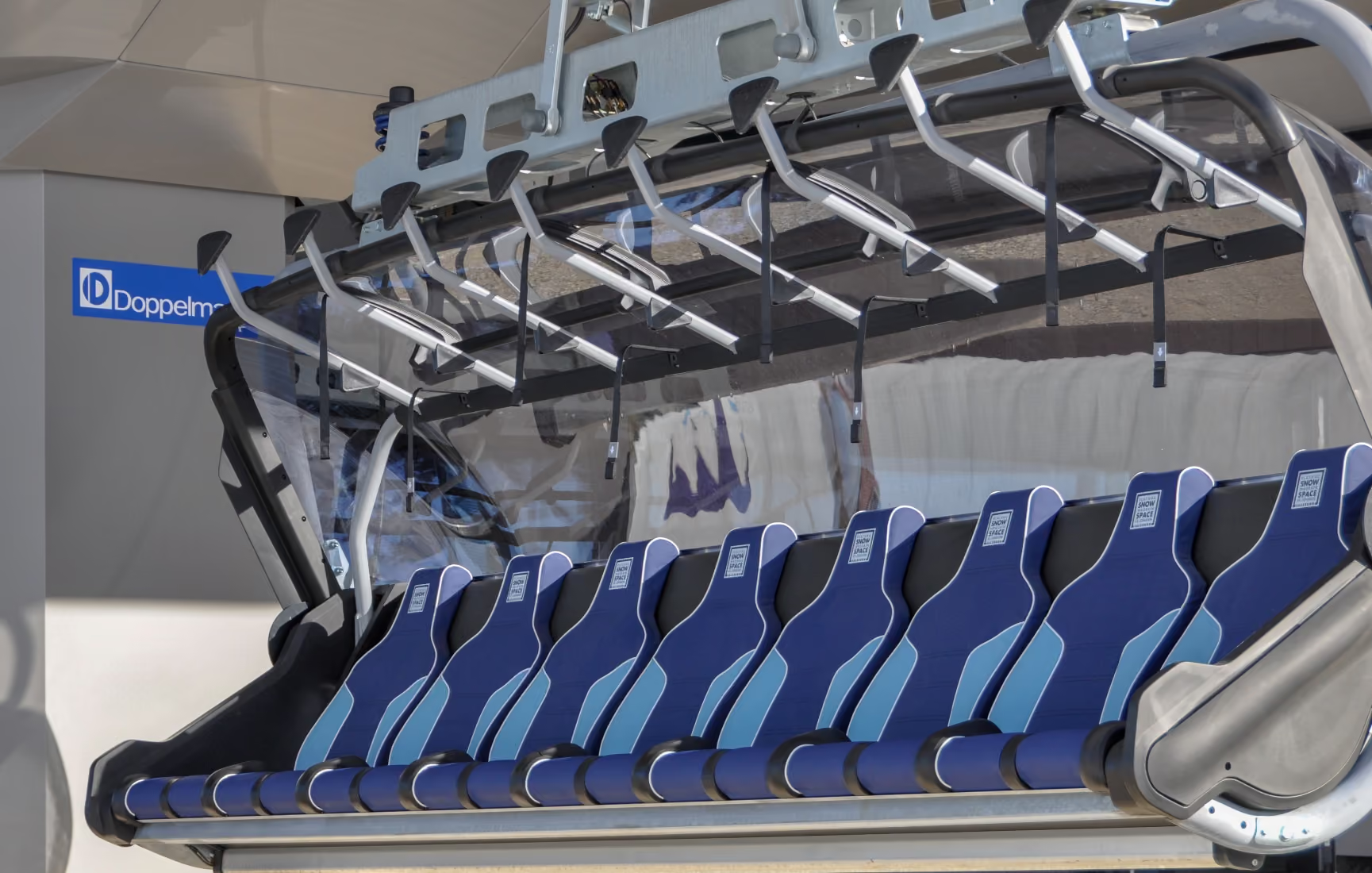
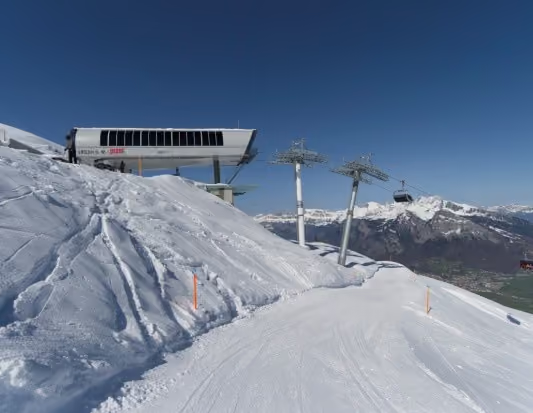
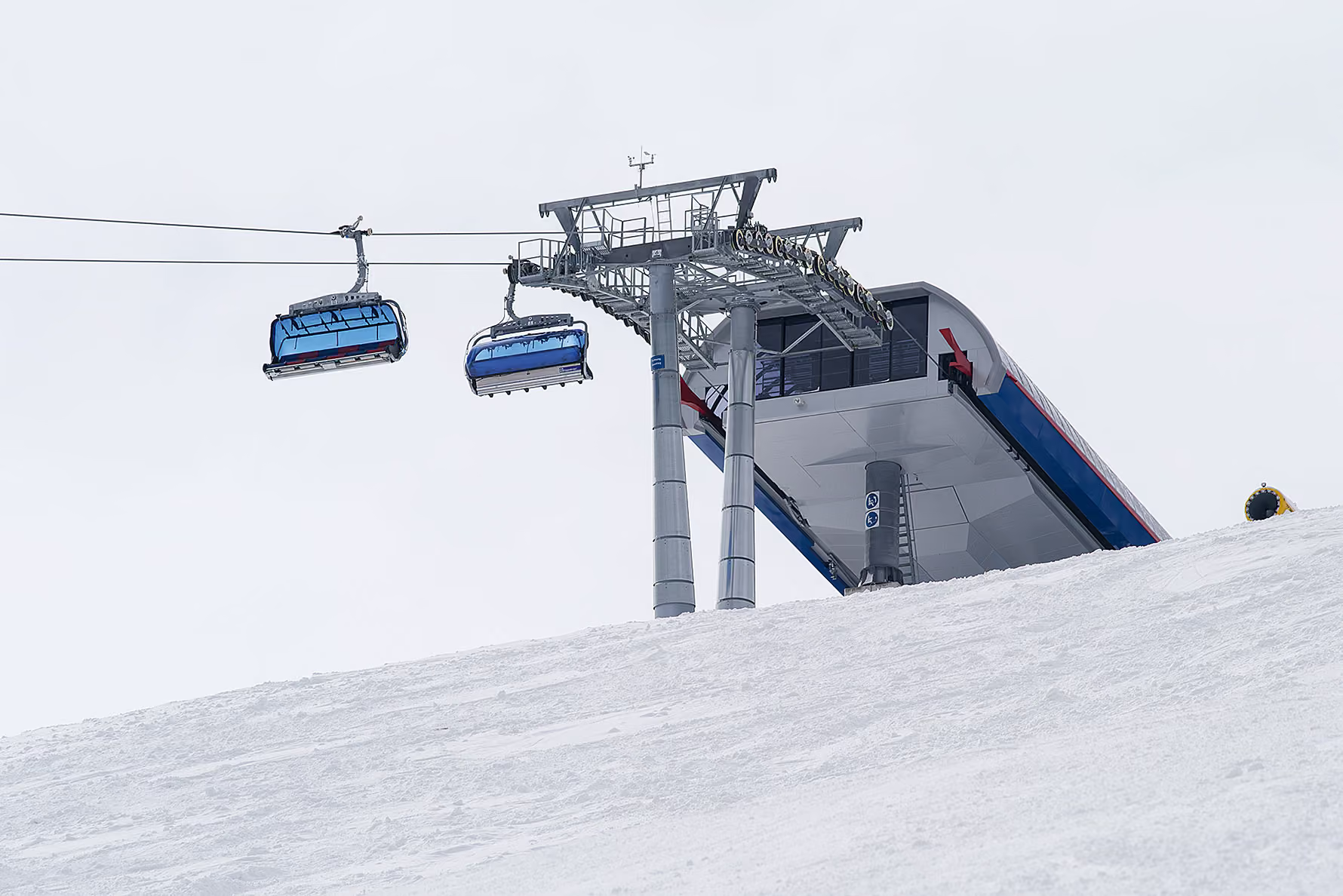
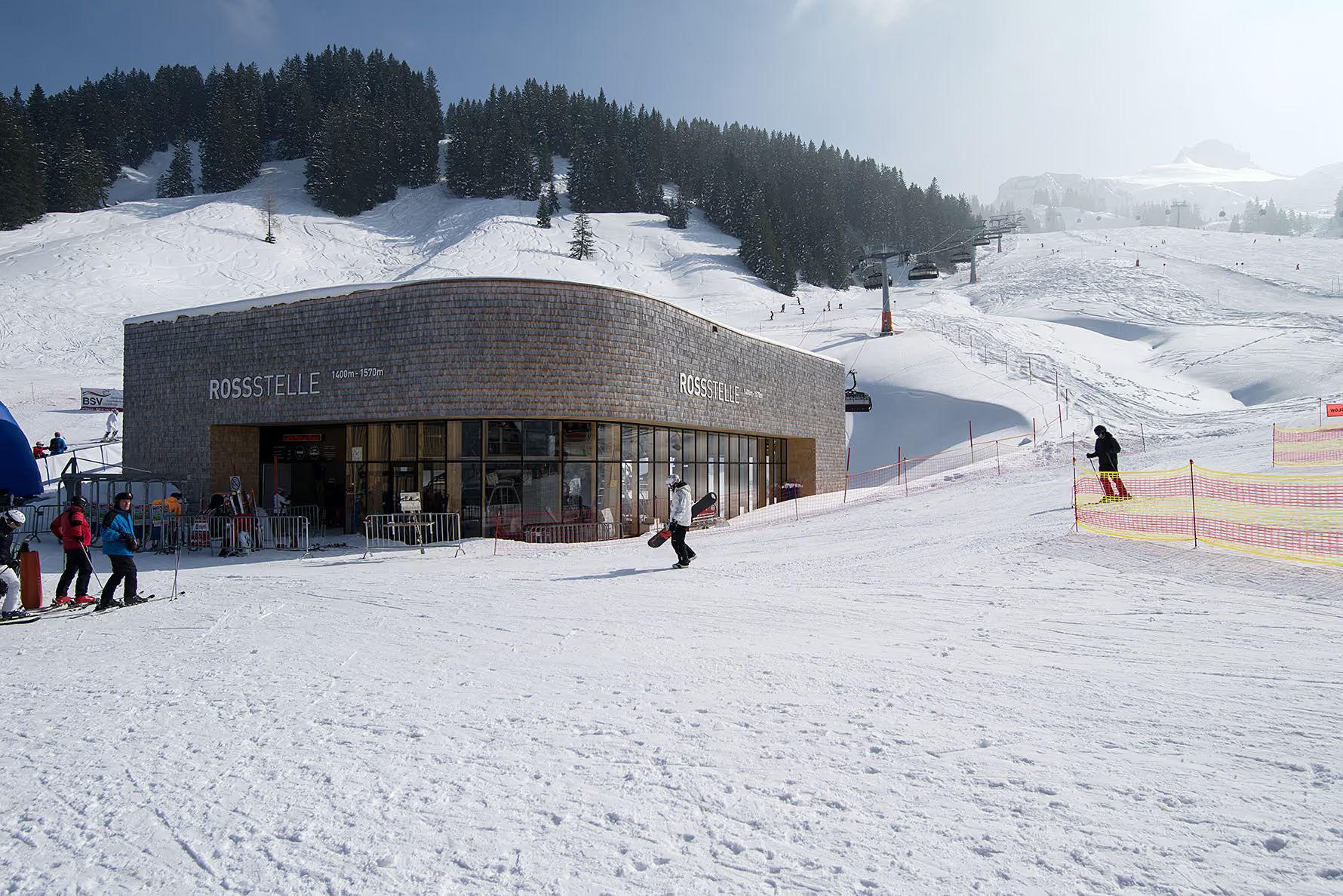
The Rossstelle made the start in 2013. On the one hand, the existing double surface lift served as the transfer link from the Mellaubahn top station to the Gipfelbahn towards Damüls. On the other, as a repeat-ride installation for less confident skiers and ski courses, the surface lift provided access to the blue pistes above the Mellaubahn. The installation was no longer up to date for several reasons: its capacity was no longer sufficient for both functions. In addition, the locations of the top and bottom stations were not ideal in terms of guest comfort, and the alignment cut across the piste area. Salzmann Ingenieure designed a detachable 8-seater chairlift. The new alignment is swung towards the north-east, which has improved access to the lift and the use of the piste area. The ropeway is built as a detachable chairlift. The drive and tensioning as well as the carrier storage are housed in the bottom station. Weather protection bubbles, seat heating and a slip-prevention device ensure comfort for winter guests.
10 EUB Mellaubahn – for a better gateway
The Mellaubahn, built in 1972 and modernised in 1986, had reached its limits once the ski areas were linked. The capacity of the 4-passenger gondola lift, at 1,000 persons per hour, was no longer remotely sufficient, and the comfort no longer met today’s requirements. The bottom station lies close to the Bregenzerwälderstraße (L200) within the village of Mellau. In winter the lift is therefore not only the first and most attractive gateway to the area, but also, when snow conditions are good and the valley run is open, a heavily used repeat-ride installation. The lift also operates in summer and is a popular destination for hikers.
System type
10-passenger monocable gondola lift
Drive
Top station
Tensioning
Bottom station
Capacity
3,146 p / h
Number of carriers
76
Drive power, operation
761 kW
Total line length
2090 m
Vertical rise
680 m
Construction period
March to November 2015
Tailor-made design
The client and the Bregenz engineers started work on the project back in 2012. “Careful planning pays off at the latest during implementation – in terms of both time and cost,” Salzmann is convinced. The calculations showed a required capacity of around 3,000 persons per hour. Salzmann Ingenieure recommended a detachable monocable gondola lift with cabins for ten people. “As an independent planner we are not tied to manufacturers. Our aim is to offer our clients the best solution at the best price on the market,” says Stephan Salzmann.
Better connection to the top station
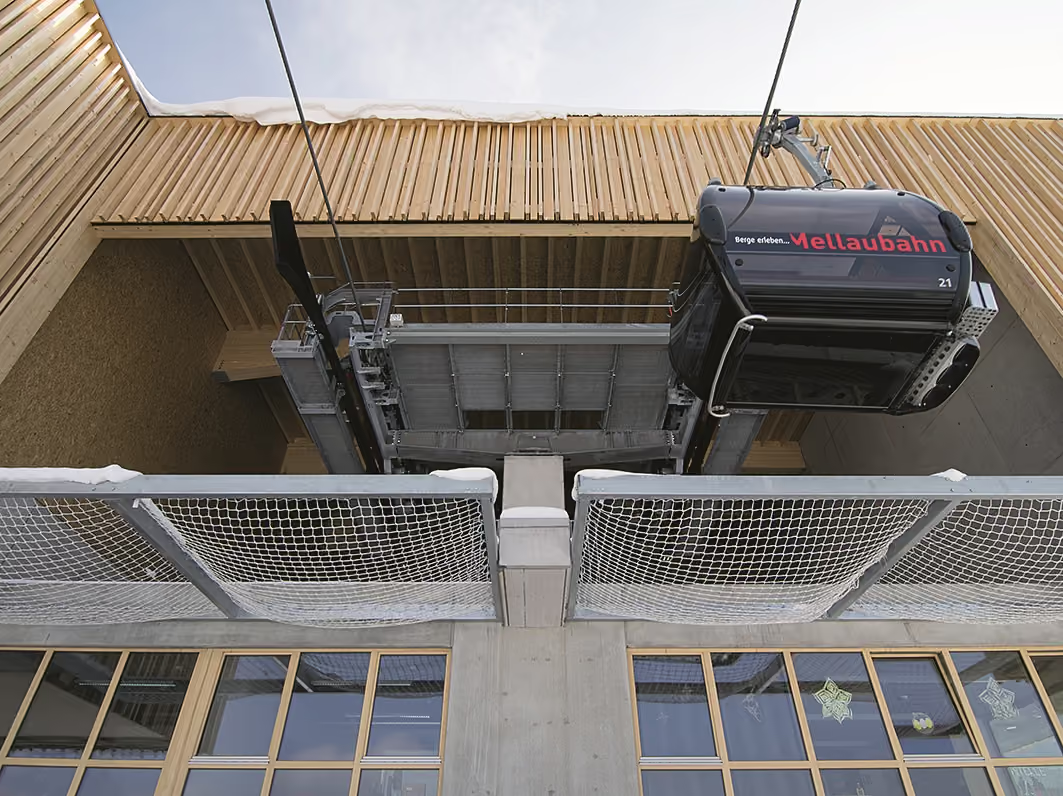
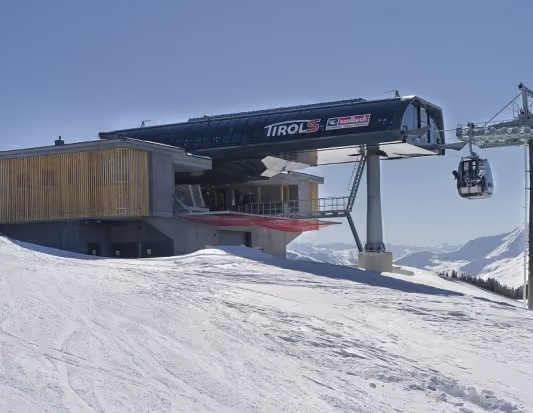
One objective of the project was also to improve the link between the top station and the bottom station of the Rossstelle, as winter sports enthusiasts had previously had to walk the short ascent to the Rossstelle. The old top station of the Mellaubahn was therefore completely dismantled and brought to the level of the Rossstelle bottom station. “Not only the visitors but also the restaurants and shops in the stations benefit from this levelling,” explains the Managing Director.
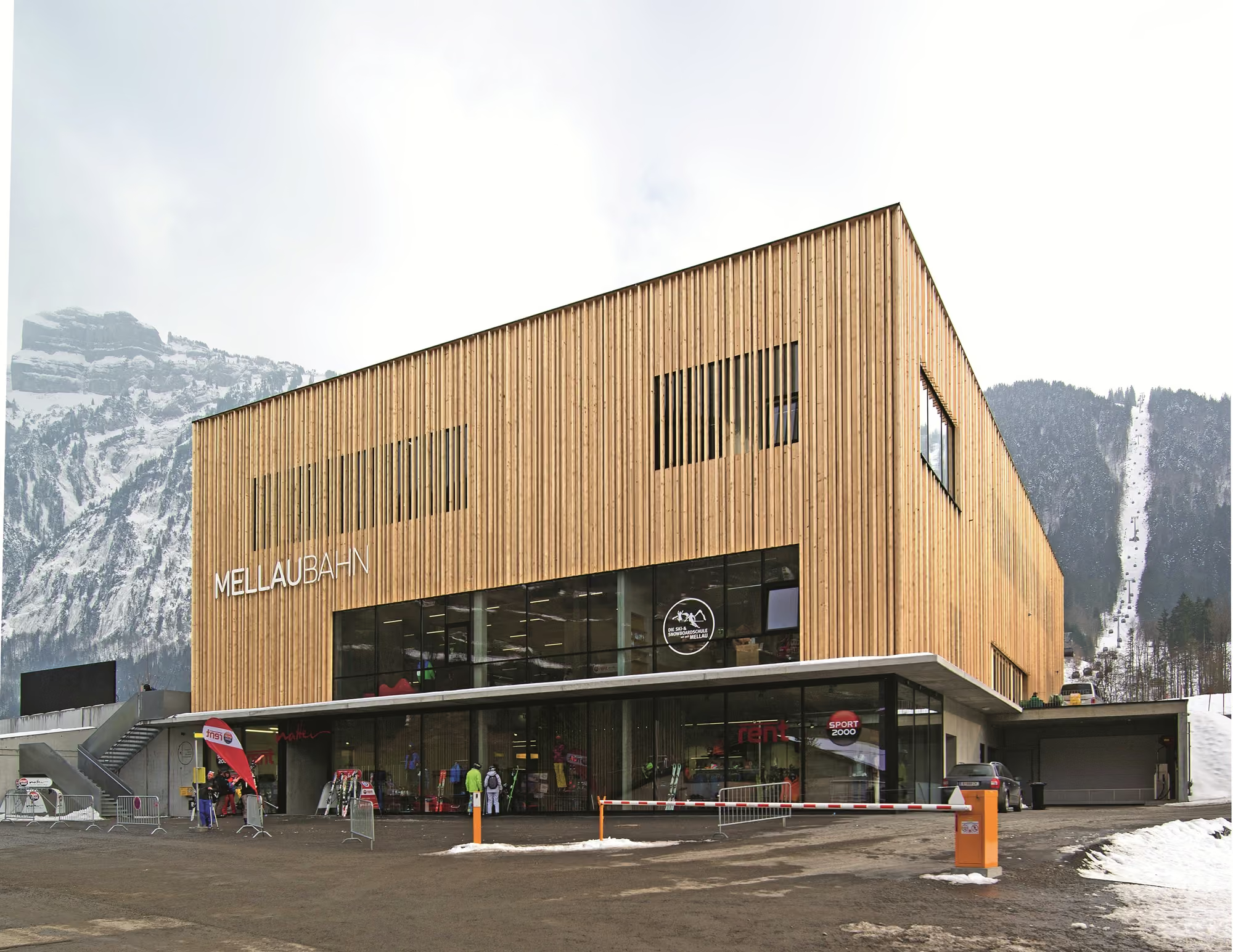
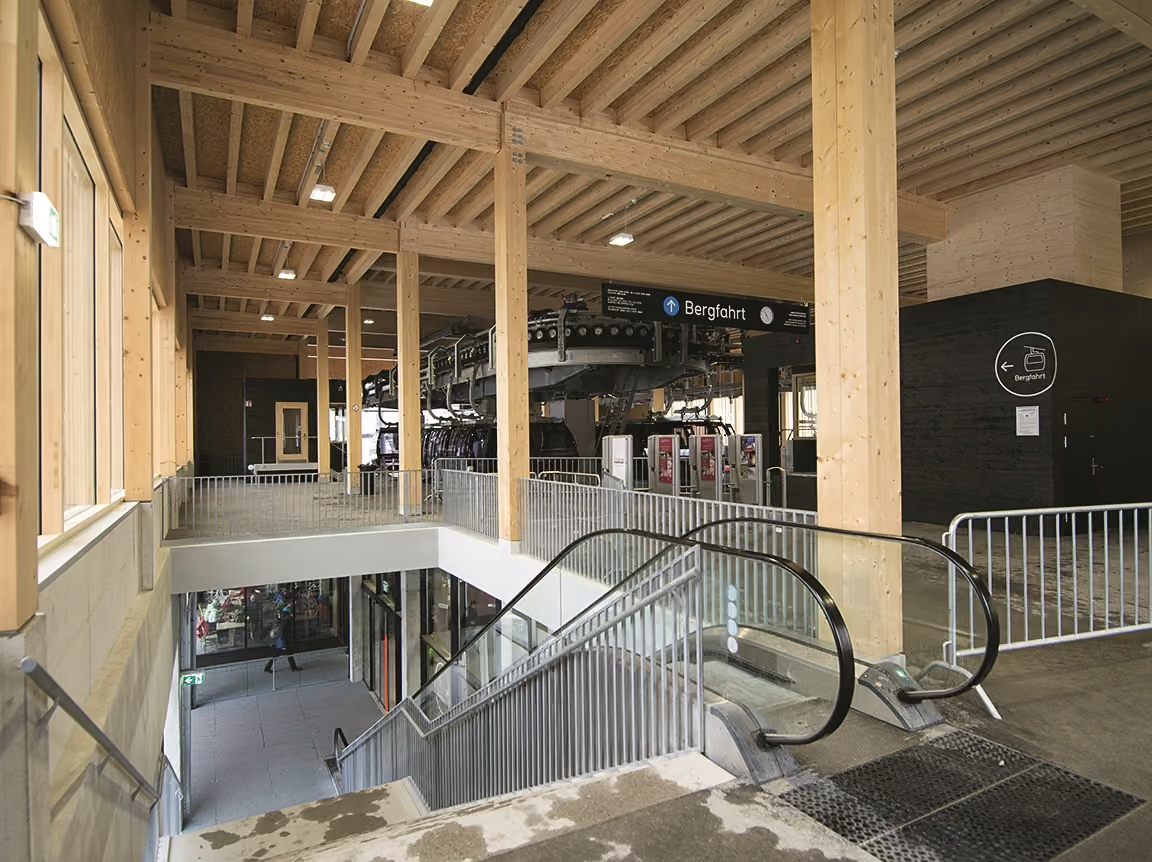
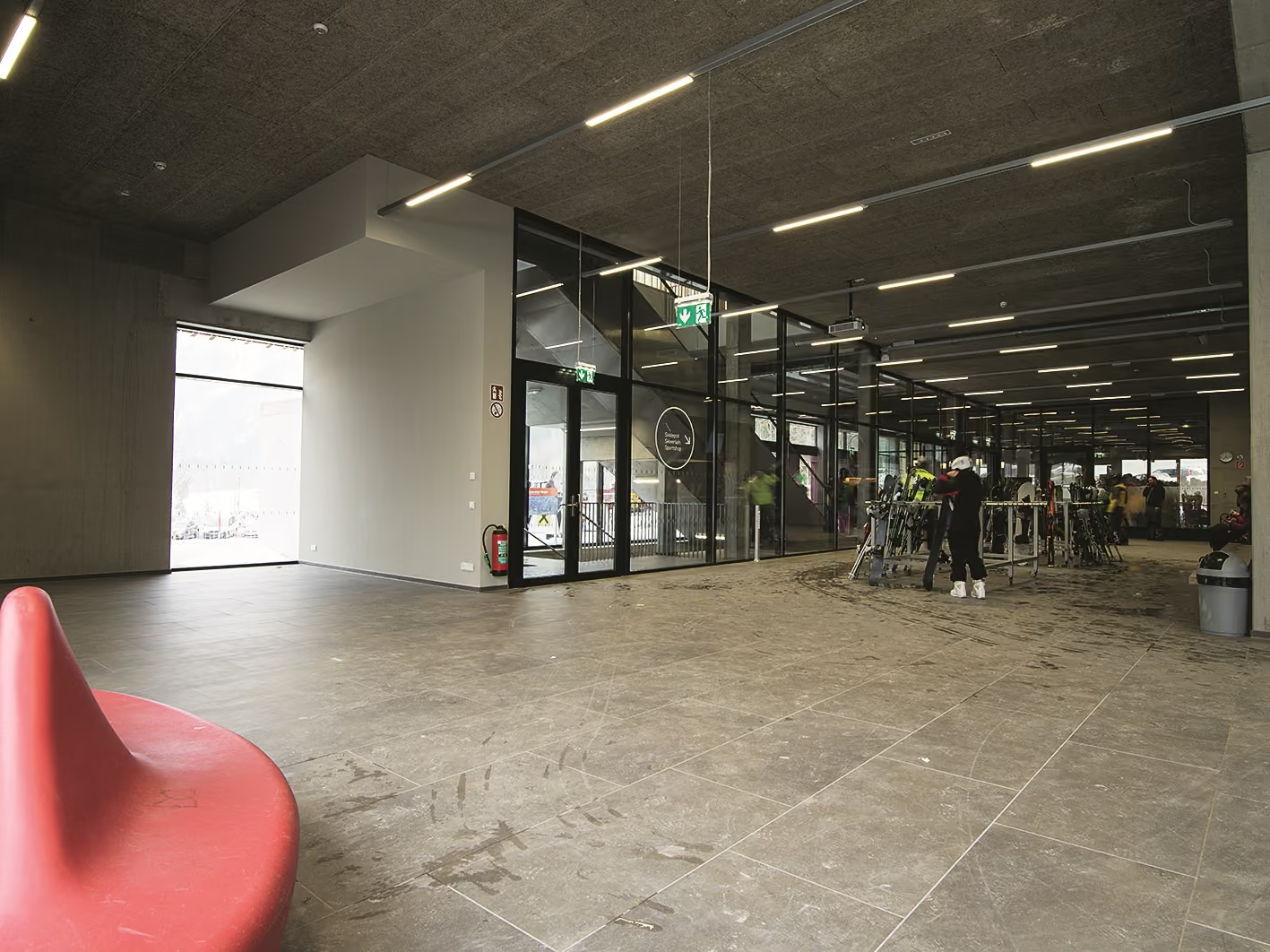
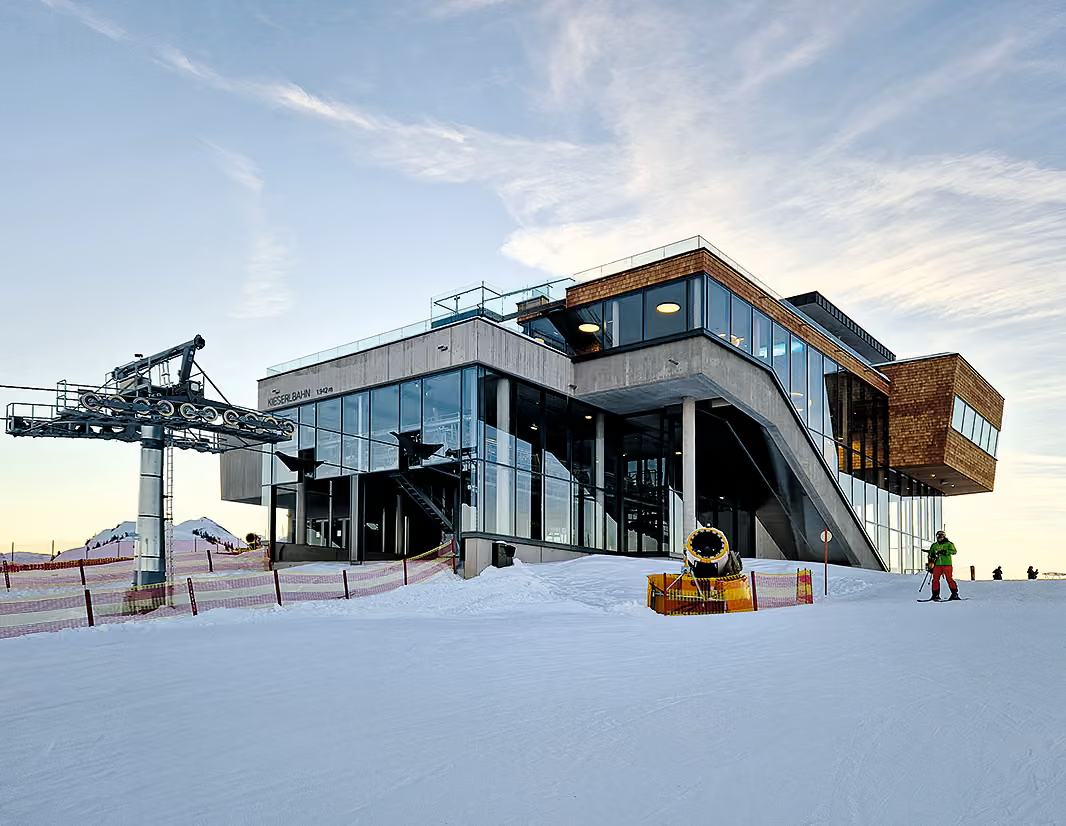
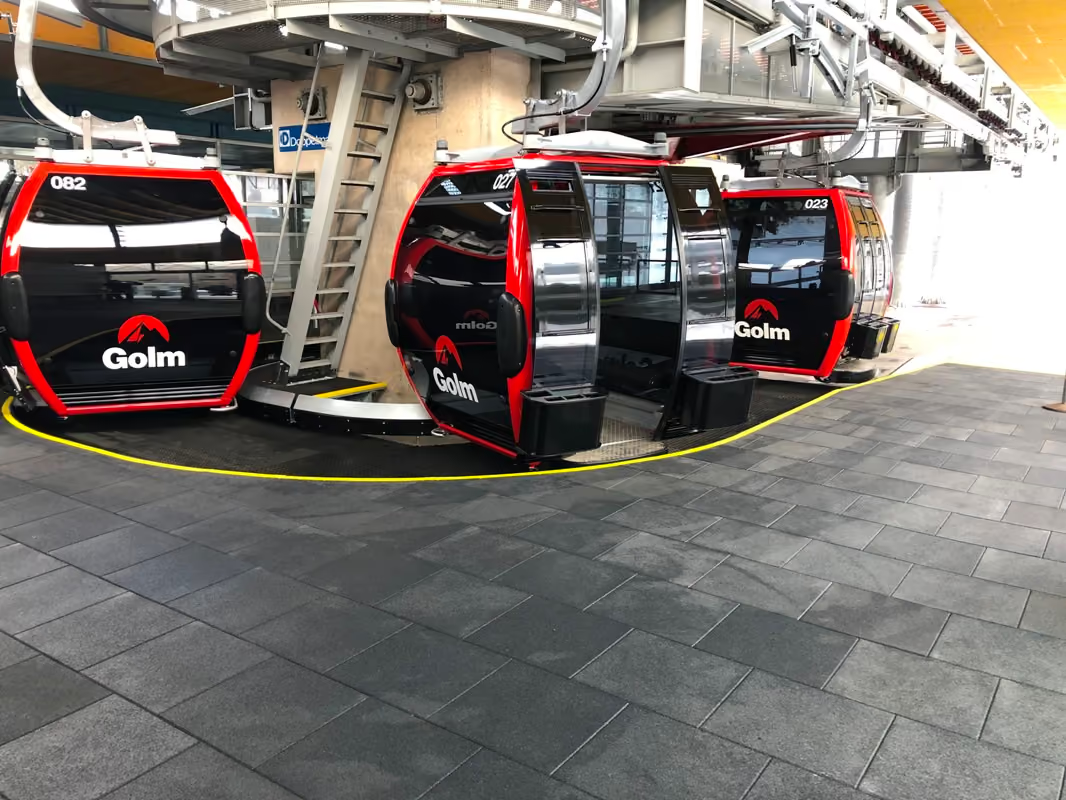
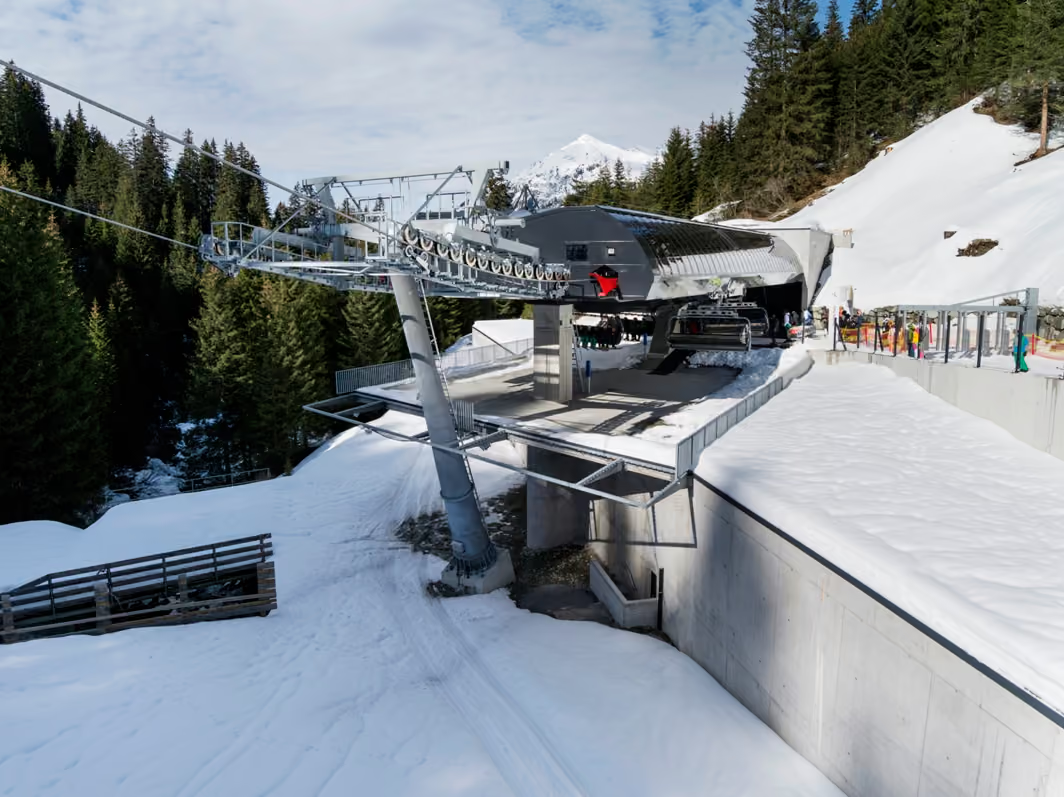
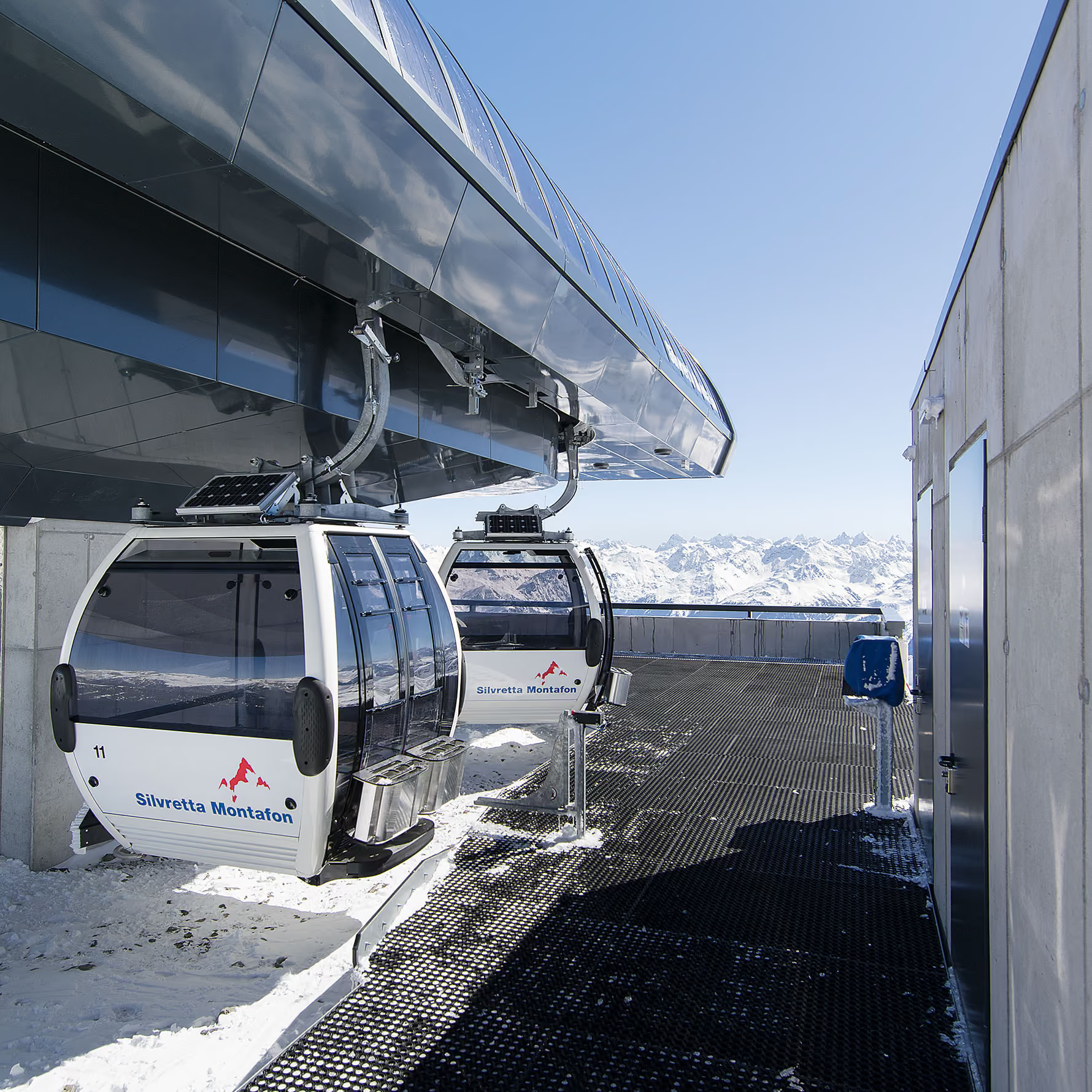
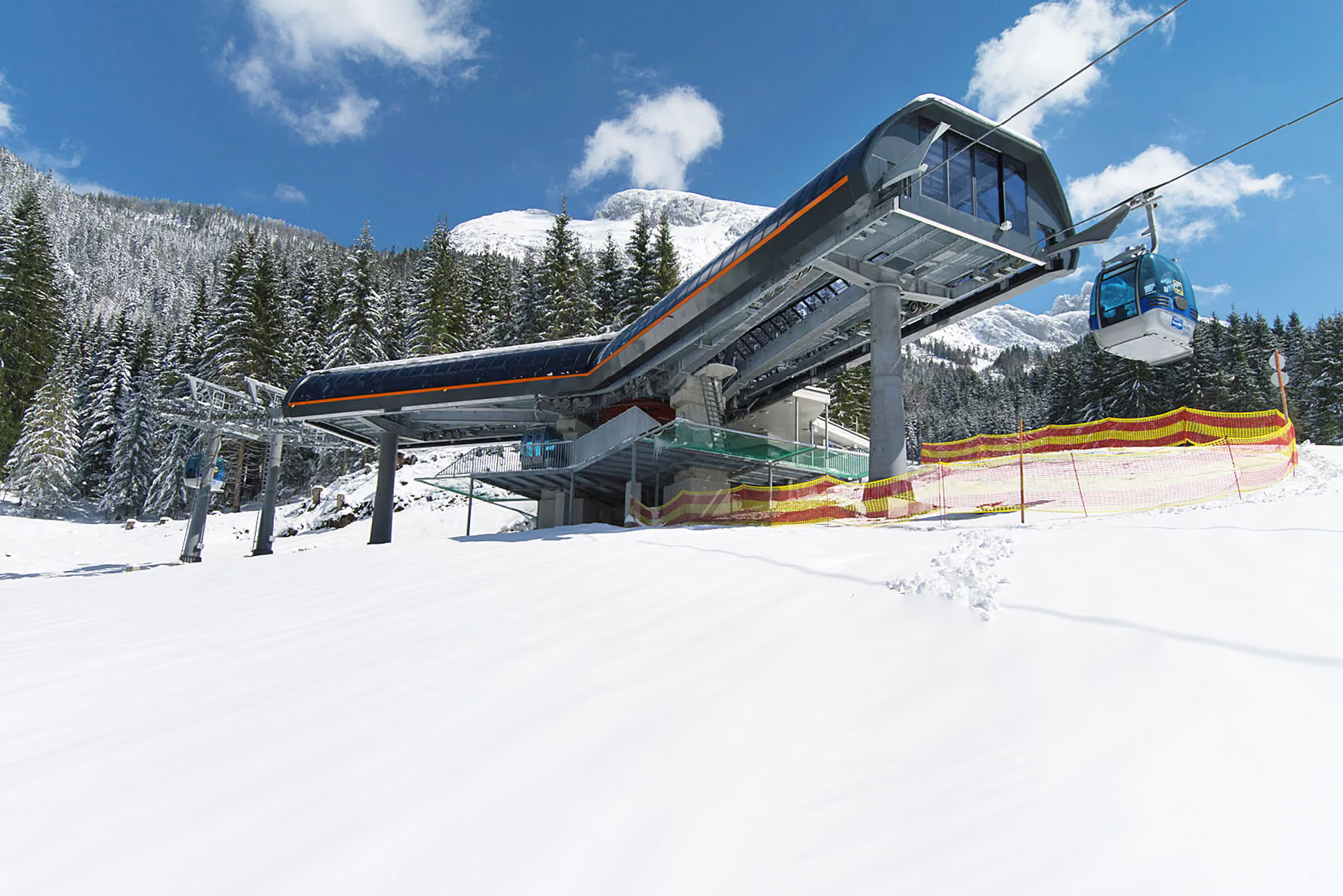
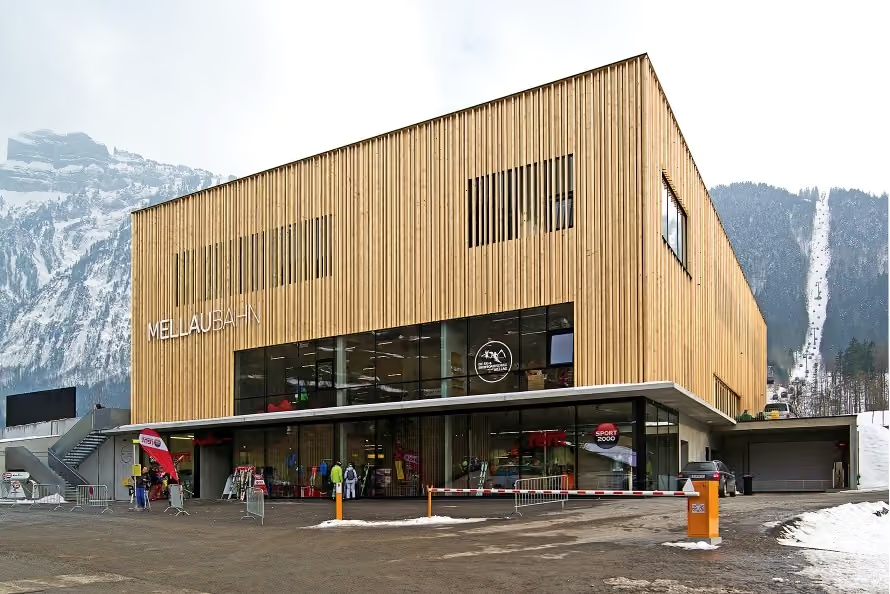
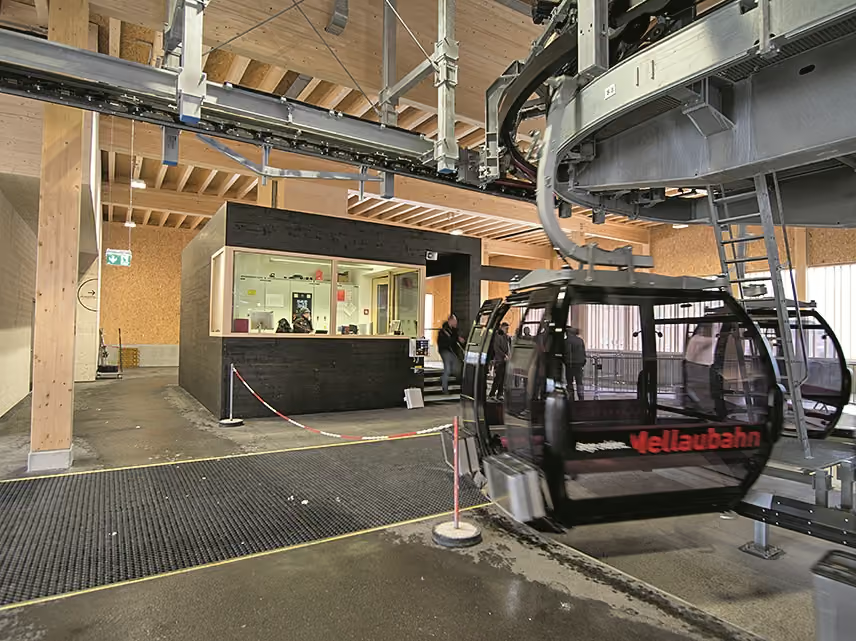
The lift meets state-of-the-art requirements for safety and comfort. The drive is located in the top station. The hydraulic tensioning device is housed in the easily accessible bottom station, which, alongside office, meeting and first-aid rooms for the staff, also contains storage areas and technical rooms. The 76 cabins are stored in the bottom and top stations, so the number of cabins in service can be matched to current transport demand. With a spacious ticket hall, toilet facilities, a ski rental with depot, a sports shop and a café, the bottom station offers guests an attractive infrastructure.
A pioneering project in timber construction
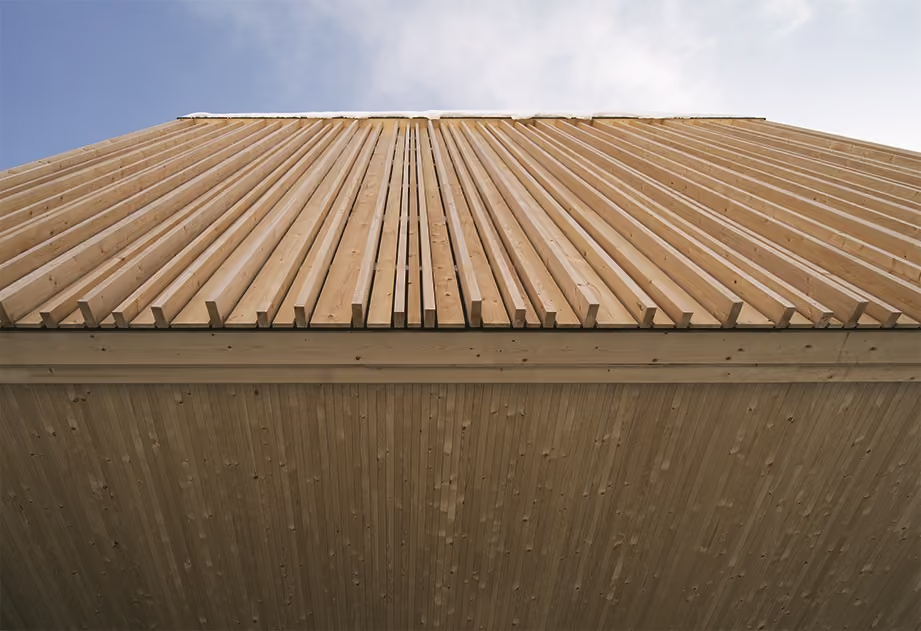
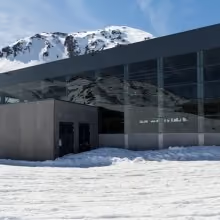
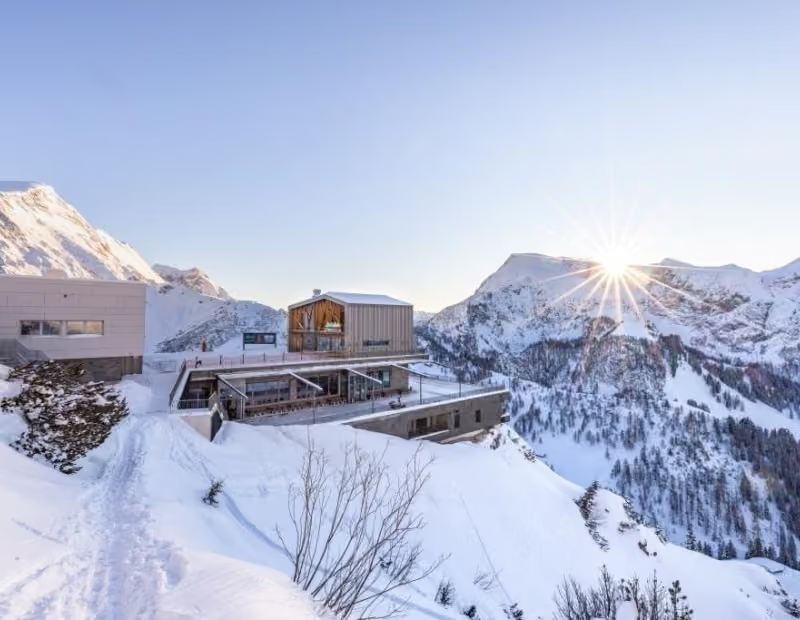
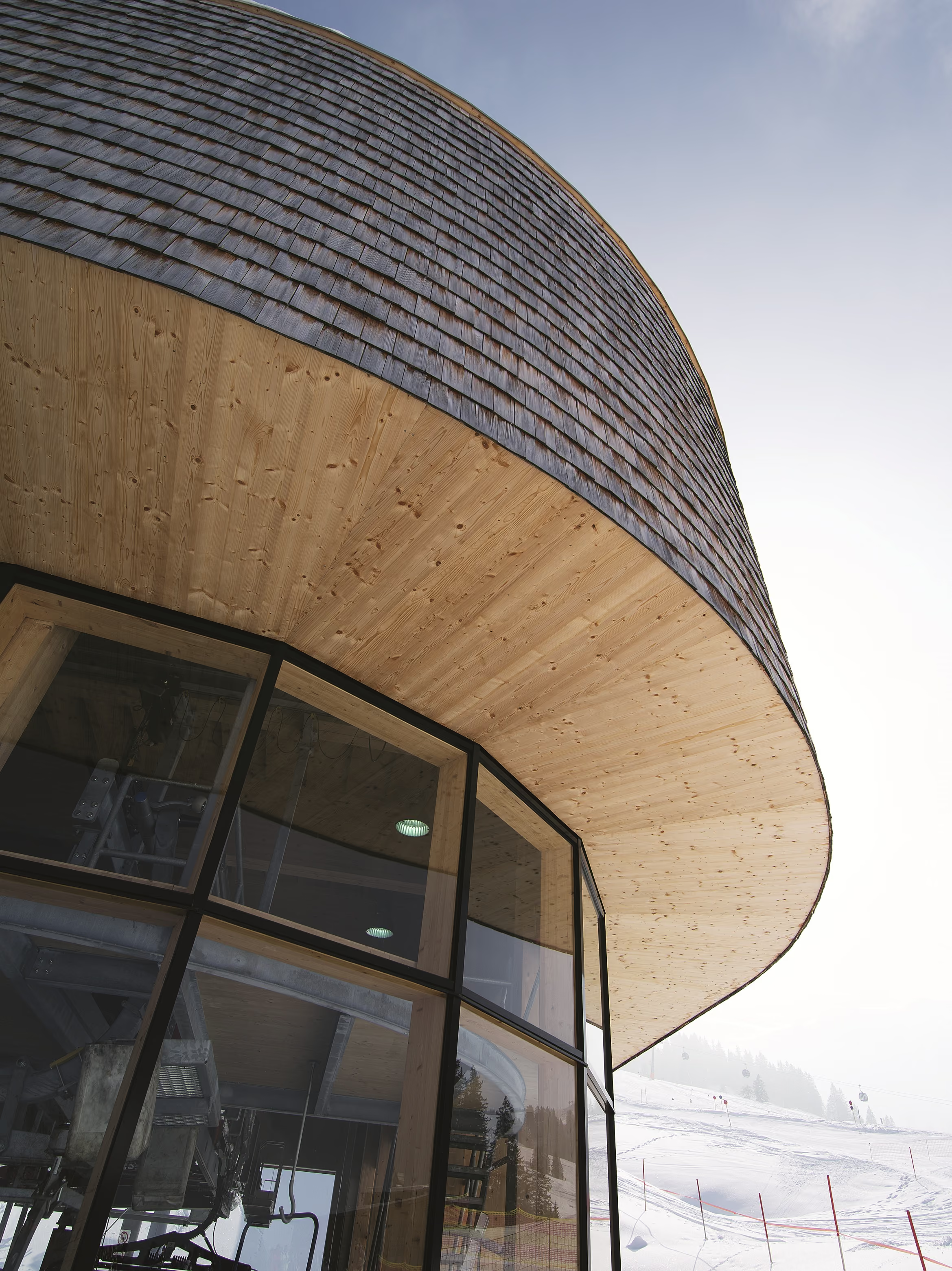
In building the top and bottom stations, the architects responsible, Architekturbüro Frick of Reuthe, were keen to use timber as a building material wherever possible, in keeping with the old Bregenzerwald craft tradition. “Since the disaster in Kaprun, fire protection requirements to use non-combustible materials have made the use of timber in ropeway construction more difficult. With the projects in Mellau it has been possible, through appropriate safety analyses, to allow timber to be used in an unusually high proportion. Besides its advantages in fire resistance, timber offers good design possibilities. Because of the high proportion of timber, this project is nevertheless a rarity in the Alpine region,” reports Salzmann. The components in contact with the ground and the basement levels are of solid construction, while the platform level is built as a timber structure. The clearly structured timber shell of the bottom station fits well into the village setting. The timber louvre cladding of the top station immediately establishes a link with the bottom station building and with the nearby shingled Rossstelle station.
Rapid implementation
The buildings and towers were demolished in March 2015 and the ground-breaking took place in April. The project was completed in time for the start of the 2015/16 winter season. “For a project of this size the time frame was relatively tight, but thanks to the sound planning it was readily achievable,” concludes Salzmann.