Ropeways for India
Ropeways for India
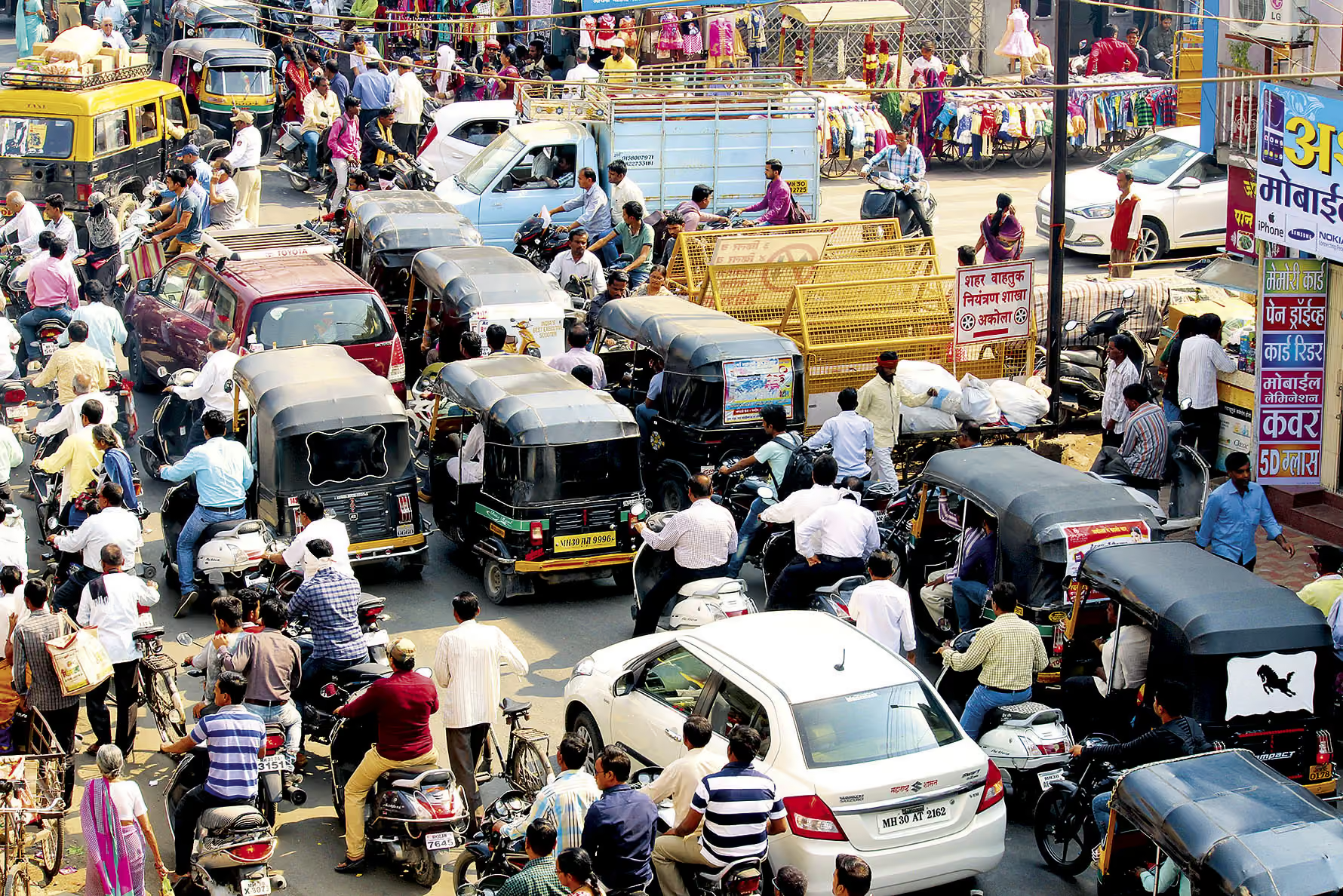
Sacred temples, dense jungle, four-lane roads full of people, vehicles and animals, up to 45 degrees in the shade and constant honking: together with the BERNARD Group from Hall in Tyrol, Salzmann Ingenieure has taken the leap to India. The two specialists are jointly examining suitable locations for ropeways on the subcontinent and played a leading role in the design of two flagship projects.
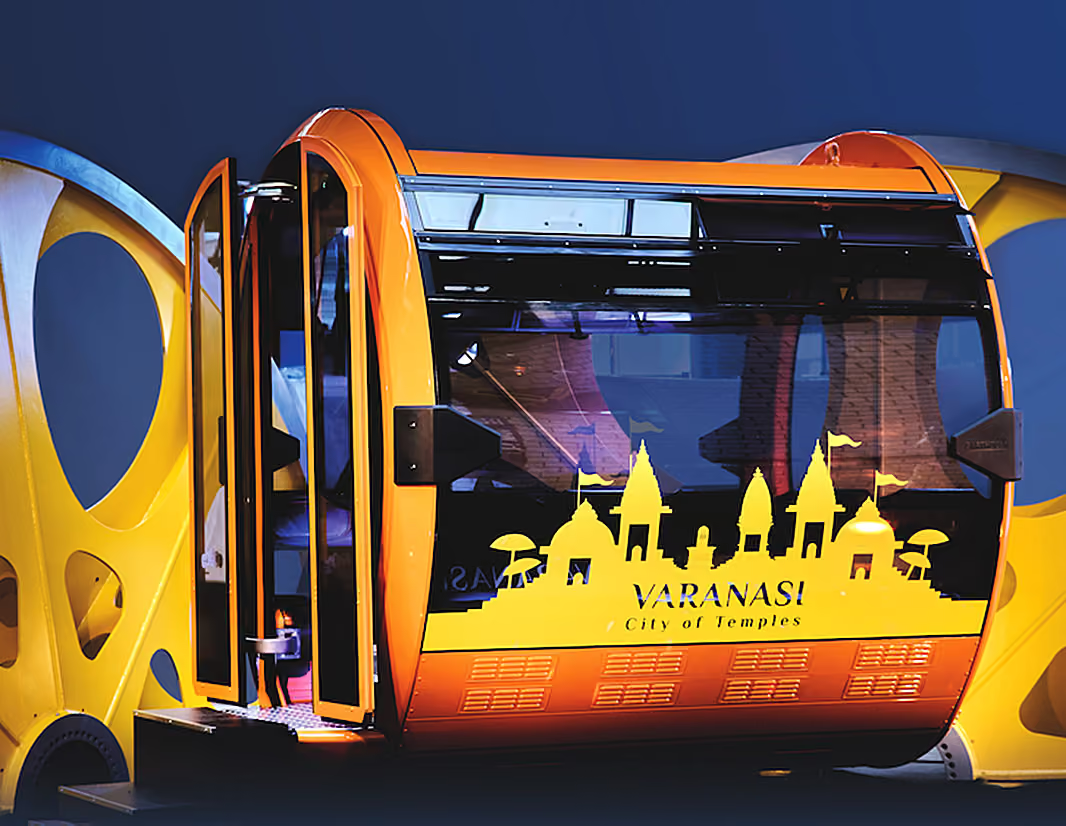
In the “eternal city” of Varanasi, the joint venture ensured the rapid delivery of the country’s first urban ropeway. From May 2025 it will carry 3,000 pilgrims an hour to the famous Kashi Vishwanath Temple. In the mountain city of Shimla, three lines with a 14-kilometre network are being built. The ropeway system is intended to make life considerably easier for people living at more than 2,000 metres above sea level.
The start of an adventure
For the team at Salzmann Ingenieure it all began with a call from the BERNARD Group. The internationally active engineering firm from Hall in Tyrol was planning to take part in the Indian government’s gigantic “Parvatmala” infrastructure programme and was looking for a partner with ropeway expertise. In November 2021, Markus Türtscher of the BERNARD Group dialled Stephan Salzmann’s number and told him about the 3.5-billion ropeway investment programme of the state-owned National Highways Logistics Management Limited (NHLML).
While the BERNARD Group, with its local office in Delhi, would take on project management and all construction matters, Salzmann Ingenieure would be responsible for the design of the ropeway technology. In the first stage, ideas for potential locations were to be examined and feasibility studies prepared. The flagship project in the pilgrimage city of Varanasi was soon added, and the mountain city of Shimla followed later. “An opportunity like this may come along only once in a lifetime. With its topographical and urban structure, India is made for ropeways: little space, many people, jungle and mountains,” says Stephan Salzmann.
The whole team was fascinated straight away. “Of course we also had reservations. We are experts in ropeways; we have been really good at that for 50 years. But we had never worked outside Europe. In India, many cultural, linguistic, climatic, regulatory and building-law peculiarities would await us. Taking part in the tender was also a leap into the unknown,” says Salzmann. Together with the BERNARD Group, the company set up a joint venture – and won the contract.
Shimla ropeway network
System type
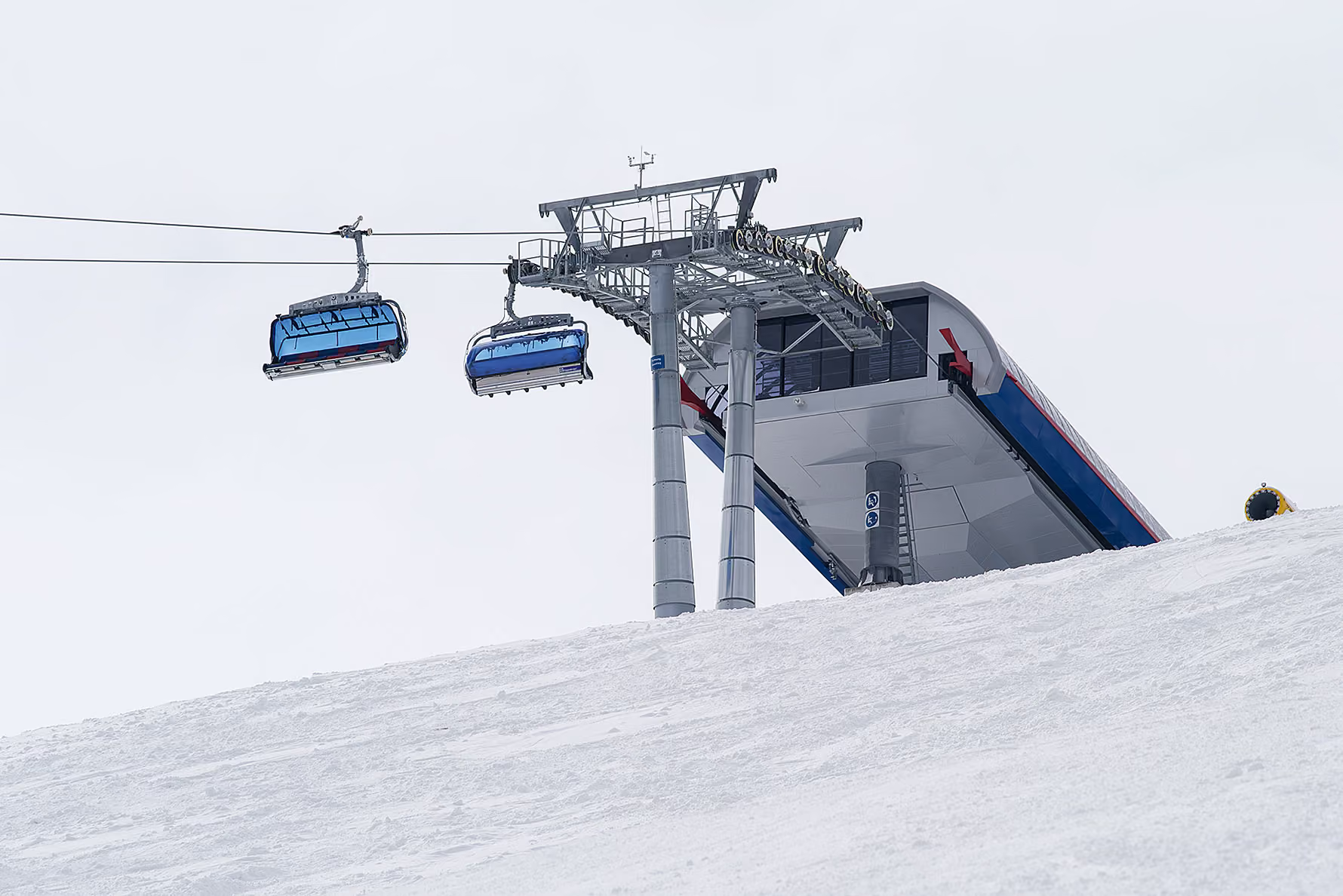
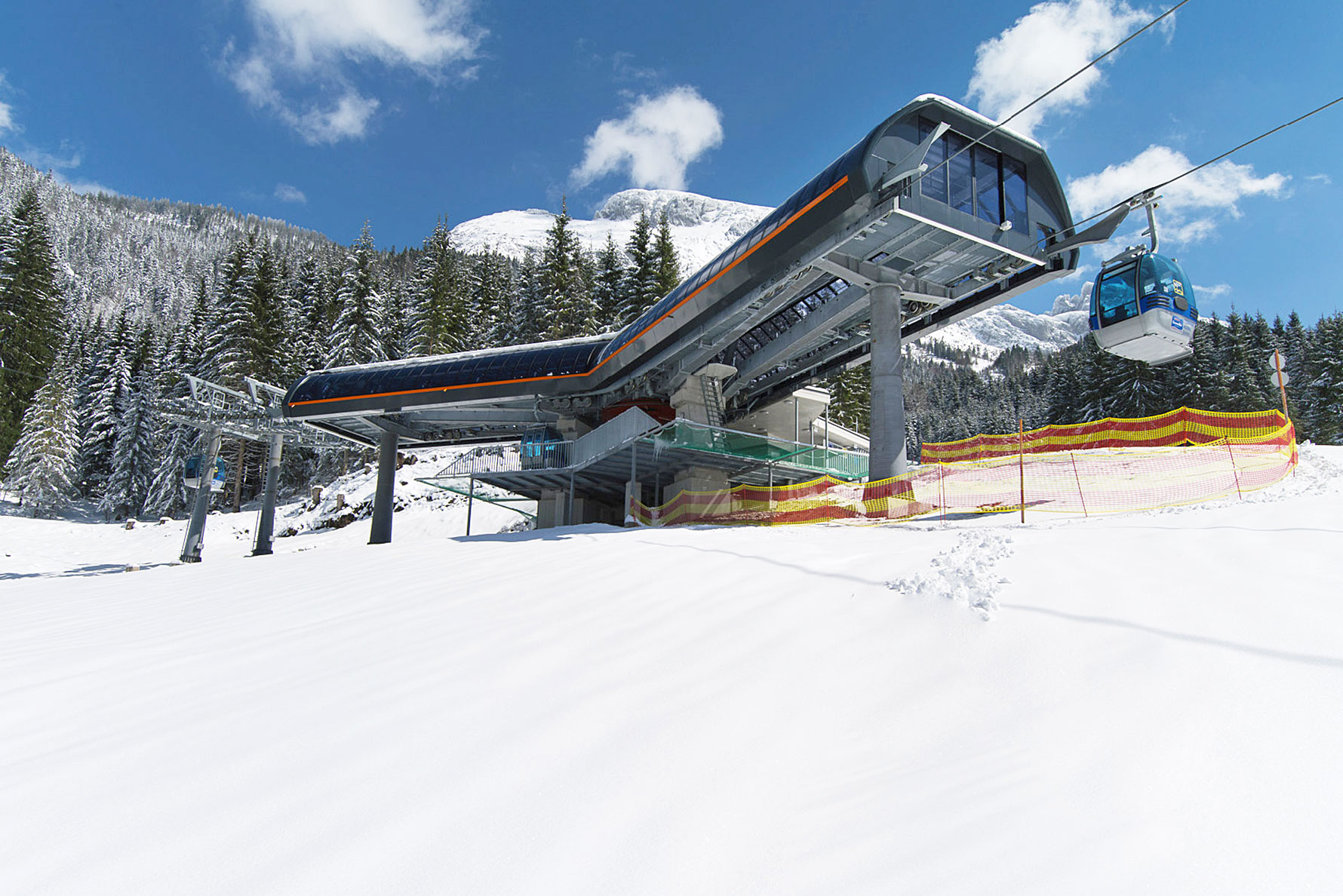
10-passenger monocable gondola lift
Lines
Apple Line, Deodar Ceda Line and Monal Line
Length
13,820 metres
Number of stations
21
Number of towers
103
Capacity
3,000 persons/h (Apple and Deodar Ceda) and 2,500 persons/h (Monal)
Varanasi urban ropeway
System type
10-passenger monocable gondola lift
Length
3,730 metres
Number of stations
5
Number of cabins
132
Number of towers
30
Capacity
3,000 persons/h
Maximum line speed
6 m/s

Project validation from north to south
Around 300 locations were submitted by the states and union territories for the “Parvatmala” programme. So far, 20 of them have been assigned to Salzmann Ingenieure and the BERNARD Group for feasibility assessment. “That brought home to us once again the enormous scale of the undertaking,” Salzmann recalls. The potential locations stretch from the far north in the union territory of Ladakh to the southernmost state of Tamil Nadu. More than 3,500 kilometres lie between the projects. They range from traffic relief in urban areas and the management of pilgrim flows to tourism facilities. Some routes are only a few hundred metres long, others run for several kilometres. In the so-called pre-feasibility stage, locations, traffic situations and visitor flows are analysed.
“Everything is in there, from the mountain temple at 3,000 metres above sea level to the installation in the jungle,” reports Marie Bach. In assessing feasibility, property and religious factors play a role alongside geographical ones. “The temple elders have a say in the alignment planning and often have the last word. Lines of force must not be disturbed. Trees are also sensitive – especially in nature reserves. For the erection of towers, however, some clearing is unavoidable now and then. Sometimes the military becomes involved as well, and flight bans make aerial photography and drone measurements more difficult,” says Stephan Salzmann, giving an insight into unexpected challenges.
Alongside pre-feasibility studies, the joint venture has been entrusted with twelve design projects, for which it prepares Detailed Project Reports (DPR) and the general contractor tenders (Build & Operate). Safety is a central issue here. While European standards apply to major projects, a comparable national standard is still lacking for smaller installations. “We take our bearings from Europe and solve safety issues above all through structural elements such as integrated evacuation,” emphasises Stephan Salzmann.
Pilgrim flows over the rooftops of Varanasi
At more than 3,000 years old, Varanasi in the state of Uttar Pradesh is one of the oldest cities in the world still inhabited today. The holy city on the Ganges is regarded as the home of the god Shiva, is visited by millions of pilgrims every year and is home to around 2,000 temples. The centrepiece of religious devotion is the Kashi Vishwanath temple district with the ghats on the Ganges. More than 90,000 people make the pilgrimage there every day – an almost unimaginable number. Until now the route to the holy sites led on foot through crowded streets full of cars, scooters and rickshaws. “During the site visit the greatest care was called for. Anyone not used to it is putting their life at risk,” says Salzmann.
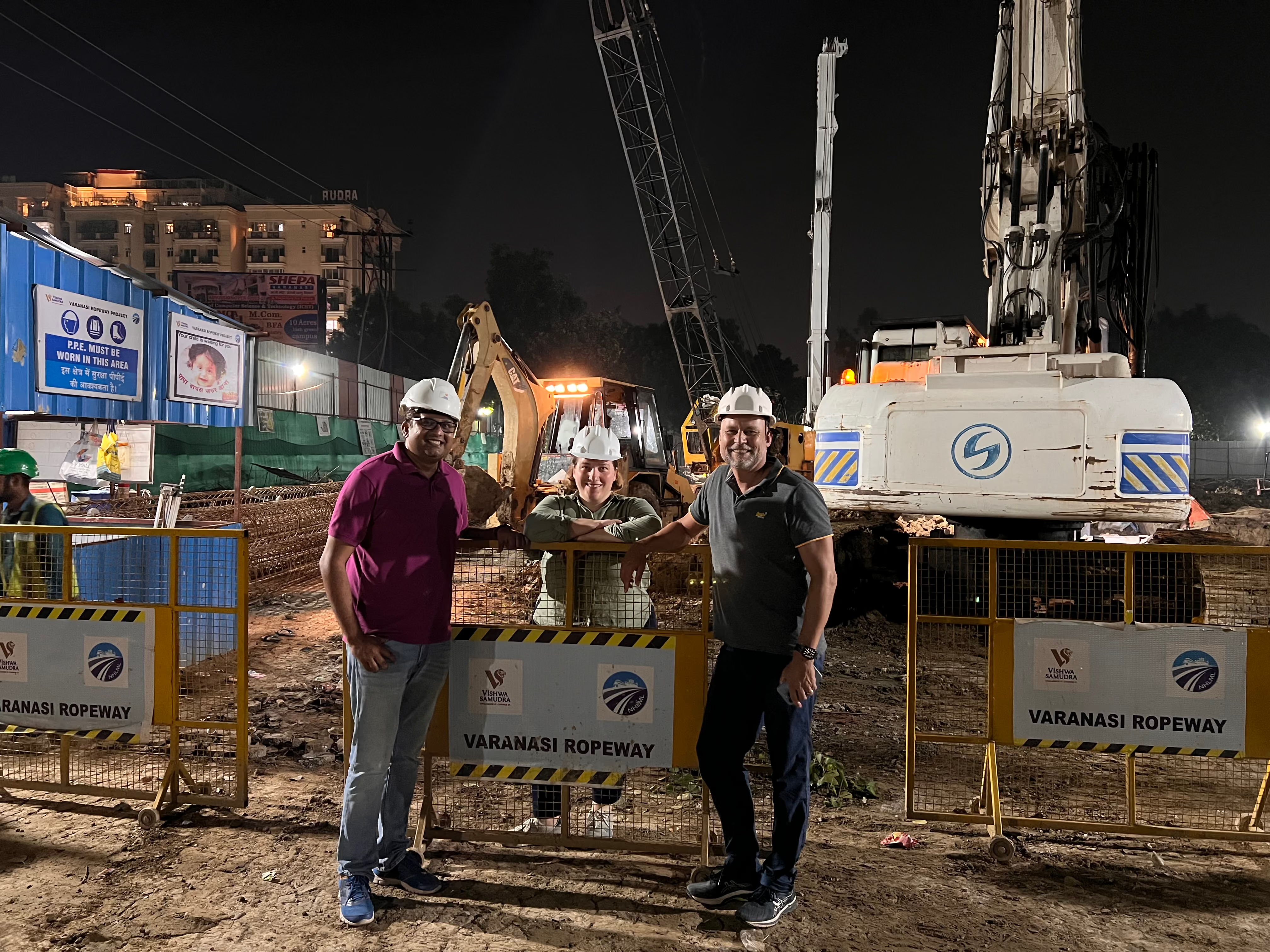
An ambitious ropeway project from “Varanasi Cantt” station to the temple district and “Godowalia Chowk” station is set to change exactly that. The Kashi ropeway is India’s first urban ropeway. This flagship project of the “Parvatmala” programme was personally driven forward by Prime Minister Narendra Modi. After the preliminary design, however, the project stalled – and that is where Salzmann Ingenieure and the BERNARD Group came in. Immediately after the first projects had been awarded to the joint venture, the ropeway for Varanasi was additionally commissioned as a priority project. “We had to get on a plane straight away. Our work was part of the general contractor tender,” recalls Stephan Salzmann. Following the economic feasibility calculation, this included the complete preliminary design and design of the ropeway as well as the building design, structural engineering and the foundation concept.
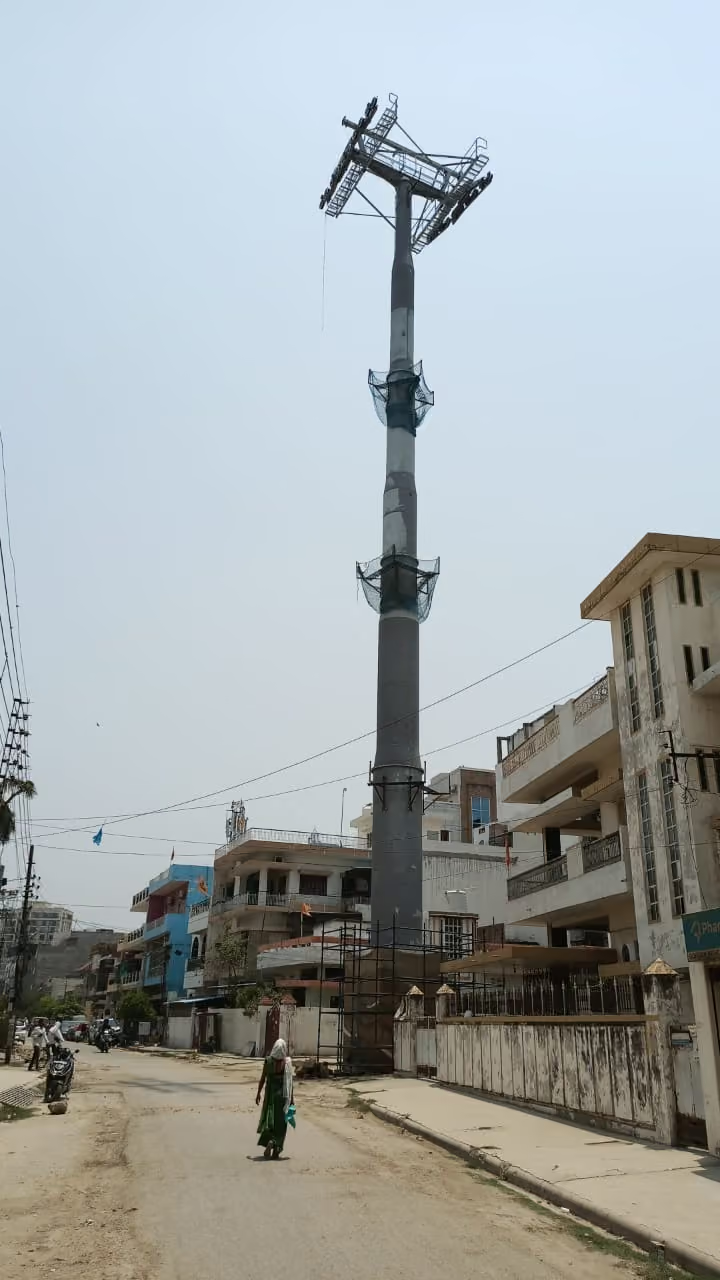
While the locations for the stations had already been fixed, the task now was to find a suitable alignment over the rooftops of the old town. No easy task given the many different ownership arrangements. One particular feature of Indian law simplified the situation. “Ropeways are treated like high-voltage lines. If the line passes over a property, there is a one-off payment. That means only the building right for the tower locations is needed for construction,” explains Salzmann. The team therefore looked for small state-owned plots such as roads and traffic islands. The challenge: in the end these had to add up to a straight line with regular spacing.
After five weeks the basic structure was in place. There was support from the state side too: “The strong political interest was always palpable and was a decisive factor in the rapid delivery,” says Salzmann. The route, 3.7 kilometres long in total, runs over four sections and five stations. Running parallel to the main traffic arteries, it fits harmoniously into the historic fabric. 29 towers up to 46 metres high carry the ropeway above the rooftops. Construction began in March 2023 with Prime Minister Modi breaking ground. As early as May 2025, the first pilgrim flows will be carried in around 150 state-of-the-art ten-passenger cabins – 3,000 persons per hour, 16 hours a day. A complete network with several sections is now planned in Varanasi. The joint venture is currently working on the designs for the second expansion stage from Cantt station to Namo Ghat.
Time pressure in mountainous Shimla
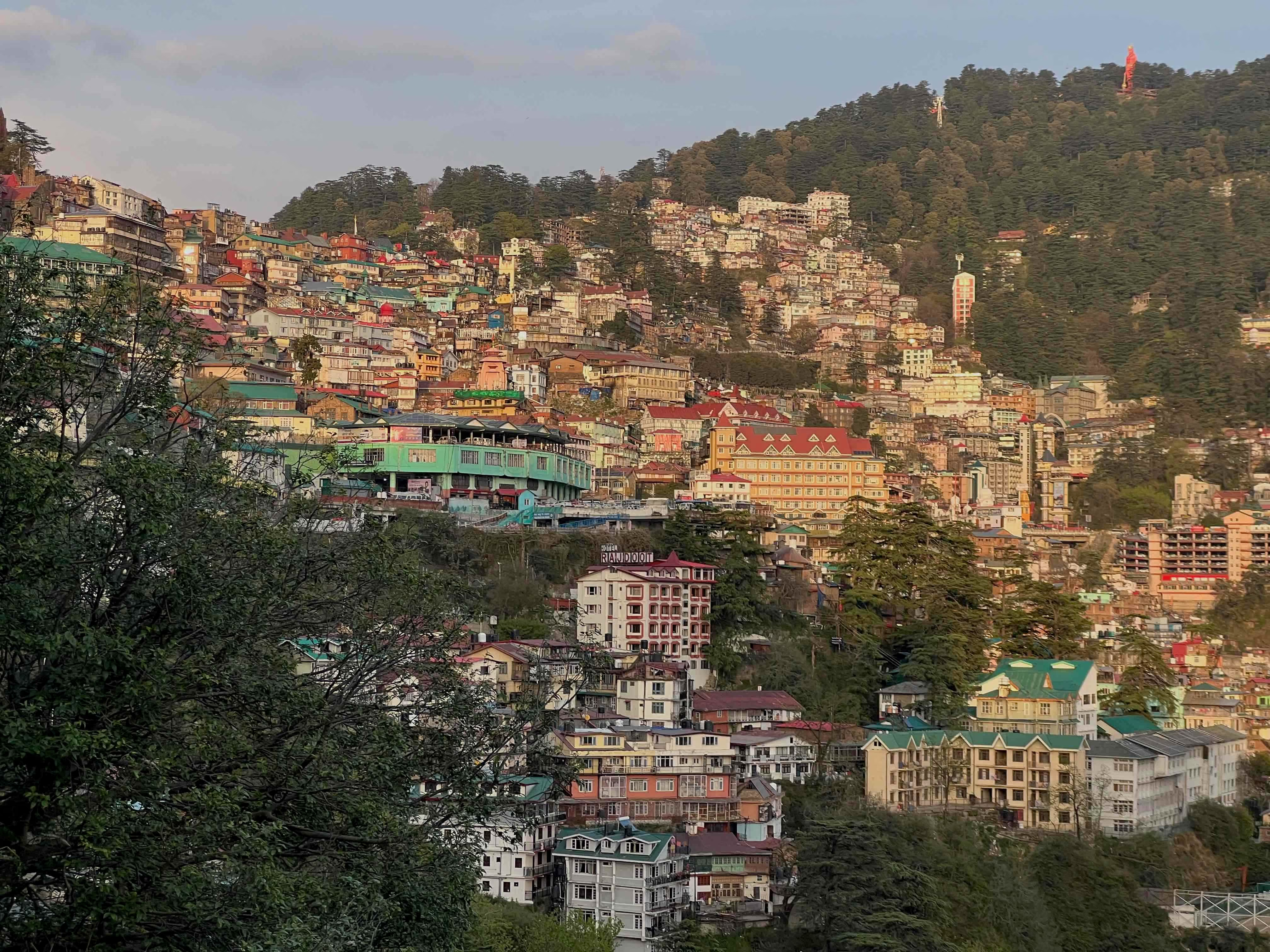
The city is called the “Queen of the Hills”, and the very first glance reveals why. Shimla nestles against the slopes of the central Himalayas. Around 170,000 people live in the capital of the state of Himachal Pradesh at more than 2,000 metres above sea level. On top of that come some three million tourists a year – and the trend is rising. Shimla does not simply lie in the mountains; the city is built on a mountain range and extends across 15 hills. Between the houses the ground can drop steeply by more than 150 metres. “As if you moved Innsbruck onto the Nordkette,” says Stephan Salzmann. The ideal topography for an urban ropeway. The local transport authority saw it the same way and approached the joint venture, which had become well known in the meantime.
“There were hardly any specifications, only a very strict schedule. It was a very intensive time,” reports Marie Bach. She joined the Bregenz engineering firm in March 2022 and was in demand from the outset. For the optimum alignment through residential areas and oak, cedar and pine forests, every option was thought through – always taking into account the already familiar problem of locations for towers and stations. As in Varanasi, publicly owned plots were identified. After just one month of design work, the team presented a ropeway network with three lines, 15 sections and a total length of about 14 kilometres. The preliminary design formed the basis for the general contractor tender now under way. If everything goes according to plan, construction is due to start as early as 2024.
A full team effort
Salzmann Ingenieure has mastered the great Indian adventure so far as a strong team. Managing Director Stephan Salzmann and planner Jörg Egger soon received support. From her first day at work, Marie Bach has been the interface to the BERNARD Group team in India and keeps an overview of the steadily growing mountain of tasks and the changing order situation. Loris Rau only joined Salzmann Ingenieure in April 2023 and was immediately involved in the Shimla project 100 per cent. For Stephan Salzmann, the past months have been proof of the power of collaboration: “Together we achieve more and we have a lot more planned. This is only the beginning of our journey in India.”